
Reviewed · DUBLIN CITY WALKING TOURS
Private Walking Tour in Dublin
Dublin’s story comes into focus on foot, and this private tour gives you a fast, useful introduction to it. In roughly two to three hours, you move from Trinity College and the 1916 Easter Rising to Viking settlement sites, medieval churches, Georgian streets, and the pubs of Temple Bar.
I like the private format, since your guide can adjust the pace and answer your questions instead of following a fixed group script. I also like the route’s range: you see famous sights such as the Spire and Ha’penny Bridge, but you also reach Wood Quay, George’s Street Arcade, and the medieval quarter. The main drawback is that admission fees are not included, and eleven stops in three hours means most places get a short introduction rather than a long visit.
Key points to know before booking
- A private route through central Dublin: Only your group takes part, so you can ask questions and request a little more time at places that interest you.
- Eleven major stops in two to three hours: The route covers Trinity College, the GPO, Temple Bar, Christ Church, St. Patrick’s Cathedral, Dublin Castle, and more.
- A strong history focus: You’ll connect Viking Dublin, English rule, the 1916 Easter Rising, Irish independence, and modern city life.
- Several interiors cost extra: Trinity College, the GPO Museum, Christ Church Cathedral, St. Patrick’s Cathedral, and Dublin Castle list admission as not included.
- A useful first-day orientation: The tour ends at the Molly Malone statue, leaving you in central Dublin with many sights and districts within reach.
- English language and mobile ticket: The experience is offered in English, with confirmation provided at booking unless you book within 12 hours.
Why this walk works well as a first look at Dublin
Dublin is compact enough to explore on foot, but its story can feel scattered at first. One street points to Viking traders, the next to Georgian wealth, and the next to the struggle for Irish independence. This route gives those pieces a clear order.
You begin at Trinity College Dublin on College Green and finish near Suffolk Street. Along the way, the walk crosses the city center, the River Liffey, Temple Bar, the medieval district, and the Liberties. That makes it useful on your first day, when you want to understand where everything sits before exploring on your own.
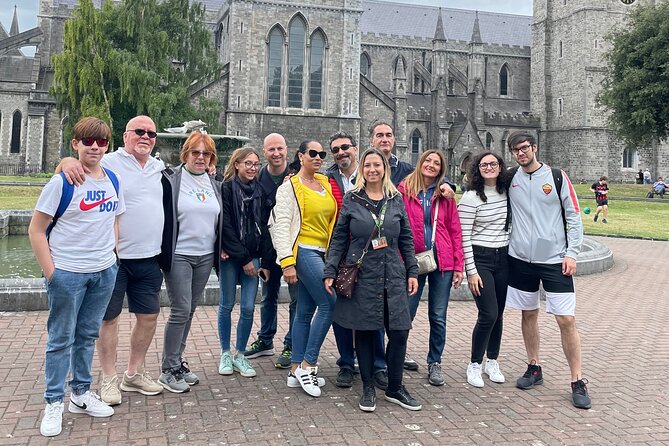
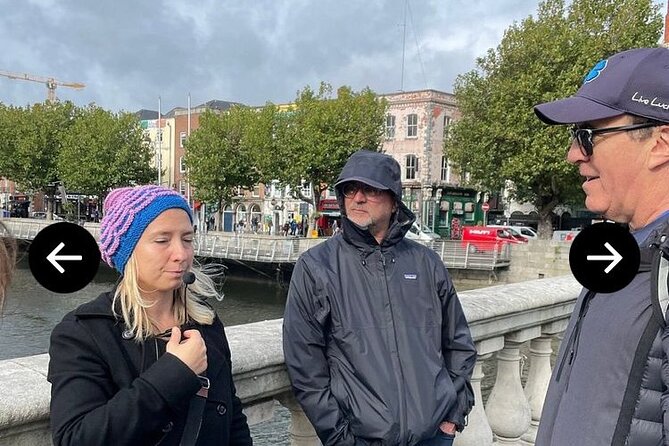
The private setup matters here. The guides connected with this experience include Francesca, John, Sinead, and Yvonne. Their approach, based on the available feedback, centers on explaining different periods of Irish history, answering questions, and adapting the walk to the people in the group. Sinead, in particular, is described as shaping the route around what the group wanted to see, while John was able to accommodate children aged six and eight.
You should still think of this as an orientation walk, not a series of full museum visits. The listed timing allows only 15 to 20 minutes at most stops. That is enough for a clear explanation, photographs, and a look at the outside of a building. It is not enough to explore every interior.
More Dublin walking tours:
- Dublin Highlights and Hidden Gems Guided Walking Tour
★ 5.0 · 6,020 reviews - Dublin: Highlights and Hidden Gems Walking Tour
★ 4.9 · 2,140 reviews - 1916 Rebellion Walking Tour
★ 5.0 · 1,605 reviews
Trinity College begins the story with Irish writers
The opening stop is Trinity College, Ireland’s best-known university. Founded in 1592 under Queen Elizabeth I, it functions almost like a small city, with more than 20,000 people studying and working there.
Your guide can put the campus into the wider story of Dublin and point out its links to figures such as Oscar Wilde, Bram Stoker, and Jonathan Swift. The allotted 20 minutes gives you time to see the setting and hear the key background.
Admission is not included. If you want to visit paid areas inside Trinity College, check the cost and allow extra time beyond the walking tour. Otherwise, the stop still works well as an introduction to the institution and its place in Irish cultural life.
The GPO and the Spire show two very different Dublins
The General Post Office, or GPO, brings you to one of the most important locations in modern Irish history. During the 1916 Easter Rising, members of the Irish Volunteers and the Irish Citizen Army seized the building on Easter Monday. The GPO later became a symbol of the fight to end British rule in Ireland.
The building’s Georgian façade remains elegant, but the bullet marks on the front pillars connect it to the violence of the uprising. Your guide can help you understand why this location matters, rather than treating it as just another grand building.
The GPO Museum is a separate paid attraction, so admission is not part of the tour price. The stop itself lasts about 15 minutes, which makes it a good preview. You can then decide if you want to return for a longer visit.
A few minutes away, the Spire gives you a sharp change of mood. Officially called the Monument of Light, it rises 120 metres and was built as a modern millennium project. The base is three metres wide, so the needle-like shape is hard to miss as you move through the city.
The Spire stop lasts only five minutes. That is enough for a quick look and a photograph, but not for a detailed discussion of modern Dublin. It works mainly as a city landmark between the historic GPO and the River Liffey.
Ha’penny Bridge leads into Temple Bar
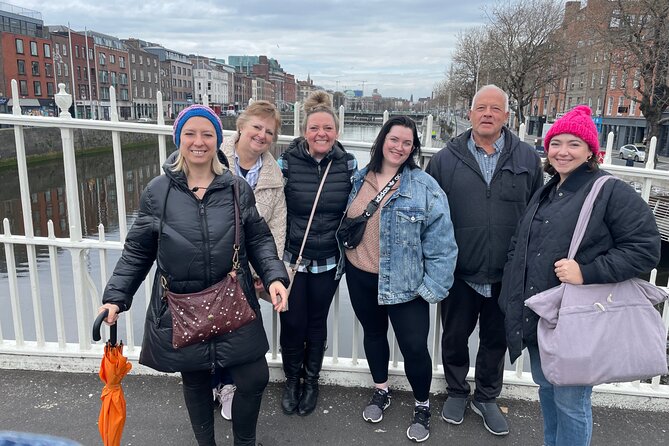
The Ha’penny Bridge, officially the Liffey Bridge, was built in 1816 and was Dublin’s first pedestrian bridge. Its familiar name comes from the half-penny toll once charged to cross it.
The bridge is one of the route’s briefest stops, with about five minutes allowed. You’ll have time to see its iron structure and the river setting, though the walk does not suggest a long pause here.
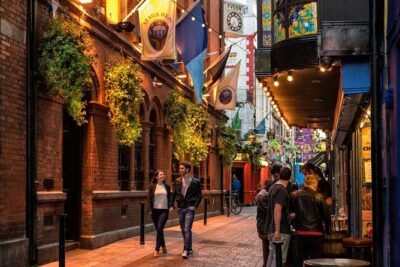
From the bridge, you continue to Temple Bar, Dublin’s best-known cultural and nightlife district. The area includes pubs associated with traditional Irish music, restaurants, and older streets that are easy to explore after the tour.
Temple Bar can be noisy and busy, especially at night. A guide is useful because you get context about the neighborhood rather than simply passing through its most photographed streets. You can also ask for suggestions about places to eat or hear music later, which is one reason this tour works well early in your stay.
The stop is listed at 15 minutes. You’ll see the area and hear the basic story, but you should return later if you want to spend an evening there.
A completely different kind of day out of Dublin:
- Dublin to Cliffs of Moher, including Wild Atlantic Way and Galway
★ 5.0 · 23,331 reviews - From Dublin: Cliffs of Moher, Burren & Galway City Day Tour
★ 4.8 · 18,888 reviews - Dublin: Guinness Storehouse Entry Ticket
★ 4.6 · 16,863 reviews - Dublin to Cliffs of Moher, Burren, Wild Atlantic Way, Galway Tour
★ 5.0 · 12,924 reviews
Wood Quay connects modern Dublin to Viking settlement
At Wood Quay Amphitheatre, the focus shifts far back in time. Archaeological work near the hill leading toward Christ Church uncovered one of the largest Viking settlements outside Scandinavia.
The Vikings first arrived as raiders and traders before settling permanently in Dublin in 841 AD. That fact changes how you see the city. Dublin was not simply created as a medieval English town. Its earliest urban story includes Norse trade, settlement, and influence.
The 15-minute stop gives you a pause from the major tourist sights and adds useful depth to the route. It also helps explain why Christ Church and the surrounding medieval district developed where they did.
Christ Church and St. Patrick’s reveal medieval Dublin
Christ Church Cathedral sits in the heart of Dublin’s medieval district. It began as a Viking church and has welcomed pilgrims and visitors for nearly 1,000 years.
Inside, the cathedral includes Strongbow’s tomb and a copy of the Magna Carta. The building itself is the main attraction, with architectural details and older layers that reward more than a quick glance.
The tour allows about 15 minutes here, and admission is not included. If you want to enter, the guide can provide the context first, but you’ll need to account for the ticket and the limits of the schedule. Those who care about church architecture or medieval Ireland may want to return independently.
St. Patrick’s Cathedral continues the religious and medieval theme, but it sits in the Liberties. The current building was completed between 1225 and 1270 in honor of Ireland’s patron saint, St. Patrick.
The site is linked to the tradition that St. Patrick baptized Irish Gaelic people here before converting them to Christianity. Inside, you’ll find the tomb of Jonathan Swift along with other historic features.
Again, admission is separate, and the planned stop is about 15 minutes. That is enough to understand why the cathedral matters, but not enough to inspect every chapel and memorial. If you have a special interest in Swift, Gothic architecture, or Irish religious history, plan on a second visit.
Dublin Castle explains centuries of English rule
Dublin Castle was the seat of the viceroy, the English monarch’s representative in Ireland, for more than 700 years. That gives the site a central place in the political story of the country.
The Record Tower is the only surviving part of the original medieval castle. The rest of the visible complex includes State Apartments built in the 18th century. This mix can surprise you. The name suggests a single fortified medieval building, but much of what you see belongs to a later period of administration and ceremony.
The stop lasts about 20 minutes, the longest allocation on the route. Admission is not included, so you’ll need an extra ticket if you want to enter the State Apartments or other paid areas.
For many people, Dublin Castle is one of the most useful stops because it connects architecture with power. You are not just looking at a grand building. You are looking at the former center of English government in Ireland.
George’s Street Arcade adds everyday city life
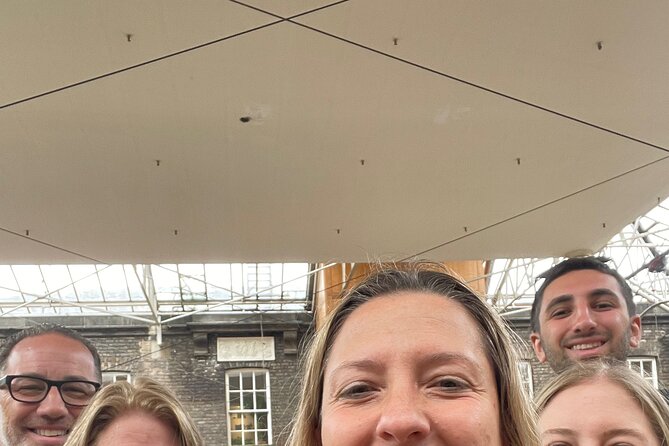
George’s Street Arcade offers a change from national monuments and cathedrals. Located in Dublin’s creative quarter, it is the city’s oldest shopping center and one of its best examples of Victorian architecture.
The arcade has operated for almost 140 years as part of the South City Market buildings. Its stalls and small shops give you a look at ordinary commercial life in the center of Dublin.
Only five minutes are allocated, so you’ll get a quick introduction rather than time to browse. I would treat this as a useful pointer. If the shops, food stalls, or architecture appeal to you, return later at your own speed.
Molly Malone provides a clear finish
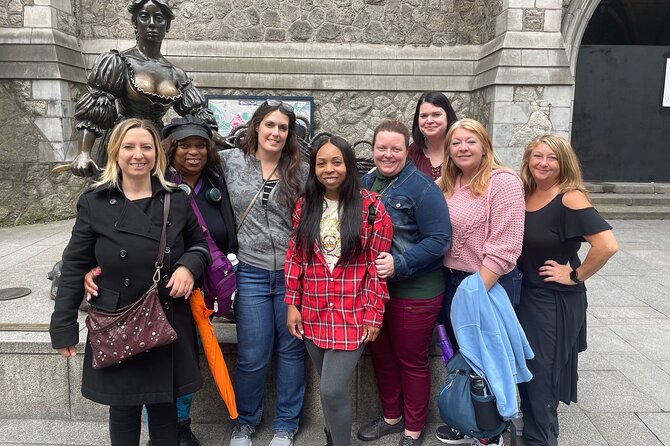
The tour ends at the Molly Malone statue on Suffolk Street. The statue was unveiled in 1988 for Dublin’s first millennium celebrations and represents the character from the famous song that became an unofficial Dublin anthem.
The statue’s history is partly legend. One theory holds that Molly Malone was based on a real woman who died in Dublin in 1699, but her actual existence is not certain.
This is a practical ending point. You are still in central Dublin, and the route leaves you near the city’s main shopping, dining, and sightseeing areas. It is also a simple place to regroup after the walk, especially if your party plans to continue exploring.
What the $90.11 price means
At $90.11 per person, this is not the cheapest way to see Dublin’s center. The value depends on your group size and how much you want a private guide rather than a large scheduled group.
For a small group, the price buys personal attention, the chance to ask questions, and a route that covers a lot of ground without requiring you to plan the order yourself. It also includes the benefit of local recommendations for later in the day.
The price does not include entrance to Trinity College, the GPO Museum, Christ Church Cathedral, St. Patrick’s Cathedral, or Dublin Castle. If you want to go inside several of those places, your total cost will rise. You should also understand that the tour time is spent walking between sites and explaining them, not providing extended visits at every attraction.
I see the best value here for a first day in Dublin, a family group, or anyone who wants the city’s history explained in plain order. If you already know the center well, or prefer spending an hour inside one major attraction, a shorter focused tour may suit you better.
Timing, pace, and practical details
The walk lasts approximately two to three hours. With eleven stops, the pace is active but manageable for most people. Several stops last only five minutes, while Trinity College and Dublin Castle receive about 20 minutes each.
Wear comfortable shoes and expect city streets, bridge crossings, and regular stops. The route is near public transportation, which makes reaching Trinity College on College Green straightforward.
The tour is offered in English and uses a mobile ticket. Service animals are allowed, and most people can take part. Since the experience requires good weather, a poor-weather cancellation may lead to a different date or a full refund.
Free cancellation is available up to 24 hours before the start time. If you cancel or request changes within 24 hours, the amount paid is not refunded.
Who will get the most from this private Dublin walk
I would choose this tour if you want a broad first look at Dublin and prefer conversation to a recorded audio guide. It is especially useful if you want to ask why a place matters, pause for a child’s question, or get suggestions for the rest of your visit.
Families can benefit from the private format. The route includes big visual landmarks, short stops, bridges, statues, and stories that can be broken into manageable pieces. The experience has also worked for a group with children aged six and eight.
History-minded visitors will appreciate the way the walk links Vikings, medieval Christianity, English administration, and the 1916 Rising. You’ll also see everyday places such as George’s Street Arcade and Temple Bar, so the experience is not limited to formal monuments.
I would hesitate if your main goal is detailed interior sightseeing. Paid entry is extra, and the schedule does not leave much time inside the cathedrals, the GPO Museum, Trinity College, or Dublin Castle. In that case, use the walk to choose your priorities, then return to two or three sites on your own.
Should you book this Dublin tour?
Book it if you want a private, history-led introduction to central Dublin, with a guide who can adjust the conversation to your interests. The route covers an impressive amount of ground, and the mix of Viking, medieval, political, literary, and modern sights gives you a solid map of the city.
Go in with the right expectations. You’ll see many places, but you won’t fully tour every interior. The strongest plan is to take this walk early in your stay, ask for advice about what to revisit, and then spend later hours inside the attractions that matter most to you.
FAQ
Where does the private walking tour begin?
The tour begins at Trinity College Dublin, College Green, Dublin 2, Ireland.
Where does the tour end?
It ends in front of the Molly Malone statue on Suffolk Street, Dublin 2.
How long does the tour last?
The tour lasts approximately two to three hours.
What language is the tour offered in?
The tour is offered in English.
Is this a private experience?
Yes. Only your group participates in the private tour or activity.
Are attraction admission fees included?
No. Admission is not included for Trinity College, the GPO Museum, Christ Church Cathedral, St. Patrick’s Cathedral, or Dublin Castle. The Spire, Ha’penny Bridge, Temple Bar, Wood Quay Amphitheatre, George’s Street Arcade, and Molly Malone statue are listed as free stops.
Is the tour suitable for children?
Most people can participate, and the experience has accommodated children aged six and eight. The tour includes several hours of walking and multiple short stops.
What happens if the weather is poor?
The experience requires good weather. If it is canceled because of poor weather, you will be offered a different date or a full refund.
Just added around Dublin
- Wicklow: Private Day Tour from Dublin★ 5.0 · 5 reviews
- Wicklow Mountains Private Day Tour including Glendalough★ 5.0 · 7 reviews
- Wicklow Mountains & Glendalough Luxury Private Day Tour★ 5.0 · 23 reviews
- Wicklow tour of Glendalough★ 4.5 · 8 reviews
- Women Of Ireland: Trailblazers & Pioneers★ 5.0 · 4 reviews
- Dublin To Kilkenny Castle Waterford Crystal Private Car – Day Tour★ 5.0 · 8 reviews
- Waterford Crystal and Kilkenny Full-Day Rail Tour from Dublin★ 5.0 · 3 reviews
- Full Day Private Wicklow Tour★ 5.0 · 12 reviews
Dublin City Walking Tours, compared.
Dublin Highlights and Hidden Gems Guided Walking Tour
Read our review →
90 Minute Dublin Walking tour and Sightseeing tips
Read our review →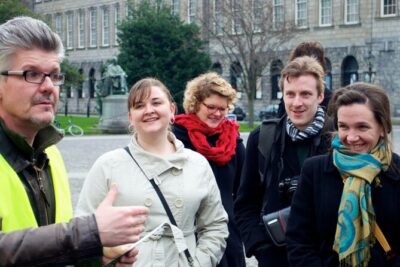

Historical 2-Hour Guided Walking Tour of Dublin
Read our review →
Dublin Traditional Irish 3 Course Meal Walking Tour with Local
Read our review →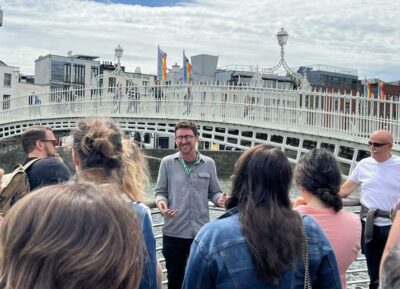
Browse the lists this tour appears in