
Reviewed · DUBLIN CASTLE AND HISTORIC CITY TOURS
2-Hour Historical Walking Tour from Dublin
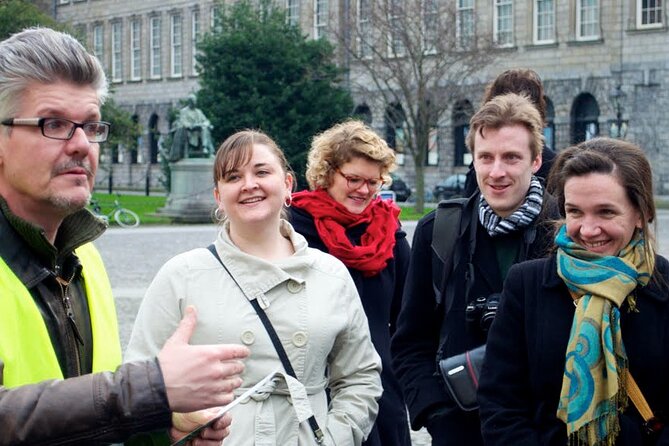
Dublin’s story comes at you fast on this two-hour walk: Viking settlement, English rule, religious conflict, rebellion, civil war, and modern Ireland all appear along a compact route through the city center. The guides, including Jody, Eoin, John, and others, bring academic training and plenty of personality to the subject.
I like the low $22.98 price and the easy central meeting point at the Grattan statue. I also like that the route gives you useful bearings for the rest of your stay, passing places you can revisit on your own, including Trinity College, Temple Bar, Christ Church Cathedral, and Dublin Castle.
The main consideration is the tour’s serious focus on politics and historical detail. Some guides cover a great deal in two hours, and the walk can run beyond its advertised length. If you prefer light sightseeing with only a few facts, this may feel like a history class on foot.
Key points to know before booking
- Start at the Grattan statue: Meet opposite Trinity College’s front gate at College Green, not at the college gates themselves.
- Eight central Dublin stops: The route links Trinity College, the Bank of Ireland, Temple Bar, Wood Quay, the Four Courts, Christ Church Cathedral, City Hall, and Dublin Castle.
- History comes first: Expect a serious look at Irish politics, religion, invasion, independence, and civil war.
- Small enough to follow: The group is capped at 25 people, and guides are history postgraduates.
- Book of Kells is not included: You enter the Trinity College campus, but admission to the Book of Kells requires a separate ticket.
- Good first-day choice: The walk helps you understand the city’s layout and gives context for later sightseeing.
Why this walk works as a Dublin introduction
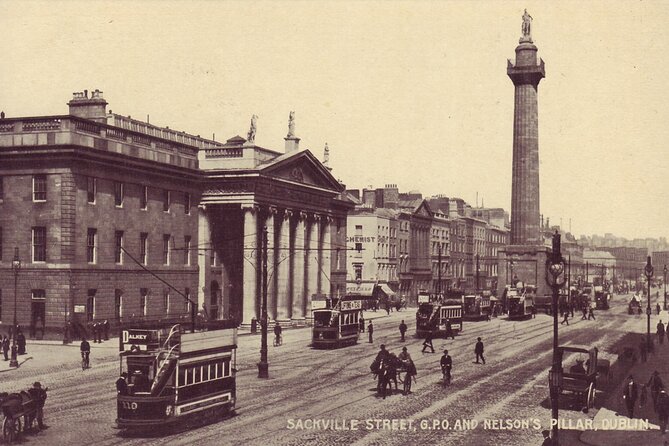
I like starting a Dublin visit with a walking tour because the city’s buildings make more sense once you know what happened around them. A grand Georgian institution may represent British rule to one Irish generation, religious freedom to another, and a contested political past to the next.
This route gives you that framework without taking a full day. The listed duration is about two hours, though some departures have lasted closer to two and a half hours. That extra time may please you if you enjoy detail, but it matters if you have a lunch booking or a timed attraction afterward.
The tour is delivered in English and led by a history postgraduate. Guides vary, but names appearing in the tour’s feedback include Jody, Eoin, John D., Owen, Colm, Daragh, and Caolan Maher. Their styles differ, yet the common thread is a serious interest in Irish history, mixed with humor, anecdotes, songs, and modern references.
The group size can reach 25. That is larger than a private walk, but still manageable in the narrow streets around Temple Bar and the civic center. A cap of 25 also helps keep the price down. At $22.98 per person, this is an inexpensive way to spend a morning or afternoon in central Dublin, especially since the tour visits many major landmarks without charging entry fees.
More Dublin castle and history tours:
- Dublin Historical Centre Food Tour with 8 Food Tastings & Drinks
★ 5.0 · 1,718 reviews - Dublin: Fast-Track Book of Kells Ticket & Dublin Castle Tour
★ 4.5 · 1,661 reviews - 1916 Rebellion Walking Tour
★ 5.0 · 1,605 reviews
Meeting at Trinity College’s Grattan statue
The meeting point is one of the most important practical details. Find the Henry Grattan Monument, also called the Grattan statue, at College Green, opposite Trinity College’s front gate.
Do not simply wait at the college gates. The stated meeting point is across from them, and confusion here has caused at least one missed departure. I would arrive a few minutes early, check the statue, and keep the mobile number used for booking available in case the guide needs to reach you.
The tour enters the Trinity College campus and begins with the university’s story. Founded in 1592, Trinity is Ireland’s oldest university. The guide also explains the Book of Kells, an eighth-century Latin manuscript containing the four Gospels.
You do not receive admission to the Book of Kells with this walk. That is an important distinction. The tour gives you context for the manuscript and Trinity, but you need a separate ticket if you want to see the exhibition and the famous illuminated pages.
I like this opening because it starts with a place most visitors already recognize. Instead of treating Trinity as a quick photo stop, the guide connects its buildings and collections to Ireland’s religious and political past. The scheduled stop lasts about 20 minutes, making it one of the longer pauses on the route.
The Bank of Ireland and the story of power
From Trinity, the walk moves to the Bank of Ireland. The building began in 1729 as Ireland’s colonial parliament. The Irish Parliament was abolished by the Act of Union in 1800, and the building became a powerful reminder of the period known as Protestant Ascendancy.
This is where the tour’s political focus becomes clear. You are not just looking at a handsome neoclassical facade. You are learning who held power, how that power was displayed, and what changed when Ireland’s parliament was absorbed into the United Kingdom.
The stop lasts about 10 minutes. That is enough time for an explanation outside, but not a long architectural inspection. If your main interest is design, you may wish the tour spent longer here. If you want the building to make political sense, the short stop works well.
Temple Bar beyond the nightlife
Temple Bar is often the liveliest part of a first Dublin visit, but this tour gives you a less obvious angle. The narrow-street district was once marked for demolition before being repurposed as Dublin’s Cultural Quarter in the 1990s.
That change says a lot about how cities decide what to preserve. What might look like an old, permanent neighborhood is also the result of modern planning, cultural policy, and changing ideas about Dublin’s identity.
The visit lasts roughly 10 minutes. You will not get a full food, pub, or nightlife tour here, and that is not the point. The guide uses Temple Bar to explain urban change, then keeps moving. I find that useful because it prevents the district from swallowing the whole outing.
More Dublin walking tours:
- Dublin Highlights and Hidden Gems Guided Walking Tour
★ 5.0 · 6,020 reviews - Dublin: Highlights and Hidden Gems Walking Tour
★ 4.9 · 2,140 reviews - 90 Minute Dublin Walking tour and Sightseeing tips
★ 5.0 · 916 reviews - Historical 2-Hour Guided Walking Tour of Dublin
★ 4.7 · 865 reviews
Viking Dublin at Wood Quay
At Wood Quay Amphitheatre, the subject shifts to the Viking city. Vikings founded Dublin in AD 840, and major archaeological excavations in the 1980s revealed much about the settlement that once occupied this area.
Wood Quay is a good reminder that Dublin’s story began long before English administration or the struggle for independence. The city was shaped by trade, settlement, and contact among different peoples over many centuries.
The scheduled stop is about 10 minutes. You should not expect an archaeological museum visit or a large collection of visible ruins. The value is in the explanation of what was found and where the Viking city lay beneath modern Dublin.
This is one point where a strong guide matters. A dry description of an excavation can pass quickly. A guide who can place the settlement in the city’s larger story makes the stop much easier to picture.
The Four Courts and the 1922 Civil War
The Four Courts is one of the tour’s most important stops. It is Ireland’s legal headquarters and the site where the Civil War began in June 1922.
The conflict divided those who supported the Treaty of December 1921 and those who opposed it. That treaty ended the War of Independence from 1919 to 1921, but it did not settle the question of Ireland’s future. The Four Courts therefore gives the guide a chance to explain how independence brought another painful division.
The tour allows about 20 minutes here, matching Trinity as the longest scheduled stop. You will hear about the people and political choices behind the fighting, not just see a government building.
This is also where you should expect the most demanding material. The Irish struggle for independence and the Civil War involve names, factions, agreements, and changing loyalties. One guide may explain it with jokes and clear signposts, while another may give you a denser political account.
I would not choose this tour for children who need constant movement or simple stories. A teenager who enjoys history may do very well, but younger children could find the pace and subject matter heavy.
Christ Church Cathedral and the English invasion
Christ Church Cathedral is Dublin’s oldest cathedral, founded in 1030. It was rebuilt in stone in the 1170s by Strongbow, a key figure in the original English invasion of that period.
The cathedral gives you a physical way to understand the transition from early medieval Dublin to English control. Its age and religious importance are striking, but the tour focuses on the people and power behind its rebuilding.
This stop lasts about 10 minutes. The listed route ends at Christ Church Cathedral, so you may be able to continue exploring the area after the guide finishes, depending on opening arrangements and your own plans. The tour does not include entry to paid attractions, so check separately if you want to go inside.
Ending near Christ Church is practical. You are close to Dublin Castle and other central sights, with a useful sense of direction after the walk. You can also pause for lunch or continue sightseeing without crossing the city again.
City Hall and Daniel O’Connell
At City Hall, the guide introduces Daniel O’Connell, whose statue is inside the building. O’Connell became Dublin’s first Catholic Lord Mayor in 1840 and led the successful campaign for Catholic Emancipation in 1829.
That campaign ended anti-Catholic laws and earned him the name The Liberator. The stop connects religious discrimination with civic life, showing how national politics affected who could hold office and take part in public affairs.
The stop is about 10 minutes. Because the statue is inside City Hall, the exact experience can depend on access at the time of the tour. The essential point is O’Connell’s role, not a long interior visit.
I like this stop because it puts a person to the political story. The tour often moves between buildings, laws, and conflicts, so a central figure such as O’Connell gives you someone to remember.
Dublin Castle and the Dubh Linn
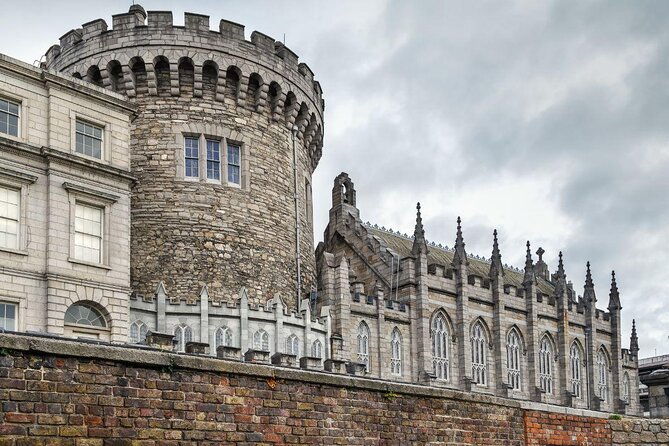
The final major stop is Dublin Castle, originally built by King John in 1204. It served as the center of British administration until 1922.
The site also connects to the city’s name. Dublin comes from Dubh Linn, meaning Black Pool, referring to the pool associated with the castle area.
Dublin Castle is an efficient final chapter because it gathers several themes in one place: medieval rule, British administration, and the transfer of power in 1922. You are looking at a site that functioned for centuries as an administrative center, not merely a picturesque castle.
The stop lasts around 10 minutes. Like the other locations, admission is not part of the walking tour. If you want a full visit to the castle interiors, plan that separately.
How much history fits into two hours
The best guides make the large subject manageable. Eoin, Jody, John, Owen, and the other guides are praised for clear voices, humor, stories, and the ability to connect ancient events with recent Irish politics. One guide reportedly began with 5,000 years of Dublin history in five minutes, then used the stops to add detail.
That approach gives you a useful outline. You hear about Celtic settlement, Vikings, the medieval church, English invasion, Protestant Ascendancy, Catholic emancipation, the War of Independence, the Civil War, and modern political change.
The tradeoff is density. You need to listen closely, and some parts may feel more like a university lecture than a casual stroll. The guide may also refer to subjects extending into recent events, including Brexit. I appreciate that modern material, since it shows that Irish history is not sealed in the past, but it can make the tour feel politically heavy.
The tour is strongest for you if you enjoy asking why a building matters, who controlled it, and how old conflicts still shape public life. It is less suited to you if you mainly want restaurant tips, shopping advice, or a relaxed walk with only light commentary.
Walking conditions and weather advice
The physical demand is moderate, but you will be on your feet for more than two full hours if the guide runs long. Wear comfortable shoes and plan for Dublin weather. Rain, wind, and cold have affected departures, yet the guides have continued outdoors and kept the presentation moving.
I would bring a waterproof layer rather than rely on a small umbrella. You may also want water, especially if the tour extends past two hours. The streets are central and the route is not described as difficult, but standing in one place while listening can feel tiring in poor weather.
The tour is near public transportation, and service animals are allowed. The group is limited to 25 people. A moderate level of physical fitness is recommended.
Price, timing, and overall value
At $22.98, this is strong value if you want historical context rather than admission to attractions. The fee covers the guide’s expertise, and every listed stop has free admission during the walk. You still pay separately for the Book of Kells or any other interior attraction you choose to visit.
I especially like the price for a first day in Dublin. You get a basic map of the center, learn which places deserve a later visit, and avoid spending half a day on a single museum or castle.
The 97 percent recommendation rate and 4.9 rating from 875 ratings suggest that the format works very well for most people. Still, the one-star and three-star experiences point to two real risks: missing the exact meeting point and finding the history too dense.
You can cancel for a full refund up to 24 hours before the start time. Changes or cancellations made less than 24 hours ahead are not accepted for a refund.
Who should book this Dublin walk
Book it if you want to understand how Dublin developed and why its public buildings matter. It is particularly useful for first-time visitors, history fans, adults who enjoy politics, and older children or teenagers who can follow a detailed explanation.
Book it near the start of your stay. You can then return to Trinity, Christ Church, Dublin Castle, or the Four Courts with a better sense of what you are seeing.
I would skip it if you want a short, breezy introduction centered on food, music, shopping, or local neighborhoods. I would also think twice if you dislike political history or find long talks tiring.
FAQ
How long is the historical walking tour?
The tour is advertised as lasting approximately two hours. Some departures have lasted about two and a half hours, so avoid scheduling another activity immediately afterward.
Where does the tour begin?
It begins at the Henry Grattan Monument, also called the Grattan statue, at College Green opposite Trinity College’s front gate.
Does the tour enter Trinity College?
The route enters the Trinity College campus and explains its history. Entry to the Book of Kells is not included.
Is the Book of Kells included in the price?
No. Admission to the Book of Kells is not included and must be arranged separately.
Where does the tour finish?
The stated end point is Christ Church Cathedral at Christchurch Place in the Wood Quay area.
How large is the group?
The tour has a maximum of 25 people.
Can I cancel for a refund?
Yes. You can cancel at least 24 hours before the start time for a full refund. Cancellations or changes made less than 24 hours before the start time are not accepted.
Should you book it?
I would book this walk if you want the story behind Dublin’s streets, not just a checklist of buildings. For $22.98, you get a compact route, a history postgraduate guide, and a useful explanation of the forces that shaped Ireland.
Meet at the Grattan statue, wear good shoes, allow more than two hours, and expect politics as well as architecture. If that sounds appealing, this is a smart first look at Dublin.
More 2-Hour Experiences in Dublin
- 2 Hour Walking Tour of Dublin’s City Centre
★ 5.0 · 63 reviews - Dublin: 2-Hour Premium Whiskey and Food Tasting Tour
★ 4.7 · 54 reviews - Dublin: 2 Hour City Center Guided Walking Tour
★ 4.9 · 12 reviews - 2-Hour Deluxe Whiskey & Food Tasting
★ 4.6 · 9 reviews
Just added around Dublin
- Wicklow: Private Day Tour from Dublin★ 5.0 · 5 reviews
- Wicklow Mountains Private Day Tour including Glendalough★ 5.0 · 7 reviews
- Wicklow Mountains & Glendalough Luxury Private Day Tour★ 5.0 · 23 reviews
- Wicklow tour of Glendalough★ 4.5 · 8 reviews
- Women Of Ireland: Trailblazers & Pioneers★ 5.0 · 4 reviews
- Waterford Crystal and Kilkenny Full-Day Rail Tour from Dublin★ 5.0 · 3 reviews
- Full Day Private Wicklow Tour★ 5.0 · 12 reviews
- Dublin To Kilkenny Castle Waterford Crystal Private Car – Day Tour★ 5.0 · 8 reviews
Dublin Castle and Historic City Tours, compared.

Dublin Historical Centre Food Tour with 8 Food Tastings & Drinks
Read our review →
Fast-Track Book of Kells Ticket & Dublin Castle Tour
Read our review →
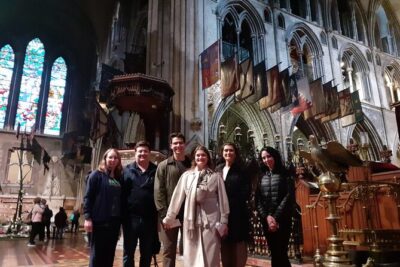
St Patrick’s Cathedral, Book of Kells and Dublin Castle Tour
Read our review →
Historical 2-Hour Guided Walking Tour of Dublin
Read our review →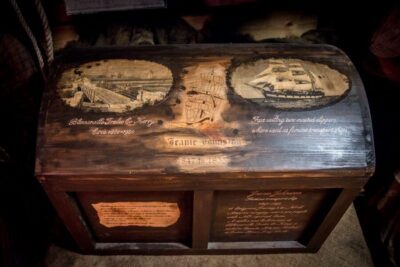
Jeanie Johnston Tall Ship Irish Famine History Tour
Read our review →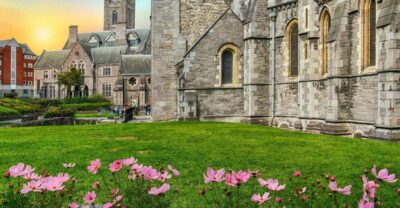
Book of Kells, Dublin Castle and Christ Church Tour
Read our review →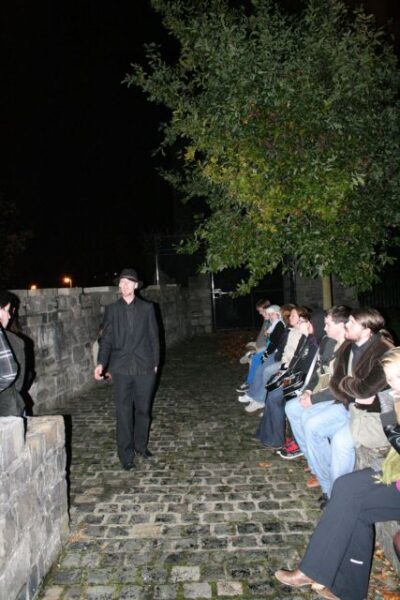
Browse the lists this tour appears in