
Reviewed · DUBLIN CASTLE AND HISTORIC CITY TOURS
1916 Rebellion Walking Tour
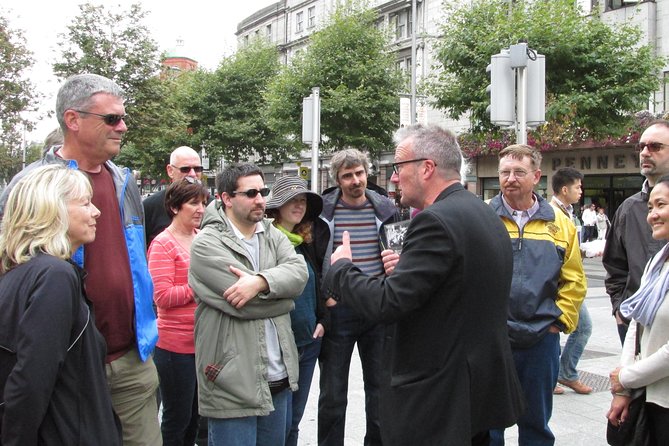
The most powerful part of this Dublin walk is the way it puts the 1916 Rising on the actual streets where it happened. You begin at the International Bar, hear how the Great Hunger shaped Irish politics, then follow the story through City Hall, Dublin Castle, the Four Courts, and the General Post Office.
I like the warm, conversational teaching style, especially when guides such as Lorcan Collins, Phelim, Liz, and Donal add songs, poems, humor, and time for questions. I also like the excellent value: for $27.81, you get roughly two hours of guided history and a route through several central Dublin landmarks. The main caution is timing. The walk can run closer to three hours, and a group of up to 30 people may feel large at busy stops.
Key points to know
- Start with a drink and an introduction: Arrive early at the International Bar on Wicklow Street if you want time to settle in with a drink and read the supplied background material.
- Follow the story across central Dublin: The route may include City Hall, Dublin Castle, the Four Courts, O’Connell Monument, the Jim Larkin statue, the GPO, Moore Street, and the Old Parliament.
- Expect history with personality: Guides may use songs, poetry, humor, and personal storytelling to make political events easier to grasp.
- No prior study is needed: The opening talk explains the road from the Great Hunger of the 1840s to the 1916 Rising.
- Plan for a variable finish time: The listed length is about two hours, but one session took close to three hours.
- Return to the beginning: The tour ends back at the International Bar, at 23 Wicklow Street.
Starting at the International Bar on Wicklow Street

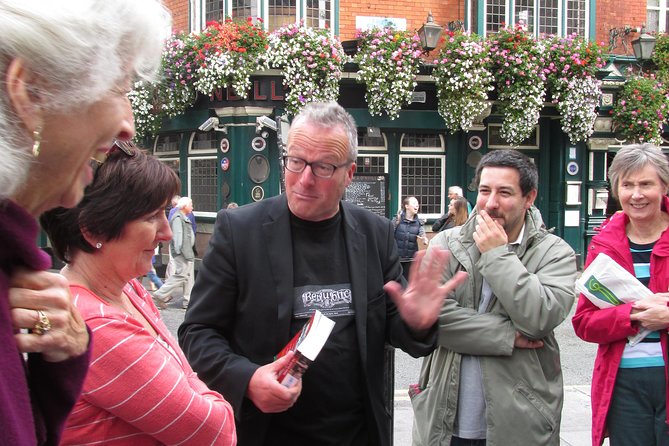
The tour begins at the International Bar, at 23 Wicklow Street in central Dublin. This is more than a place to gather. It sets the tone for a walk that treats Irish political history as a living story rather than a string of dates.
You can arrive early, order an alcoholic drink, and read introductory material supplied by the guide. Drinks are not included in the tour price, but the pub gives you a natural place to meet the group and get your bearings before heading outside.
The opening talk is important. Instead of dropping you into Easter Week without context, the guide starts with the Great Hunger of the 1840s and traces the political pressure that built over the following decades. The presentation then moves toward the revolutionary period and the 1916 Rising.
I find this approach especially useful if you know Ireland mainly through names such as Patrick Pearse, James Connolly, or Michael Collins but do not yet understand how their stories connect. You are also invited to ask questions at the start, which helps turn the session into a conversation rather than a lecture.
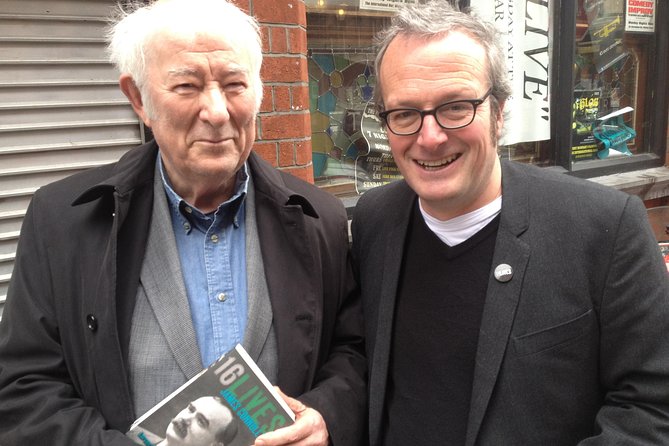
Lorcan Collins has led the tour since 1996, and his name is closely linked with the experience. Other guides praised for their delivery include Liz, Phelim, Donal, Adam, Phil, Fallon, Elaina, and Phalim. The exact guide depends on the date, but the common thread is clear speech, strong subject knowledge, and a lively manner.
More Dublin castle and history tours:
- Dublin Historical Centre Food Tour with 8 Food Tastings & Drinks
★ 5.0 · 1,718 reviews - Dublin: Fast-Track Book of Kells Ticket & Dublin Castle Tour
★ 4.5 · 1,661 reviews - St Patrick’s Cathedral, Book of Kells and Dublin Castle Tour
★ 4.5 · 882 reviews
City Hall and Dublin Castle: power on both sides
City Hall is the first major stop listed on the route. During the 1916 Rising, the Irish Citizen Army occupied the building. That detail gives the site a direct connection to the working-class and labor side of the rebellion, a part of the story that can disappear when the focus stays only on military leaders.
The guide explains what happened at City Hall and places the occupation within the wider events of Easter Week. You will not simply be looking at an old civic building. You will be asked to imagine it as a position held during a short, uncertain revolt.
From there, the walk continues to Dublin Castle, the center of British administration in Ireland. Its role in the Rising and the later War of Independence helps explain why this building mattered so much to both sides.
Dublin Castle is also familiar from the film Michael Collins, but the tour uses it for more than a quick movie reference. The stop gives you a clearer sense of the authority that the revolutionaries were challenging. It also helps connect 1916 to the political conflict that followed.
These early stops are useful because they set up the main contrast of the tour: government power on one side, armed rebellion and competing visions of Ireland on the other. You get physical markers for both forces before reaching the more famous GPO.
The Four Courts and the road to civil war
The Four Courts brings the story forward into 1922. Revolutionaries occupied the complex in 1916, and it became important again during the buildup to the Irish Civil War.
The building is best viewed from a bridge over the River Liffey rather than by walking all the way to its entrance. That viewpoint lets the guide explain both the 1916 occupation and the later fighting without spending too much of the tour on a single stop.
This is one of the most useful parts for anyone who knows about the Easter Rising but is less clear on what happened afterward. The guide explains the difficult split within the nationalist movement and the complications of the Civil War.
The Four Courts stop also shows why a tour focused on 1916 should not end with the surrender. The Rising was defeated, but the political arguments and personal divisions it helped unleash continued into the struggle for independence and then into conflict among former allies.
Expect plenty of information here. If you prefer a light stroll with only a few historical facts, this section may feel dense. If you want the connections between 1916, the War of Independence, and 1922, it is one of the strongest reasons to choose this walk.
Bullet holes, Daniel O’Connell, and the human scale of war
At the O’Connell Monument, the guide points out bullet holes left from the Rising. These small marks can be more affecting than a grand speech. They give you something physical to examine while the guide explains where British and Irish forces were positioned in 1916.
This is where the walk’s street-level approach works best. You are not only hearing about troop movements and political declarations. You are seeing damage that remains visible on a monument in the middle of Dublin.
The tour also stops at the statue of Jim Larkin, the union leader from Liverpool and a close colleague of James Connolly. Larkin’s connection with Dublin’s working class adds another thread to the story. The rebellion was not only about national independence. It also grew from arguments about workers, poverty, social order, and who should control the future of Ireland.
Guides may pause at other smaller locations along the way. The route changes from day to day, so you should not treat every listed stop as guaranteed. That variation keeps the walk from becoming a rigid recital, but it also means you may see a slightly different version of the tour depending on your guide and the day.
More Dublin walking tours:
- Dublin Highlights and Hidden Gems Guided Walking Tour
★ 5.0 · 6,020 reviews - Dublin: Highlights and Hidden Gems Walking Tour
★ 4.9 · 2,140 reviews - 90 Minute Dublin Walking tour and Sightseeing tips
★ 5.0 · 916 reviews - 2-Hour Historical Walking Tour from Dublin
★ 5.0 · 875 reviews
The GPO, where the Rising becomes real
The General Post Office on O’Connell Street is the central stop. It served as headquarters for the revolutionaries, and Patrick Pearse read the Proclamation of the Irish Republic here in 1916.
The guide uses the GPO to explain the events of Easter Week in detail. You will hear why the building mattered, how the revolutionary headquarters functioned, and why the GPO remains such a powerful symbol in Irish national life.
I would save your attention for this stop. The tour often spends about 30 minutes here, longer than at most other locations. That extra time is justified because so many strands meet at the GPO: the declaration of independence, the military occupation, the public reaction, the fighting, and the eventual surrender.
The building also helps you picture the Rising as a risky and confused action rather than a clean military operation. The rebels held important positions, but they faced much greater forces. The guide’s stories and occasional songs can make the personalities and mood of the week easier to grasp.
Some guides use music or poetry during the walk. This will appeal to you if you like history presented with a human voice and a bit of performance. It may not suit you if you want a quiet, strictly academic lecture, but the singing is used to support the story rather than replace it.
Moore Street and the final stand
If time allows, the group continues to Moore Street. This area is linked with the final stand of the GPO garrison during Easter Week.
Moore Street adds a strong closing image to the GPO story. You have already heard about the headquarters and the proclamation. Here, the guide explains the last stage of the garrison’s position and the pressure that led to surrender.
Because the route varies, Moore Street is not certain on every outing. If this location matters to you, ask at the beginning how much ground the group is likely to cover. The guide may need to adjust the route based on timing, group size, or the day’s plan.
The Old Parliament and Trinity College
The Bank of Ireland, often called the Old Parliament, may also be included. The building and nearby Trinity College open another chapter in Dublin’s political story.
This stop is not always part of the route, but it can add useful background to the city’s older political institutions. The guide decides how to fit it in, so consider the tour a guided historical walk with a flexible route rather than a fixed checklist.
That flexibility is both a strength and a limitation. You may get extra context at a place that fits the day’s discussion, but you should not book this expecting a guaranteed visit inside each landmark. The experience is mainly outdoors, with explanations given from public streets and viewpoints.
How much walking and how much time?
The advertised duration is about two hours. The route includes many stops, so the actual pace is moderate rather than hurried. You will be standing outside while the guide speaks, then walking between locations in central Dublin.
One session lasted nearly three hours, partly because a large group created more questions and longer pauses. I would avoid scheduling a tight museum booking or meal immediately afterward. Give yourself extra time, especially if you want to stay for questions at the end.
The group can include up to 30 people. That is a reasonable maximum for a popular walking tour, though it can feel crowded around the GPO or at a narrow viewing point. Arrive on time, stay close to the guide, and position yourself where you can hear clearly.
The tour is near public transport, and most people can take part. Children must be accompanied by an adult. Since the experience depends on being outdoors, poor weather can lead to a new date or a full refund.
Is $27.81 good value?
At $27.81 per person, this is a strong buy if you want a serious introduction to modern Irish political history. You are paying for a professional guide, not entry to an attraction, so the value comes from interpretation, route planning, and the chance to connect places that you might otherwise pass without understanding.
The walk covers more than the GPO. It links civic buildings, monuments, statues, river views, and streets into one story. That saves you the work of researching each site and helps you see the relationship between the Rising, the War of Independence, and the Civil War.
The price does not include drinks at the International Bar. Treat the opening drink as optional rather than part of the package. The main cost covers the guided walk.
Who should book this Dublin history walk?
I would choose this tour if you want more than a quick photo at the GPO. It suits history buffs, but the opening explanation makes it accessible if your prior knowledge is limited.
It is also a good fit for anyone interested in labor history, the role of women in Irish social history, political movements, or the links between Irish emigration and the United States. One guide, Elaina, placed particular focus on women’s roles, and the tour’s wider coverage allows room for those social and political connections.
You should skip it if you want a short, silent sightseeing walk or a fixed route with guaranteed entry inside every landmark. The amount of information is substantial, the route can change, and the session may run longer than advertised.
Should you book the 1916 Rebellion Walking Tour?
Book it if you want to understand why the 1916 Rising still matters, not simply where it happened. The GPO, bullet holes at the O’Connell Monument, City Hall, Dublin Castle, and the Four Courts give the story a clear physical setting.
The biggest strengths are the passionate guides, the range of historical stops, and the lively delivery through songs, poems, humor, and conversation. The main drawbacks are the possible three-hour duration, the group size, and the fact that some stops depend on the route chosen that day.
For $27.81, I think it is one of the better ways to spend two hours in central Dublin, provided you want a serious history lesson with plenty of walking and personality. Arrive early, wear comfortable shoes, allow extra time, and keep your afternoon open.
FAQ
Where does the 1916 Rebellion Walking Tour start?
The tour starts at the International Bar, at 23 Wicklow Street, Dublin, D02 VH59, Ireland.
Where does the tour finish?
The activity ends back at the meeting point at the International Bar.
How long does the tour last?
The listed duration is approximately two hours. The actual walk can sometimes take closer to three hours.
What landmarks are included?
Possible stops include City Hall, Dublin Castle, the Four Courts, the O’Connell Monument, the Jim Larkin statue, the General Post Office, Moore Street, and the Bank of Ireland, also known as the Old Parliament.
Is the route always the same?
No. The guide varies the route, so some locations depend on the day and the time available.
Are drinks included?
No. Alcoholic drinks are available to purchase at the International Bar, but they are not included in the tour price.
Is previous knowledge of Irish history required?
No. The tour begins with an explanation of the Great Hunger of the 1840s and the events that led to the revolutionary period and the 1916 Rising.
What happens if the weather is poor?
The experience requires good weather. If it is canceled because of poor weather, you will be offered another date or a full refund. Free cancellation is available when you cancel at least 24 hours before the start time.
Just added around Dublin
- Wicklow: Private Day Tour from Dublin★ 5.0 · 5 reviews
- Wicklow Mountains Private Day Tour including Glendalough★ 5.0 · 7 reviews
- Wicklow tour of Glendalough★ 4.5 · 8 reviews
- Women Of Ireland: Trailblazers & Pioneers★ 5.0 · 4 reviews
- Wicklow Mountains & Glendalough Luxury Private Day Tour★ 5.0 · 23 reviews
- Dublin To Kilkenny Castle Waterford Crystal Private Car – Day Tour★ 5.0 · 8 reviews
- Waterford Crystal and Kilkenny Full-Day Rail Tour from Dublin★ 5.0 · 3 reviews
- Full Day Private Wicklow Tour★ 5.0 · 12 reviews
Dublin Castle and Historic City Tours, compared.

Dublin Historical Centre Food Tour with 8 Food Tastings & Drinks
Read our review →
Fast-Track Book of Kells Ticket & Dublin Castle Tour
Read our review →
St Patrick’s Cathedral, Book of Kells and Dublin Castle Tour
Read our review →
Historical 2-Hour Guided Walking Tour of Dublin
Read our review →
Jeanie Johnston Tall Ship Irish Famine History Tour
Read our review →
Book of Kells, Dublin Castle and Christ Church Tour
Read our review →
Browse the lists this tour appears in