
Reviewed · DUBLIN CITY WALKING TOURS
Medieval Dublin Walking Private Guided Tour
Dublin’s medieval story is easiest to grasp when you can see its remains under your feet. This private walk links Viking-era archaeology, old city walls, Christ Church Cathedral, Dublin Castle, and St. Audoen’s Church in a compact two-and-a-half-hour route through the city center.
I like the way the tour connects physical traces to everyday life, rather than treating medieval Dublin as a list of dates. I also like the private format, with a group of up to five and a guide who can keep the pace personal. The main consideration is cost: at $193.09 per group, it makes the most sense for several people sharing the fee, not for a solo visitor on a tight budget.
Key points to know
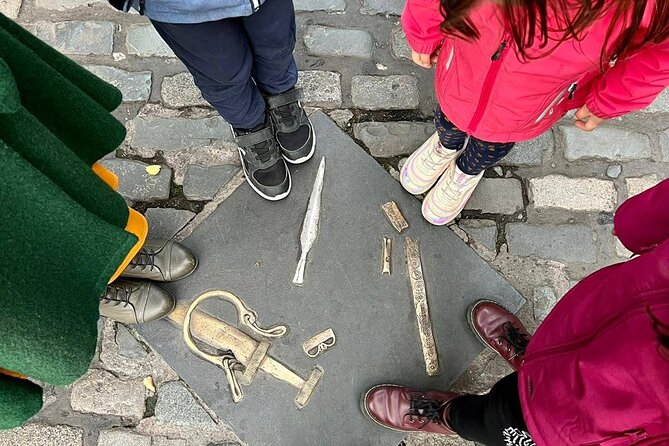
- Archaeology at Dublin City Council: Begin at one of the city’s largest archaeological sites and see artifacts linked to Dublin’s earliest settlers.
- A surviving slice of city wall: At Wood Quay Amphitheatre, you’ll see part of medieval Dublin’s oldest defenses.
- Two optional paid interiors: Christ Church Cathedral and Dublin Castle are part of the route, but their admission charges are extra.
- Junona Wild leads the walk: She guides in English and has also worked with bilingual families in English and Russian.
- A private group of up to five: You can ask questions freely and keep the experience focused on your group.
- Free cancellation up to 24 hours ahead: Poor weather may also lead to a new date or a full refund.
A street-level introduction to medieval Dublin
This is not a bus tour that leaves you with a vague sense that Dublin is old. You walk from archaeological evidence to surviving masonry, then on to churches and government buildings that mark major changes in the city’s story.
The route gives you five stops of about 30 minutes each. That rhythm is useful. You get enough time for explanation and questions without spending the entire afternoon inside one attraction.
Guide Junona Wild is a key part of the experience. The tour is offered in English, and she has also guided a family with English and Russian speakers, including children and an older adult. That detail matters if your group has mixed ages or language needs. The private format also lets the guide adjust explanations for a ten-year-old, an older relative, or someone already familiar with Irish history.
The tour begins and ends at Dublin City Council’s Civic Offices on Wood Quay, Dublin 8. It runs on Mondays from noon to 3:30 p.m. within the stated operating period, so you should check the available date before building the rest of your day around it.
More Dublin walking tours:
- Dublin Highlights and Hidden Gems Guided Walking Tour
★ 5.0 · 6,020 reviews - Dublin: Highlights and Hidden Gems Walking Tour
★ 4.9 · 2,140 reviews - 1916 Rebellion Walking Tour
★ 5.0 · 1,605 reviews
Wood Quay and the archaeology beneath modern Dublin

The opening stop at Dublin City Council sets up the whole walk. This area contains one of the city’s biggest archaeological sites, and you’ll see artifacts connected with the people who founded and shaped early Dublin.
That is a strong place to begin because archaeology asks you to picture a city that is no longer visible at street level. You are not simply looking at a handsome old building. You are learning how evidence from the ground can reveal the city’s early residents and its changing role.
The stop lasts about 30 minutes and has no admission charge. You can expect the guide to explain what was found and why it matters, rather than leaving you to decode a display on your own.
This part should appeal to anyone who likes history with something tangible behind it. If you prefer grand interiors and dramatic architecture, the first stop may feel quieter. Its value lies in context. Once you understand the early settlement, the later walls, churches, and castle make better sense.
Wood Quay Amphitheatre and the old city wall
At Wood Quay Amphitheatre, the focus shifts from objects to stone. You’ll see a section of the oldest medieval walls in Dublin, one of those fragments that can be easy to miss when you are moving through a modern city.
A surviving wall segment does not look like a complete fortress. That is precisely why a guide helps. Junona can point out what remains and explain how it fitted into the medieval town. You begin to see Dublin as a defended settlement, not only as a collection of later Georgian streets and busy public spaces.
This stop is free and takes about 30 minutes. It is also a good reminder to keep your expectations realistic. You are not visiting a complete medieval quarter. You are following scattered remains, with the guide tying them together.
I like this kind of stop because it rewards close attention. The stone itself may be modest, but its location gives you a physical link to the city’s earliest defenses. Ask questions here if you want to understand how the wall relates to the settlement and the people who lived inside it.
Christ Church Cathedral and the growth of Christianity
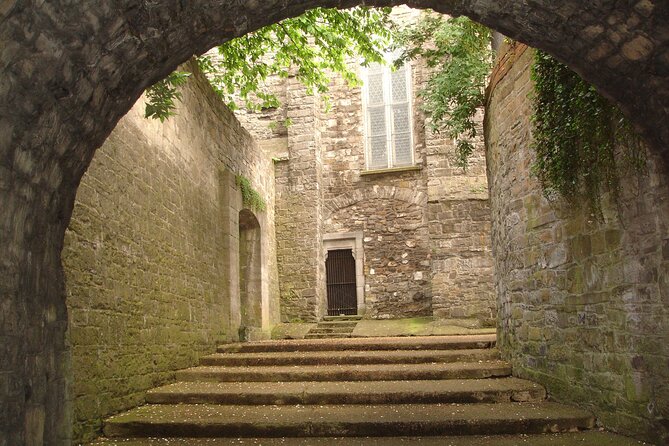
The walk then reaches Christ Church Cathedral, where the subject broadens from walls and settlement to religion and architecture. You’ll explore the cathedral grounds, look at its design, and hear about the history of Christianity in Ireland.
The grounds are included in the walking experience, but entering the cathedral itself is optional and requires a separate ticket. Admission is listed as €10 for adults, €8.50 for seniors and students, and €3.50 for children.
That extra choice is useful. If your group wants a focused walk and is watching its spending, you can stay with the exterior and the guide’s explanation. If the cathedral interior is a priority, plan for the added fee and allow enough time for the visit.
This is one place where the guide’s role can make a big difference. Architecture can tell you something about power, worship, and changing traditions, but only if someone helps connect the building to the wider story. The tour gives you that framework without forcing every person in your group to buy an admission ticket.
Families may appreciate the short stop length. Thirty minutes is enough for a clear introduction, though an especially keen architecture fan may want more time inside. If you want a full cathedral visit, think of this tour as an introduction rather than a substitute for a separate, longer exploration.
A completely different kind of day out of Dublin:
- Dublin to Cliffs of Moher, including Wild Atlantic Way and Galway
★ 5.0 · 23,331 reviews - From Dublin: Cliffs of Moher, Burren & Galway City Day Tour
★ 4.8 · 18,888 reviews - Dublin: Guinness Storehouse Entry Ticket
★ 4.6 · 16,863 reviews - Dublin to Cliffs of Moher, Burren, Wild Atlantic Way, Galway Tour
★ 5.0 · 12,924 reviews
Dublin Castle and the Anglo-Norman story
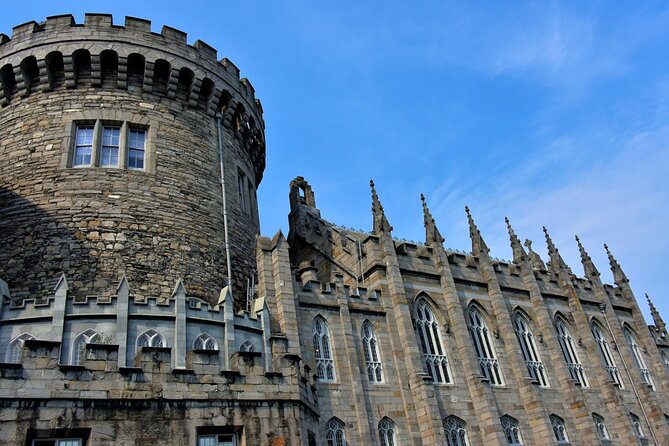
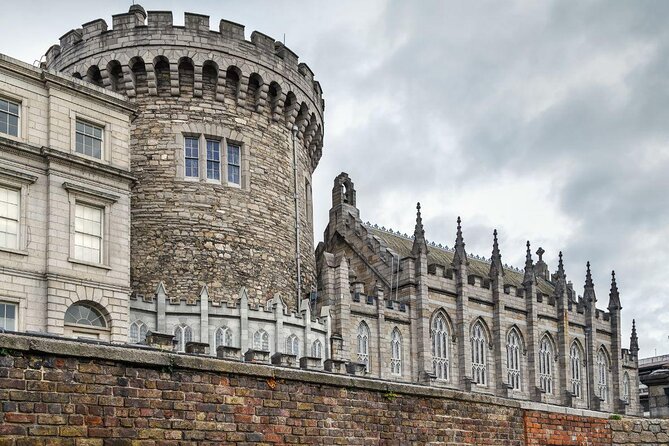
Dublin Castle adds another layer to the city’s political past. Here you’ll see remains of an older medieval building, discuss the Anglo-Norman intervention, and visit the castle gardens.
The word castle can set up the wrong expectation. This stop is about surviving remains, historical change, and the grounds, not a perfectly preserved fortress from one single period. The guide helps you read the site as a place altered by different powers and uses.
Castle admission is not included. The listed prices are €8 for adults, €6 for seniors and students, and €4 for children. That gives you a clear choice: stay with the walking tour and its exterior discussion, or pay extra for the interior experience.
I find this arrangement practical for mixed groups. One person may want to examine every room, while another may care more about the city wall or cathedral. Since the route already covers the castle area, you can make that decision based on your group’s interests and budget.
The gardens also provide a change of pace after the denser history of archaeology and defenses. You get an open area where the guide can explain the site without keeping you pressed against a wall or doorway.
St. Audoen’s Church and difficult medieval lives
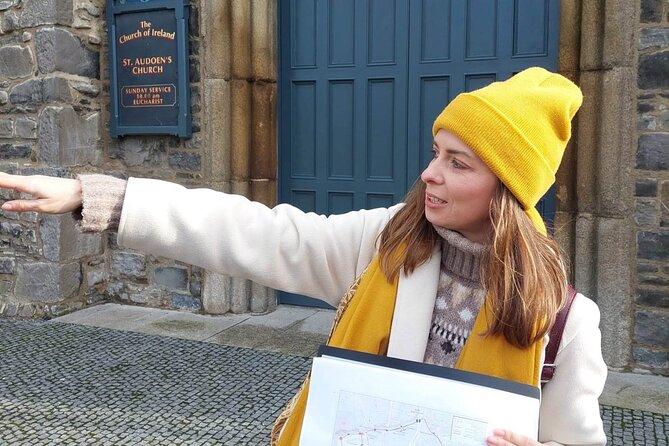
The final stop is St. Audoen’s Church, where the tour takes a darker turn. You’ll see a surviving section of the city walls and hear about conflict between Catholics and Protestants, witchcraft, and punishment in medieval Dublin.
This is useful because it moves beyond kings, buildings, and military control. A city’s past also includes religious tension, fear, law, and punishment. These subjects can be uncomfortable, but they give you a more honest sense of how people lived under medieval authority.
The church stop is free and lasts about 30 minutes. It provides a fitting end because it brings together several themes from the walk: religion, defense, political power, and ordinary people caught in larger struggles.
I would pay close attention here if you want the tour’s strongest sense of human drama. The earlier stops establish the city’s physical shape. St. Audoen’s helps explain what that structure meant for the people inside it.
How the private format changes the experience
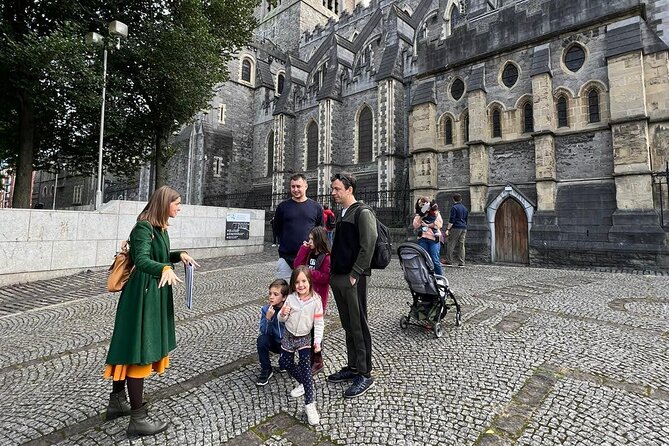
A private tour for up to five people is not the same as joining a large group and listening from the back. You can stop to ask about a wall fragment, request a simpler explanation for a child, or spend less time on a subject your group already knows.
The small size also suits families. Junona has experience keeping both children and older adults involved, and one bilingual family found that she could guide in English and Russian. The experience is offered in English, so you should confirm any language needs when booking rather than assume another language is guaranteed.
The private setup is especially useful for a group with different interests. One person may want architecture, another may want Viking-era settlement, and another may be more interested in religious conflict. A guide can respond to those questions in a way a fixed large-group script cannot.
You should still expect a walking tour, not a fully customized private car service. The stops are set, the tour lasts about two and a half hours, and the route ends back at the meeting point. Wear sensible shoes and be ready to spend the time outdoors between stops.
Is $193.09 good value for your group?
The price is $193.09 per group of up to five, not per person. For five people, that works out to about $38.62 each before any optional admission tickets. For two people, the cost is about $96.55 per person, so the value changes sharply with group size.
I see the best value for a family or a small party that wants personal attention. You are paying for a dedicated guide, a clear route through several important medieval sites, and the ability to ask questions throughout. A souvenir postcard is also included, though the guide service is the main reason to book.
The two optional entrance fees are worth adding to your budget if you want to enter Christ Church Cathedral and Dublin Castle. For one adult visiting both, the listed total is €18. You can also skip one or both interiors and still follow the historical route.
Coffee and tea are not included. There is a halfway pause where you can use the toilet and buy a drink, so bring a little extra money and treat the stop as a useful break rather than part of the tour price.
Who will get the most from this walk?
I would recommend this tour to you if you want a clear introduction to Dublin’s medieval past and prefer asking questions to reading labels on your own. It suits couples, families, and small groups who want a guide focused only on them.
It is also a good match for groups with mixed ages. The stops are short, and Junona’s experience with both a ten-year-old and an 87-year-old suggests she can keep explanations flexible. The private setting gives your group room to set a comfortable pace.
History fans who want Viking settlement, medieval walls, Christianity, Anglo-Norman rule, and religious conflict in one outing will find the range useful. You get several connected subjects without committing to a full day.
I would be more cautious if you want long interior visits, a museum-heavy experience, or a completely open-ended route. Christ Church and Dublin Castle admission are extra, and the tour’s strength is the connection between sites rather than extended time inside each one.
Practical details before you book
The meeting point is Dublin City Council’s Civic Offices at Wood Quay, Dublin 8. The tour returns there, which makes planning simpler if you want to continue from the same central area afterward.
Confirmation is sent within 48 hours of booking, subject to availability. The tour is near public transportation, service animals are allowed, and most people can participate.
The stated schedule is Monday from noon to 3:30 p.m. Check the date carefully, since the available operating period runs from June 19, 2022, through December 8, 2026. The schedule shown is narrow, so do not assume the walk runs every day.
You can cancel for a full refund up to 24 hours before the start time. Changes or cancellations inside that window are not accepted and are not refunded. The experience requires good weather, and if poor weather causes cancellation, you’ll be offered another date or a full refund.
Should you book the Medieval Dublin Walking Private Guided Tour?
Book it if you want medieval Dublin explained through real remains, not just presented as a string of dates. The strongest reasons are the private group size, Junona Wild’s personal approach, and the route’s useful mix of archaeology, walls, church history, castle politics, and social conflict.
For the best value, bring three to five people and decide in advance if you want to pay for Christ Church Cathedral, Dublin Castle, or both. If you do that, this becomes a focused half-day introduction to old Dublin with enough flexibility to work for children, older relatives, and mixed interests.
Skip it if you want a low-cost walk with no extra admission charges or a long, detailed visit inside each building. For a small group seeking a clear, human explanation of Dublin’s medieval core, it is a sensible choice.
FAQ
How long does the Medieval Dublin Walking Private Guided Tour last?
The tour lasts approximately two hours and 30 minutes. Each of the five listed stops is planned for about 30 minutes.
Where does the tour begin and end?
It begins at Dublin City Council Civic Offices, Wood Quay, Dublin 8, Ireland. The activity ends back at the same meeting point.
Is this a private tour?
Yes. Only your group participates, with a maximum group size of five people.
Are Christ Church Cathedral and Dublin Castle admission tickets included?
No. The walking tour includes the cathedral grounds and the castle area, but entrance tickets are extra. Christ Church admission is listed as €10 for adults, €8.50 for seniors and students, and €3.50 for children. Dublin Castle admission is listed as €8 for adults, €6 for seniors and students, and €4 for children.
Is the tour offered in English?
Yes, English is the stated tour language. Guide Junona Wild has also guided bilingual families in English and Russian.
Can I cancel the tour for a refund?
You can cancel up to 24 hours before the experience start time for a full refund. If poor weather causes the tour to be canceled, you’ll be offered another date or a full refund.
Just added around Dublin
- Wicklow: Private Day Tour from Dublin★ 5.0 · 5 reviews
- Wicklow Mountains Private Day Tour including Glendalough★ 5.0 · 7 reviews
- Wicklow tour of Glendalough★ 4.5 · 8 reviews
- Women Of Ireland: Trailblazers & Pioneers★ 5.0 · 4 reviews
- Wicklow Mountains & Glendalough Luxury Private Day Tour★ 5.0 · 23 reviews
- Dublin To Kilkenny Castle Waterford Crystal Private Car – Day Tour★ 5.0 · 8 reviews
- Waterford Crystal and Kilkenny Full-Day Rail Tour from Dublin★ 5.0 · 3 reviews
- Full Day Private Wicklow Tour★ 5.0 · 12 reviews
Dublin City Walking Tours, compared.
Dublin Highlights and Hidden Gems Guided Walking Tour
Read our review →

90 Minute Dublin Walking tour and Sightseeing tips
Read our review →

Historical 2-Hour Guided Walking Tour of Dublin
Read our review →
Dublin Traditional Irish 3 Course Meal Walking Tour with Local
Read our review →
Browse the lists this tour appears in