
Reviewed · DUBLIN CITY WALKING TOURS
Dublin Walking Tour: Top 10 highlights
Dublin’s best-known sights sit close together, and this two-hour walking tour links them in one brisk route from the Spire to Trinity College. You’ll see the GPO, Ha’penny Bridge, Temple Bar, Dublin Castle, both major cathedrals, the Liffey, and more, with a guide explaining what each place means.
I like the efficient route and the focus on stories rather than simply pointing at buildings. I also like that guides such as Matthew have taken time with questions and added facts about both old and modern Dublin. The main drawback is pace: two hours is short for ten major sights, and you’ll learn about the interiors from outside rather than going in.
Key points to know before booking

- The Spire is the starting marker: Meet at its base on the GPO side, a clear spot in central Dublin.
- You cover a lot in two hours: The walk connects O’Connell Street, the Liffey, Temple Bar, Dublin Castle, the cathedrals, and Trinity College.
- All explanations are outdoors: The tour does not include entry to Christchurch Cathedral, Saint Patrick’s Cathedral, Dublin Castle, the GPO Museum, or Trinity College.
- French is the listed tour language: Confirm the language and starting time when you reserve.
- The guide is a major part of the experience: Matthew is named in the tour information, and the feedback describes a guide who handled questions well and used humor.
- The price is $54 per person: That can be fair for a private-feeling, story-led orientation, but less so if you want interior visits or a slow architectural tour.
Why this route works for a first look at Dublin
Dublin rewards walking. The city center is compact, and many of its main sights sit within an easy stretch of streets, bridges, and public squares. This tour uses that advantage well, giving you a quick introduction before you decide which places deserve more of your time.
You begin at the Spire, cross toward the GPO and O’Connell Street, follow the Liffey and its bridges, then move south through Temple Bar toward the cathedrals and Dublin Castle. Trinity College comes near the end, giving the walk a strong finish among one of the city’s most recognizable institutions.
The route is less about entering attractions and more about placing Dublin’s story on a map. You’ll hear how civic buildings, religious sites, riverside crossings, literary associations, and political landmarks fit together.
That approach is useful on your first day. You can note the places that catch your attention, then return later with a clearer idea of where to spend admission money.
More Dublin walking tours:
- Dublin Highlights and Hidden Gems Guided Walking Tour
★ 5.0 · 6,020 reviews - Dublin: Highlights and Hidden Gems Walking Tour
★ 4.9 · 2,140 reviews - 1916 Rebellion Walking Tour
★ 5.0 · 1,605 reviews
Starting beneath the Spire and at the GPO
The meeting point is at the foot of the Spire, on the GPO side. This tall stainless-steel monument is difficult to miss, which matters in a busy city center where small street corners can be confusing.
From there, the tour turns toward the General Post Office, one of Dublin’s most important public buildings. You’ll receive information about the GPO and its role in the city, but the walk does not include entry to the GPO Museum.
That distinction is important. If you want museum exhibits and a closer look inside, you’ll need to return separately. On this tour, the value comes from understanding why the building matters and how it connects to Dublin’s political story.
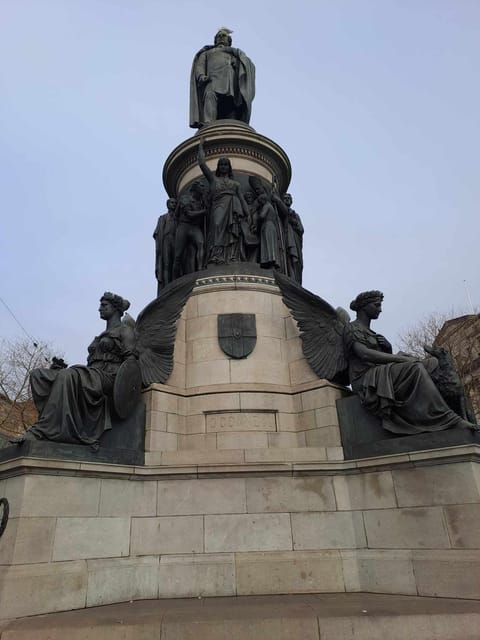
O’Connell Street gives the opening section a broad urban setting. It is a major north-south route, and the guide uses it to explain the buildings, memorials, and public life around the street.
You should expect to stop often for commentary, but not for extended viewing. Keep your shoes comfortable and be ready to walk at a steady pace.
Crossing the Liffey by Ha’penny Bridge
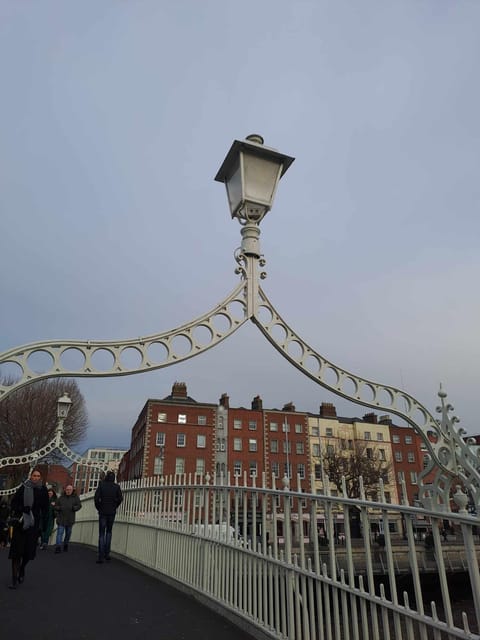
The walk continues toward the River Liffey and Ha’penny Bridge. This is one of Dublin’s most familiar crossings and an easy place to understand how the river divides and joins the city center.
The bridge also gives you a useful change of view. Instead of seeing Dublin as a series of isolated buildings, you begin to notice the relationship between the north side, south side, riverfront, and lanes leading inland.
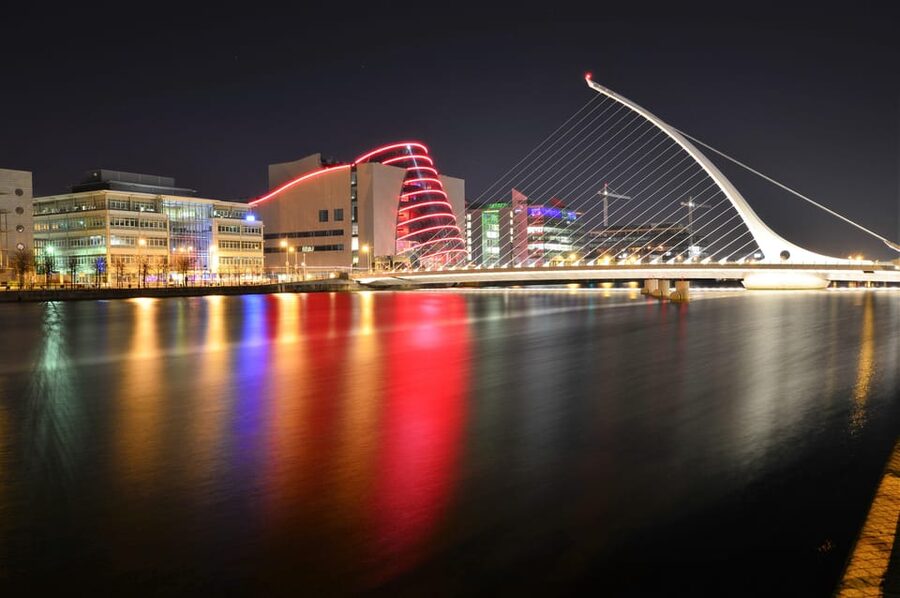
The tour includes information about the Liffey and its bridges. That sounds simple, but it helps you get your bearings quickly. If you plan to explore on your own afterward, knowing these crossings can save time.
This section may be crowded, especially around a well-known crossing and the Temple Bar area. Your guide’s explanations will happen outdoors, so stay close enough to hear and expect some background noise.
Temple Bar without making it the whole story
Temple Bar is often presented as Dublin’s entertainment district, but this walk treats it as one part of a larger city story. You’ll pass through the area and hear about its character, history, and place in modern Dublin.
That balance is useful. Temple Bar is easy to visit on your own, but it can also dominate a first-time visitor’s idea of the city. This tour places it alongside cathedrals, government buildings, bridges, and colleges.
Do not expect a long pub stop or a food tasting. The supplied details describe a guided walk, not a nightlife tour. You’ll get orientation and explanation, then continue to the next landmark.
The area can be lively, and the short schedule means you may not have much time to browse. If you want photographs, take them quickly or return later when you are not trying to keep up with the group.
A completely different kind of day out of Dublin:
- Dublin to Cliffs of Moher, including Wild Atlantic Way and Galway
★ 5.0 · 23,331 reviews - From Dublin: Cliffs of Moher, Burren & Galway City Day Tour
★ 4.8 · 18,888 reviews - Dublin: Guinness Storehouse Entry Ticket
★ 4.6 · 16,863 reviews - Dublin to Cliffs of Moher, Burren, Wild Atlantic Way, Galway Tour
★ 5.0 · 12,924 reviews
Christchurch Cathedral and medieval Dublin
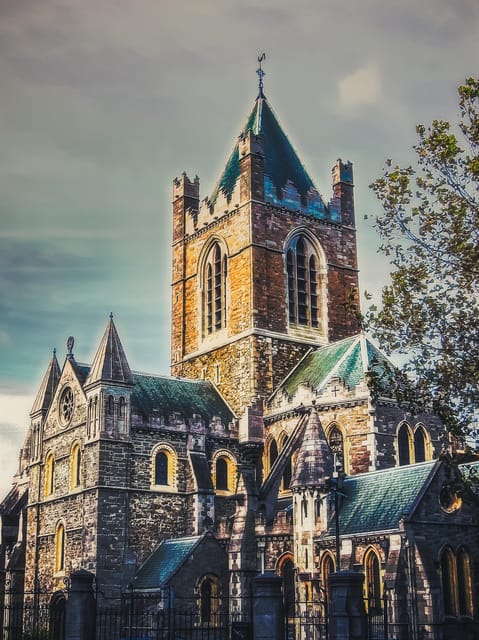
Christchurch Cathedral brings the tour into Dublin’s medieval center. The guide explains the cathedral from outside, along with the surrounding part of the city and its development over time.
You will not enter the cathedral on this activity. That keeps the tour moving, but it also means you miss the interior details that make a cathedral visit especially rewarding.
The stop still has value because it links architecture with the older shape of Dublin. You can hear the explanation, look closely at the exterior, and decide if an interior visit belongs on your own schedule.
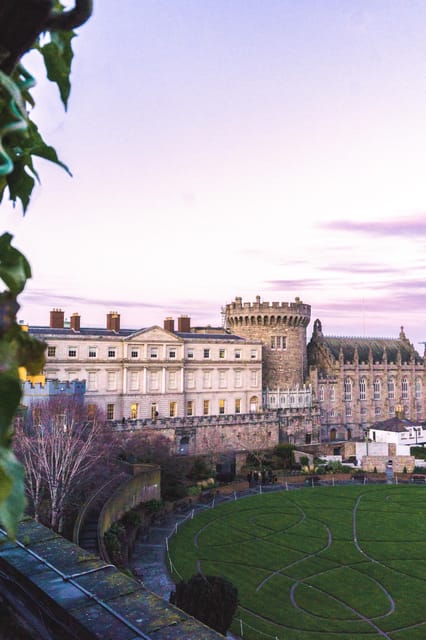
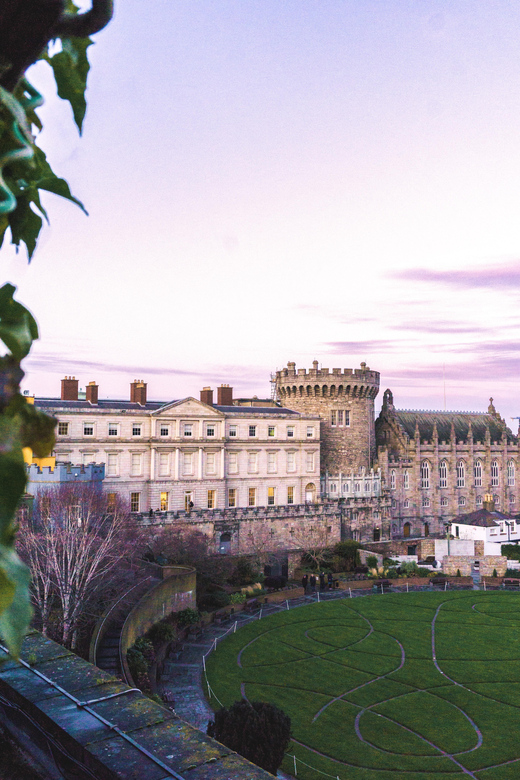
The route also covers Dublin Castle and medieval Dublin. The castle area helps connect the city’s religious, civic, and political centers, giving you a broader sense of how Dublin developed.
Again, think of this as an introduction rather than a complete castle visit. There is no admission included, and the guide’s information is delivered outside.
Dublin Castle and Saint Patrick’s Cathedral from the street
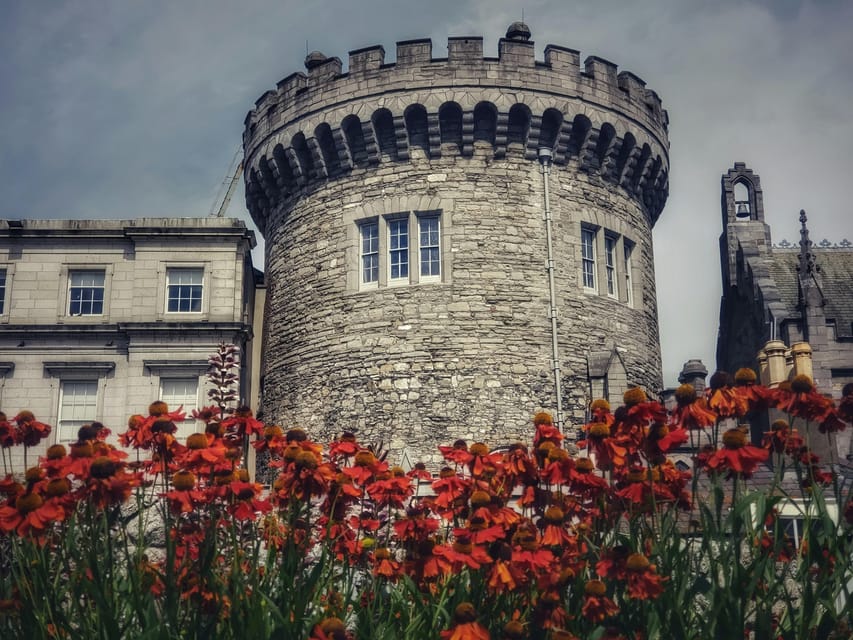
Dublin Castle is another major stop where the guide explains the site and its importance without taking you inside. For many visitors, that is enough to understand where the castle fits into the city before choosing a longer visit.
Saint Patrick’s Cathedral follows as another major landmark. Its exterior gives you a strong sense of scale and setting, while the guide adds context about its place in Dublin’s religious and civic story.
Seeing both cathedrals in one walk is one of the route’s strongest features. You can compare their settings and architectural presence without spending half a day moving between them.
The tradeoff is time. You will not have a quiet interior pause, and there may be more information than you can absorb at once. I suggest writing down the names of the places you want to revisit instead of trying to remember every date.
Trinity College as the final major sight

Trinity College is listed as the final major stop and the finish point of the route. It gives the walk a natural ending, since you have crossed much of central Dublin and arrived at one of the city’s best-known academic landmarks.
The guide provides information from outside. Entry to the college is not part of the activity, so you should plan a separate visit if you want to explore the grounds or see its interior attractions.
Finishing at Trinity is practical. The college sits near central shopping streets and other sights, so you can continue exploring after the tour. The route information also says the activity ends back at the meeting point, while the stop-by-stop route identifies Trinity College as the finish. Confirm the exact end point when booking.
The final section may feel compact after so many earlier stops. That is the nature of the tour: it gives you a citywide introduction rather than a long visit at one location.
What the guides add to the walk
The guide is the difference between this being a useful city orientation and a simple list of photo stops. The tour is offered in French, and the activity information identifies Matthew among the guides connected with it.
One account of Matthew describes a guide who answered many questions, took time with the group, and used humor. Another describes a Belgian guide who supplied facts and dates about both historical and modern Dublin. Those details suggest a style that combines explanation with conversation rather than delivering only a memorized speech.
You should still confirm the language before booking, especially if you need a French tour. The listed language is French, and no other language is specified.
Since the walk includes many landmarks in only two hours, feel free to ask focused questions. A guide can give more useful answers when you ask about a building, street, or event that interests you instead of trying to cover every possible topic.
Is $54 a fair price for two hours?
At $54 per person, this is not the cheapest way to walk around Dublin. You can see many of these exteriors independently for nothing, especially if you already know the city center.
The price makes more sense if you want a guide to connect the sights and explain why they matter. You are paying for a planned route, live commentary, and the convenience of seeing many central landmarks without working out the sequence yourself.
It makes less sense if you expect admission to several attractions. The GPO Museum, Christchurch Cathedral, Saint Patrick’s Cathedral, Dublin Castle, and Trinity College are discussed from outside, not visited inside.
I would compare the cost with your schedule. If you have only a short stay, the walk can save you from spending your first afternoon wandering without a plan. If you have several days and enjoy researching places on your own, you may prefer to choose one or two paid interiors and explore the streets independently.
Free cancellation up to 24 hours before the activity and the reserve-now, pay-later option make the booking less rigid. The price remains the main consideration, so book it for the guide and the context, not for entry tickets.
Who will get the most from this Dublin walk?
This tour suits first-time visitors who want a fast introduction to central Dublin. You’ll see the major landmarks, learn how they relate to one another, and finish with a better sense of where to return.
It also suits anyone who prefers a guide’s explanation to reading plaques. The comments about Matthew and the Belgian guide point to a tour where questions, dates, and humor are part of the experience.
The walk may work well for French-speaking visitors because French is the listed language. It is also marked wheelchair accessible, though you should still confirm the precise route and meeting arrangements for your needs.
I would be more cautious if you want a slow photography walk, lengthy stops, or interior access. Ten highlights in two hours requires concentration and steady movement.
Wear comfortable shoes and dress for the weather. Dublin’s conditions can change, and all commentary takes place outside, so a waterproof layer can matter more than a polished outfit.
Should you book this tour?
Book it if you want a well-packed introduction to Dublin’s center, especially early in your stay. The route covers an impressive range of places, from the GPO and the Liffey to the cathedrals, castle, Temple Bar, and Trinity College.
I would also book it if you enjoy asking questions and want a guide who can add facts about both old and modern Dublin. The positive descriptions of Matthew’s patience and humor are a useful sign of the experience’s strongest feature: the human explanation between the landmarks.
Skip it if your priority is entering buildings or spending long periods at one site. At $54, the tour earns its price through context and convenience, not admission tickets.
FAQ
Where does the Dublin walking tour start?
The tour starts at the foot of the Spire, on the GPO side.
Where does the tour finish?
The route lists Trinity College as the finish. The activity information also says it ends back at the meeting point, so confirm the exact end location when booking.
How long does the tour last?
The guided walking tour lasts two hours.
What language is the tour offered in?
The listed tour language is French.
Does the tour include entry to the buildings?
No. The guide provides information from outside the buildings, and the tour does not include interior visits.
Is the walking tour wheelchair accessible?
Yes, the activity is listed as wheelchair accessible.
Just added around Dublin
- Wicklow: Private Day Tour from Dublin★ 5.0 · 5 reviews
- Wicklow Mountains Private Day Tour including Glendalough★ 5.0 · 7 reviews
- Wicklow Mountains & Glendalough Luxury Private Day Tour★ 5.0 · 23 reviews
- Wicklow tour of Glendalough★ 4.5 · 8 reviews
- Women Of Ireland: Trailblazers & Pioneers★ 5.0 · 4 reviews
- Waterford Crystal and Kilkenny Full-Day Rail Tour from Dublin★ 5.0 · 3 reviews
- Full Day Private Wicklow Tour★ 5.0 · 12 reviews
- Dublin To Kilkenny Castle Waterford Crystal Private Car – Day Tour★ 5.0 · 8 reviews
Dublin City Walking Tours, compared.
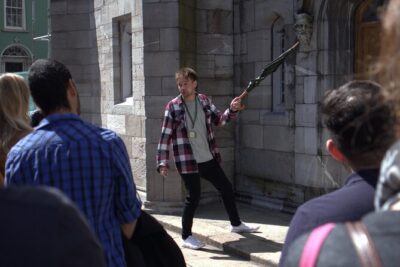
Dublin Highlights and Hidden Gems Guided Walking Tour
Read our review →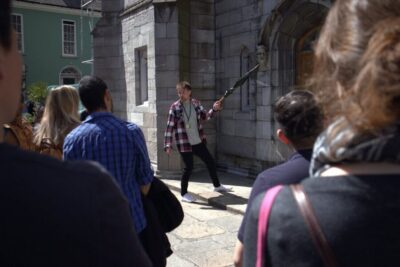
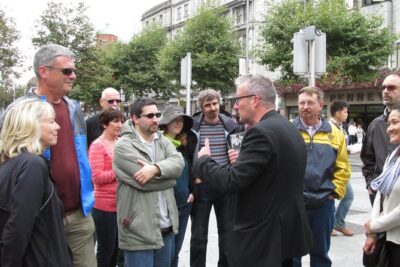
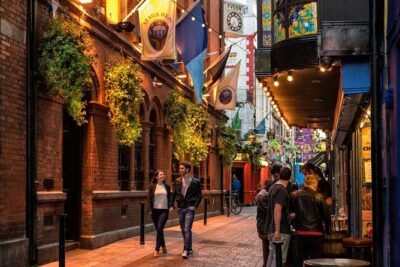
90 Minute Dublin Walking tour and Sightseeing tips
Read our review →

Historical 2-Hour Guided Walking Tour of Dublin
Read our review →
Dublin Traditional Irish 3 Course Meal Walking Tour with Local
Read our review →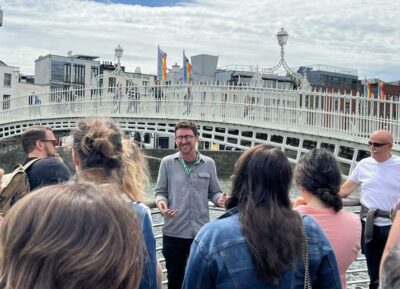
Browse the lists this tour appears in