
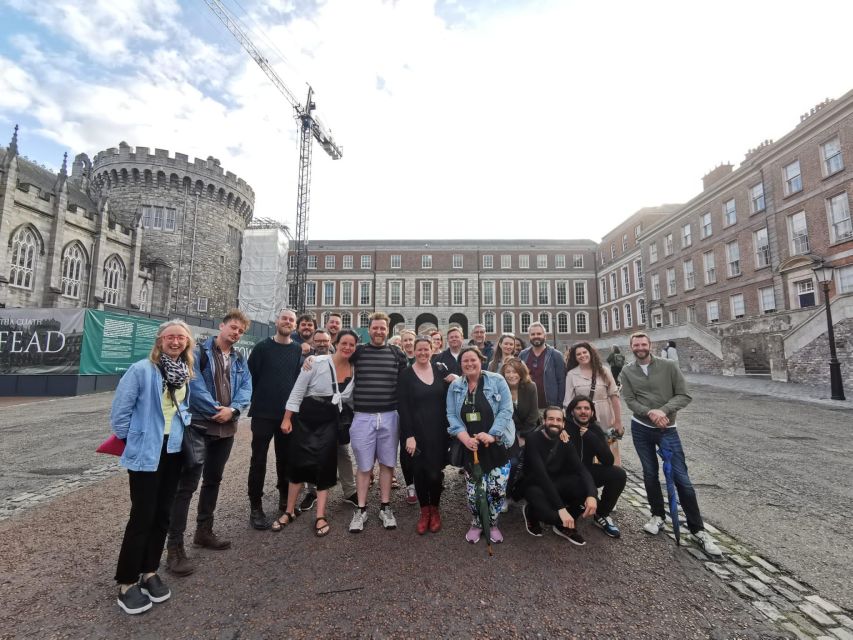
Reviewed · DUBLIN CASTLE AND HISTORIC CITY TOURS
Dublin: LGBT Pride Walking Tour with Queer History
Dublin’s queer history comes alive through the people and places tied to Ireland’s long fight for equality. This two-hour walk links revolutionaries, pride pioneers, civil rights campaigners, and gender identity advocates with landmarks such as Liberty Hall, Trinity College, and the General Post Office.
I like the way the tour connects national history with individual lives, including Panti Bliss and Dr Lydia Foy. I also like the personal touch brought by guides such as Helena, whose humor, warmth, and willingness to answer questions help keep serious material approachable. The main drawback is that two hours can only sketch a large and sometimes painful subject, so you should expect a focused introduction rather than a full history course.
Key points
- Liberty Hall and the first pride protest: Learn how an early public act of LGBTQ+ protest fits into Dublin’s political story.
- Panti Bliss and Dr Lydia Foy: Hear about two important figures who helped bring queer rights and gender recognition into public discussion.
- Landmarks with a different meaning: Pass the General Post Office, Trinity College, the Hirschfield Centre, the Diceman’s Corner, and the George.
- A guide-led, conversational walk: Helena is praised for her wit, personal stories, energy, and thoughtful answers.
- A short route with serious subject matter: The two-hour format works well for a first look, but the material includes discrimination, abuse, and hard-won legal change.
- Simple, flexible planning: The tour costs $27 per person, returns to its starting point, and allows free cancellation up to 24 hours before departure.
Dublin’s queer story, told on the street
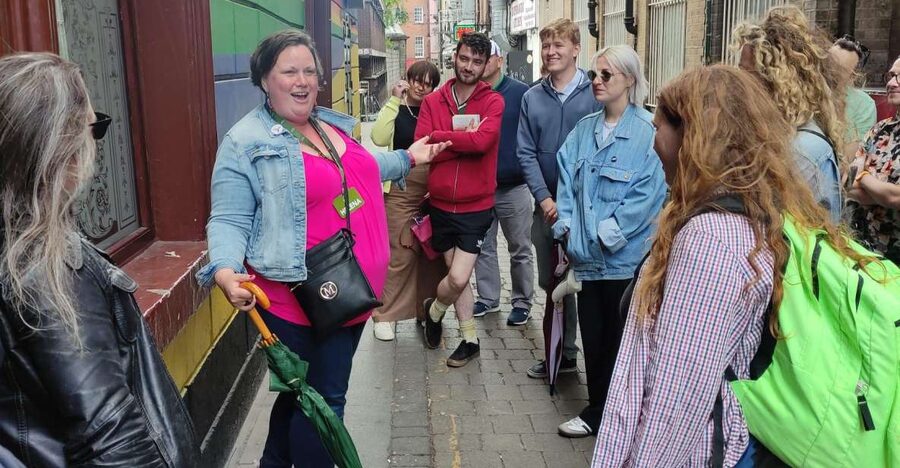
This is not a general sightseeing walk with a brief mention of LGBTQ+ history. The subject is the reason for the route, and the city becomes the setting for stories about exclusion, protest, public identity, and legal change.
You walk through central Dublin while your guide explains how Ireland moved from harsh discrimination and abuse toward marriage equality. That change did not happen in one grand moment. The tour shows it through people and campaigns, giving you a clearer sense of how social change can grow from personal courage, public protest, and organized pressure.
I find this approach especially useful if you already know Dublin’s famous landmarks. The General Post Office or Trinity College can feel familiar as standard sightseeing stops. Here, they help frame a different account of Irish history, one that many visitors would not meet on a conventional city tour.
The tone is not purely celebratory. You will hear about hardship as well as progress. That balance matters. Ireland’s movement toward equal rights is inspiring, but the route also makes clear that legal recognition came after long periods of silence, hostility, and exclusion.
More Dublin castle and history tours:
- Dublin Historical Centre Food Tour with 8 Food Tastings & Drinks
★ 5.0 · 1,718 reviews - Dublin: Fast-Track Book of Kells Ticket & Dublin Castle Tour
★ 4.5 · 1,661 reviews - 1916 Rebellion Walking Tour
★ 5.0 · 1,605 reviews
Meeting outside the Old Storehouse
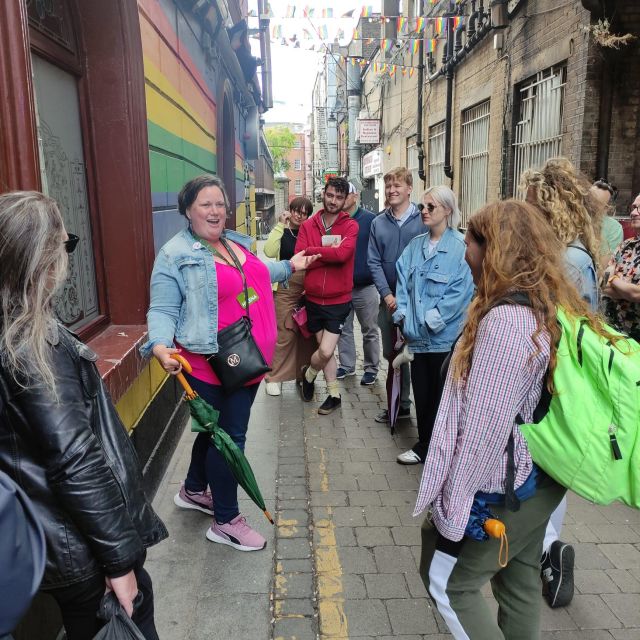
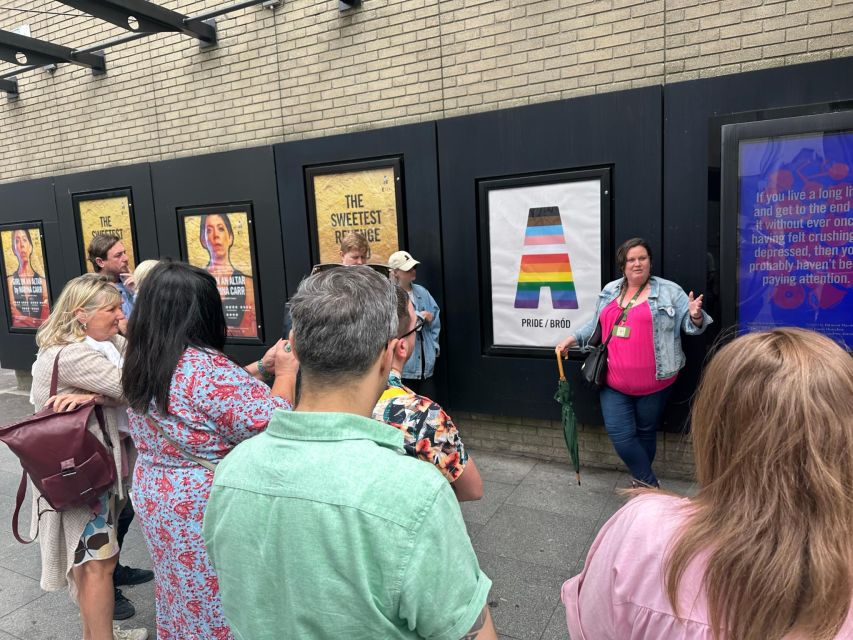
The tour begins directly outside the Old Storehouse Bar & Restaurant. Look for a guide carrying a green umbrella, a practical marker in a busy part of central Dublin.
You do not need to arrange transportation between stops. This is a walking experience from start to finish, and it ends back at the meeting point. Wear comfortable shoes, especially if you plan to add more sightseeing afterward.
The tour is conducted in English with a live guide. It is also wheelchair accessible, which makes it a useful choice for visitors who want a guided city experience without stairs or transport between locations. Since the route is outdoors, check the forecast before setting out and dress for Dublin’s changeable conditions.
Liberty Hall and the beginning of public protest
Liberty Hall is one of the most important points on the route. Here, you hear about the first pride protest and how LGBTQ+ people began making their demands visible in public.
That location gives the story a strong political setting. Pride is often treated as a colorful celebration, but this stop helps you understand its protest roots. Public visibility was itself a challenge to a society that had often pushed queer lives out of view.
Your guide places this event within the wider story of Irish political activism. The connection is useful because it shows that queer equality did not develop separately from Ireland’s other struggles for rights and recognition. The route presents LGBTQ+ campaigners as part of the country’s broader history of political action.
This is also where the tour’s personal delivery matters. Helena is praised for bringing energy and warmth to serious subjects, and that style can help keep the discussion from becoming dry or overly formal.
The General Post Office and Panti Bliss
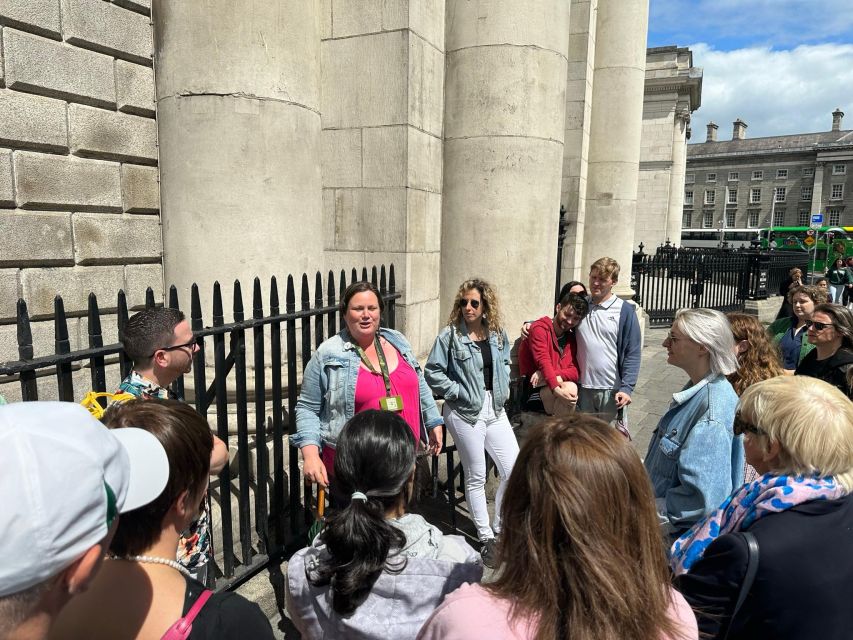
The General Post Office adds another layer to the walk. You hear about revolutionary queer figures such as Panti Bliss while standing beside one of Dublin’s best-known political landmarks.
The point is not simply that a famous LGBTQ+ personality is associated with Dublin. The story shows how queer identity, public speech, performance, and political debate can overlap. Panti Bliss became an important public voice in Ireland’s equality movement, and her story helps connect the personal with the national.
This stop should appeal to anyone interested in modern Irish culture as well as queer history. It is also one of the places where the guide’s storytelling style can make a difference. The material is political, but the tour is designed to be engaging and funny as well as educational.
I would not expect every detail of Panti Bliss’s career or activism in a two-hour walk. Instead, you get a focused account of why she matters and how public figures helped shift the national conversation.
More Dublin walking tours:
- Dublin Highlights and Hidden Gems Guided Walking Tour
★ 5.0 · 6,020 reviews - Dublin: Highlights and Hidden Gems Walking Tour
★ 4.9 · 2,140 reviews - 90 Minute Dublin Walking tour and Sightseeing tips
★ 5.0 · 916 reviews - 2-Hour Historical Walking Tour from Dublin
★ 5.0 · 875 reviews
Dr Lydia Foy and gender recognition
The tour also covers Dr Lydia Foy and the Gender Recognition Act. This section turns from pride and public protest toward legal recognition of gender identity.
Dr Foy’s story gives you a more specific view of the personal cost of restrictive laws. Rather than discussing legal change only in broad terms, the walk introduces a figure connected with the campaign for recognition and dignity.
This part may be especially valuable if you want to understand that LGBTQ+ equality includes more than marriage rights. Gender recognition raises questions about identity, paperwork, public institutions, and the right to live openly. The guide connects those issues with Ireland’s wider movement toward equal rights.
The subject can be difficult, but the tour’s format keeps it grounded in a person and a place. That is easier to follow than a long explanation of legislation without human context.
Trinity College and the Sexual Liberation Movement
At Trinity College, the conversation turns to the Sexual Liberation Movement. The university setting offers a useful contrast with Liberty Hall and the General Post Office.
Here, the emphasis is on changing attitudes and challenging older ideas about sexuality. You are not simply looking at a historic academic building. You are considering how students, activists, and public debate helped question rules that had governed private life.
The stop broadens the tour beyond a timeline of laws. It gives you a sense of the cultural forces behind legal reform. Campaigns for equality need public voices, but they also need changes in how ordinary people think and talk about identity and relationships.
If you enjoy tours that connect architecture with social movements, this will likely be one of the more interesting stops. The information stays tied to the place, giving Trinity College a meaning beyond its usual role in a standard Dublin itinerary.
The Hirschfield Centre and the community’s own spaces
The Hirschfield Centre is another important location on the walk. Its inclusion reminds you that queer history is not only about famous names or national legislation. It is also about community spaces where people could meet, organize, and find support.
The stop helps explain how movements grow. Public protests and legal campaigns matter, but people also need places where they can build trust and work together. A location such as the Hirschfield Centre gives that part of the story a physical anchor.
The tour’s route through these sites is one of its strongest features. Instead of presenting LGBTQ+ history as a series of abstract dates, it shows you how it is connected to Dublin’s streets and buildings. You leave with a better sense of the city as a place where community life and political change developed side by side.
The Diceman’s Corner and the George
The Diceman’s Corner and the George bring the tour closer to Dublin’s social and nightlife history. They help show how queer life has been expressed in public spaces, not only through demonstrations and court battles.
The George is described as Ireland’s most iconic LGBTQ+ venue. Passing it gives the tour a clear connection to the living community as well as to the past. A venue can be a place for social life, identity, celebration, and solidarity, all of which are important parts of the story.
The Diceman’s Corner adds another stop with a specific connection to Dublin’s queer past. Your guide explains why it matters rather than leaving you to guess from the name or appearance of the site.
These locations also break up the heavier political material. After hearing about discrimination and legal struggles, it is useful to encounter places associated with community, visibility, and everyday life.
What the guide adds to the experience
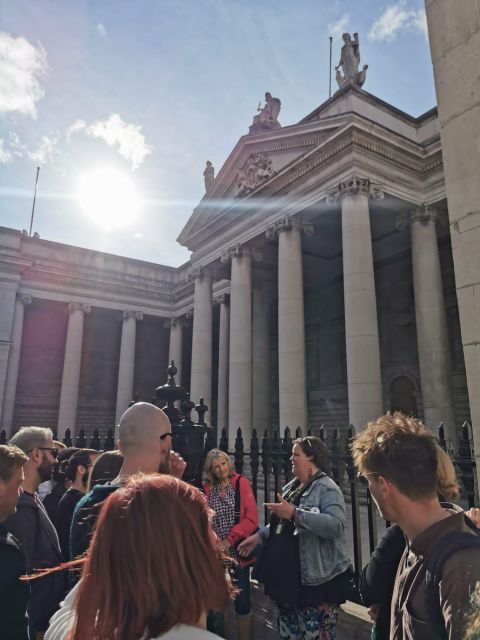
A walking tour like this depends heavily on the guide. Helena receives especially strong praise for being welcoming, witty, energetic, and sincere. Her personal anecdotes add warmth, while her answers to questions help make the walk feel like a conversation rather than a speech.
That matters because the subject covers several generations and different kinds of activism. You move from revolutionary figures to pride organizers, from public performers to gender recognition campaigners. A good guide has to keep those threads clear without turning the tour into a list of names.
Helena’s style appears suited to mixed groups. The tour has been enjoyed by adults and at least one teenager, and its blend of humor and serious content can work for people with different levels of background knowledge.
You should still feel free to ask questions. The guide is there to explain the places and people, not simply lead you from one point to another. If you have a particular interest in Irish politics, LGBTQ+ activism, or gender recognition, a conversational guide can make the two hours more useful.
Is two hours enough?
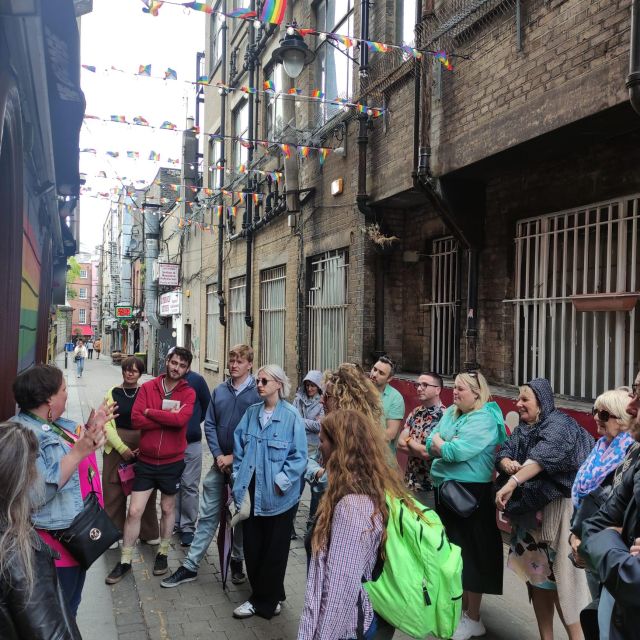
Two hours is a sensible length for a first introduction. It gives you enough time to visit several central locations without using an entire morning or afternoon.
The limit is clear, too. Ireland’s queer history includes many more people, groups, and events than this route can cover. The tour focuses on selected figures and places, so you should not expect a complete account of every campaign or legal milestone.
I see that as a strength for visitors with limited time. The tour gives you a framework that you can build on with further reading or visits to LGBTQ+ venues afterward. It also fits neatly into a day of Dublin sightseeing because the route begins and ends in the same area.
The emotional pace may vary. Some stories are uplifting, while others deal with abuse, exclusion, and the difficulty of gaining recognition. The guide’s humor helps, but this is not a light entertainment-only walk.
The $27 price and overall value
At $27 per person, the tour offers reasonable value if you want a focused subject rather than a basic introduction to Dublin’s general sights. You are paying for two hours with a live English-speaking guide, along with a route that brings together historical, political, and community locations.
The value is strongest for visitors who would otherwise miss this part of Dublin’s story. A general city walk may pass near the General Post Office, Trinity College, or the George without explaining their connection to queer life. Here, those places are selected for a reason.
The price is less compelling if you only want a quick orientation to Dublin or prefer to explore entirely on your own. You will cover a defined route and spend the full two hours on one subject. That focus is the point, but it will not suit everyone.
The reserve-now, pay-later option gives you some flexibility, and you can cancel for a full refund up to 24 hours before the tour. Those policies make it easier to fit the walk into a changing Dublin schedule.
Who should book this Dublin walking tour?
I would recommend it to anyone interested in LGBTQ+ history, Irish social change, civil rights, or modern Dublin culture. It is also a strong choice if you have visited Dublin before and want to see familiar streets from another angle.
The tour suits solo visitors, couples, families with older children, and anyone who prefers learning through stories rather than museums or long lectures. The warm, humorous approach described for Helena should make it approachable even if you do not have much prior knowledge of Irish queer history.
You should think twice if you want a completely general tour, a pub crawl, or an activity with no serious subject matter. The route includes difficult parts of Ireland’s past, and the limited two-hour format means some topics will receive only a brief treatment.
Should you book it?
Book this tour if you want a clear, human introduction to Dublin’s queer history and value a guide who can connect names, laws, landmarks, and personal stories. The combination of Liberty Hall, the General Post Office, Trinity College, the Hirschfield Centre, the Diceman’s Corner, and the George gives the walk a useful range.
I especially like that the route links past struggles with present-day equality rather than treating history as finished. At $27, it is a fair buy for a focused two-hour experience, particularly if Helena is leading your group and you enjoy an informative guide with humor and personal warmth.
FAQ
Where does the LGBT Pride Walking Tour begin?
Meet your guide directly outside the Old Storehouse Bar & Restaurant. Look for someone carrying a green umbrella.
Where does the tour end?
The tour ends back at the meeting point outside the Old Storehouse Bar & Restaurant.
How long does the walking tour last?
The tour lasts two hours. Starting times vary, so check availability when booking.
What language is the tour in?
The tour is conducted in English with a live guide.
How much does the tour cost?
The listed price is $27 per person.
Which Dublin landmarks are included?
The route includes Liberty Hall, the General Post Office, Trinity College, the Hirschfield Centre, the Diceman’s Corner, and the George, among other locations.
Which historical figures are discussed?
The tour includes stories about Panti Bliss, Dr Lydia Foy, and other important people in Ireland’s LGBTQ+ history.
Is the walking tour wheelchair accessible?
Yes, the activity is listed as wheelchair accessible.
What should I bring?
Bring comfortable shoes for the two-hour walk.
Just added around Dublin
- Wicklow: Private Day Tour from Dublin★ 5.0 · 5 reviews
- Wicklow Mountains Private Day Tour including Glendalough★ 5.0 · 7 reviews
- Wicklow Mountains & Glendalough Luxury Private Day Tour★ 5.0 · 23 reviews
- Wicklow tour of Glendalough★ 4.5 · 8 reviews
- Women Of Ireland: Trailblazers & Pioneers★ 5.0 · 4 reviews
- Dublin To Kilkenny Castle Waterford Crystal Private Car – Day Tour★ 5.0 · 8 reviews
- Waterford Crystal and Kilkenny Full-Day Rail Tour from Dublin★ 5.0 · 3 reviews
- Full Day Private Wicklow Tour★ 5.0 · 12 reviews
Dublin Castle and Historic City Tours, compared.

Dublin Historical Centre Food Tour with 8 Food Tastings & Drinks
Read our review →
Fast-Track Book of Kells Ticket & Dublin Castle Tour
Read our review →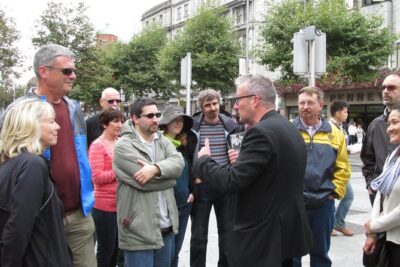
St Patrick’s Cathedral, Book of Kells and Dublin Castle Tour
Read our review →
Historical 2-Hour Guided Walking Tour of Dublin
Read our review →
Jeanie Johnston Tall Ship Irish Famine History Tour
Read our review →
Book of Kells, Dublin Castle and Christ Church Tour
Read our review →Browse the lists this tour appears in