
Reviewed · DUBLIN CITY WALKING TOURS
Dublin: Highlights and Hidden Gems Walking Tour
Dublin’s best introduction may be a walk that links its music, folklore, grand institutions, and everyday street life. This three-hour route begins at Claddagh Records, crosses the Ha’penny Bridge, passes through Temple Bar and College Green, and ends among the performers and shops of Grafton Street.
I like the way the tour mixes famous sights with small cultural details, especially the meaning of the Claddagh ring and the stories behind Dublin’s songs. I also like the clear route through central Dublin, which gives you a useful first look at several major areas without needing buses or taxis.
The main consideration is pace. Three hours on foot covers a lot of ground, and several stops are viewed from the street rather than explored inside. At $62 per person, the value depends on how much you want live commentary and local context alongside the landmarks.
Key points about this Dublin walking tour
- Irish music begins the route: Start at Claddagh Records and hear about the cultural meaning of the Claddagh ring.
- The Wall of Fame links Dublin to modern music: See tributes to performers including U2 and Sinéad O’Connor.
- Temple Bar brings the city’s old and new sides together: Expect lively streets, creative energy, and plenty of people.
- Trinity College provides a stately change of mood: Walk across College Green and hear about the area’s political and academic past.
- The route ends on Grafton Street: Street musicians, performers, and shopping make this a lively finish.
- You can choose the language and format: The tour is offered in English, Spanish, French, or Italian, with private groups available.
Starting at Claddagh Records on Wellington Quay
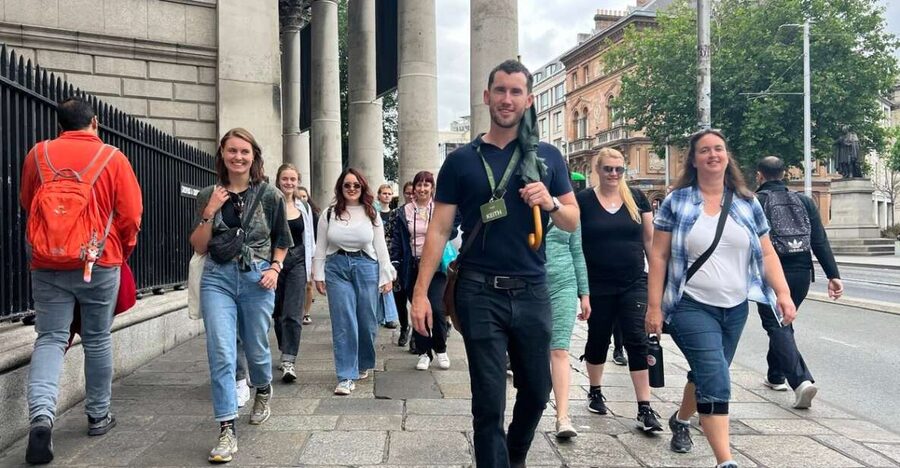
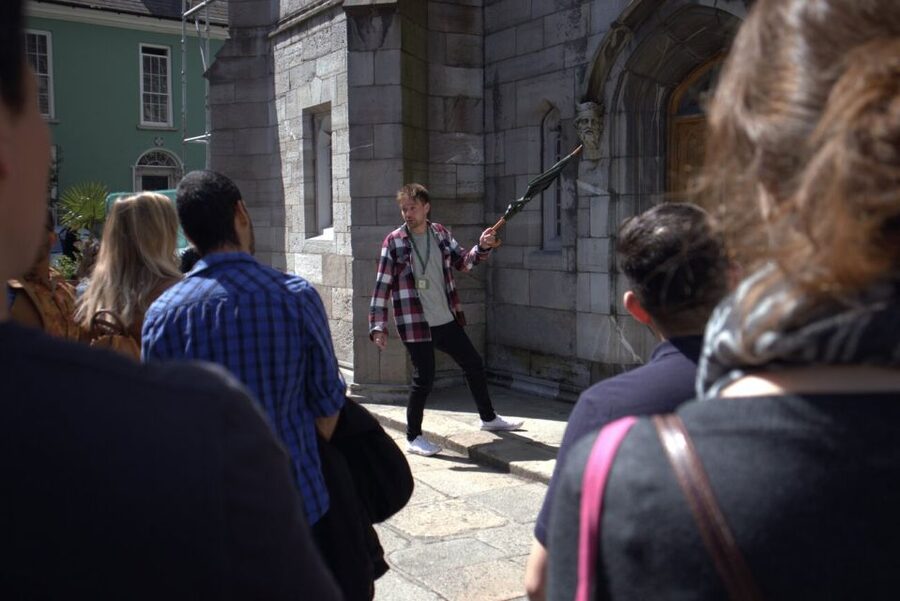
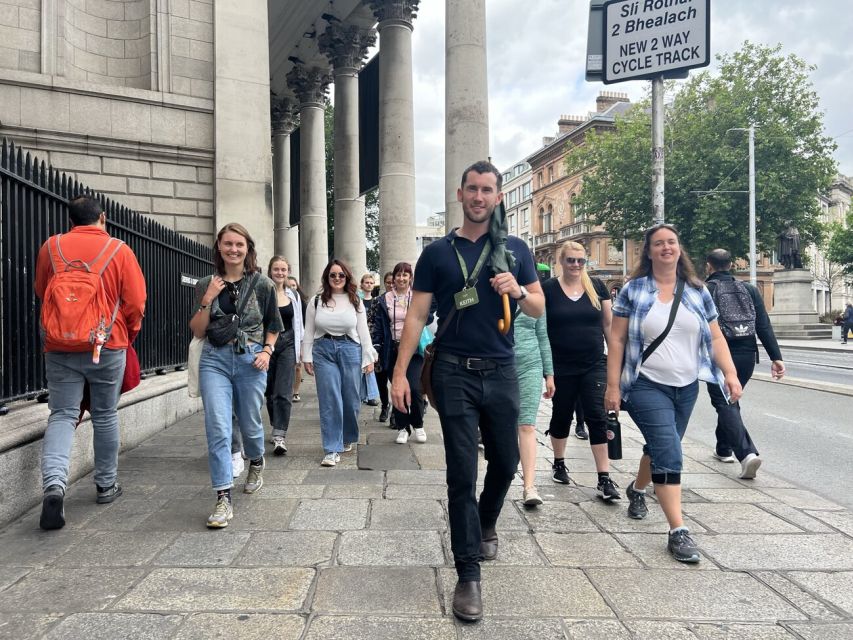
Meet your guide at 23 Wellington Quay, a central starting point that puts you close to the River Liffey and several of Dublin’s main sights. The tour starts at Claddagh Records, where Irish music provides the opening subject rather than a simple landmark photo.
That choice matters. Music is one of the easiest ways to understand Dublin’s character, and the stop gives the guide a natural way to explain the Claddagh ring. The ring is familiar around the world, but its meaning is tied to Irish identity, friendship, loyalty, and love. This early explanation adds some cultural background before the walk moves into busier streets.
The musical theme continues at the Wall of Fame. Here, you see tributes to Irish performers such as U2 and Sinéad O’Connor. It is a useful stop for anyone who connects Dublin with its musicians, and it gives the walk a modern edge.
The Wall of Fame is not a long museum visit. Think of it as an outdoor pause where your guide supplies the context and points out why these names matter. If you want a detailed account of every artist or a full music tour, this route may feel too broad. If you want a quick introduction as part of a larger city walk, it fits well.
One named guide connected with the experience is Catherine. A review specifically praises Catherine’s skill and passion for the history of Dublin and Ireland. You cannot always assume which guide will lead your departure, but the mention suggests that the experience benefits from a guide who can turn familiar streets into stories.
More Dublin walking tours:
- Dublin Highlights and Hidden Gems Guided Walking Tour
★ 5.0 · 6,020 reviews - Dublin: Highlights and Hidden Gems Walking Tour
★ 4.9 · 2,140 reviews - 1916 Rebellion Walking Tour
★ 5.0 · 1,605 reviews
Temple Bar, where Dublin’s public life gets noisy
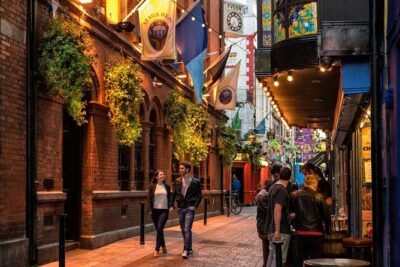
From the music stops, the walk reaches Temple Bar. This is one of Dublin’s most recognizable districts, known for its pubs, cultural venues, colorful streets, and steady flow of people.
You will see the area as part of a working city, not as a quiet historic quarter. Temple Bar can be loud and crowded, especially around popular venues and busy times. That is part of its appeal, but it also means you should not expect a calm stroll or a private-feeling neighborhood.
The guide’s role here is to connect the district’s tradition with its creative side. You get a sense of why Temple Bar has become such a familiar symbol of Dublin while also seeing how much of the area is geared toward food, drink, entertainment, and visitors.
I like this stop because it gives you a chance to compare postcard Dublin with everyday Dublin. The area can feel touristy, but it remains useful on a first visit because it is central, easy to reach, and full of character. The tour does not ask you to spend your whole day there. It uses Temple Bar as one part of a wider look at the city.
Bring comfortable shoes and keep your attention on the guide. Temple Bar streets can be active, and you will get more from the stop if you listen for the story rather than simply searching for the next photo.
Crossing the Ha’penny Bridge over the Liffey
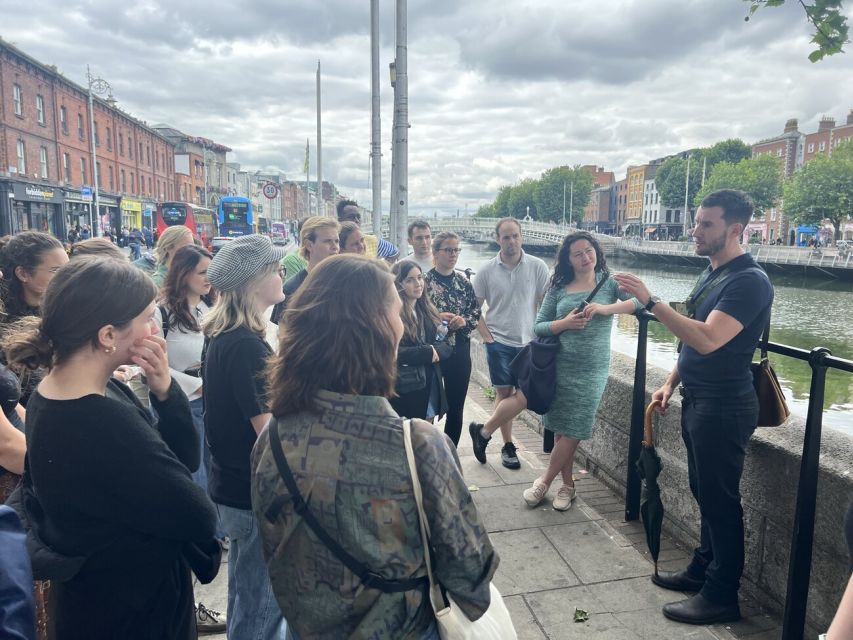
The walk continues to the Ha’penny Bridge, one of Dublin’s most recognizable crossings. The bridge takes you over the River Liffey and offers a physical link between the city areas on either side.
Your guide explains the bridge’s place in Dublin’s development and resilience. That gives the crossing more meaning than a quick walk from one bank to another. You see how a practical piece of city infrastructure can become part of Dublin’s public identity.
This stop is also a natural change of pace. After Temple Bar, the open crossing provides a clear view of the river and lets you experience Dublin as a city shaped by movement across the Liffey. The bridge itself is not a long visit, so do not expect an extended river walk or a separate sightseeing cruise.
The route remains focused on central Dublin. That is good news if you have limited time, are staying near the city center, or want to learn your way around before exploring on your own. It also means the tour cannot cover every district or major attraction beyond the route.
College Green and the grounds of Trinity College
Next comes College Green, a broad plaza with a more formal feel than Temple Bar. The area was once a political center and is now associated with Trinity College, one of Dublin’s most important academic institutions.
The change in atmosphere is one of the route’s strengths. In a short distance, you move from music and nightlife to a place shaped by education, public life, and old institutions. Your guide explains how College Green developed from a political setting into the distinguished grounds associated with Trinity College.
You should think of this as an exterior visit. The walk takes you through the area and provides context, but the information supplied for this experience does not include entry to Trinity College or access to its library and Book of Kells exhibition. If those are priorities, you would need to arrange them separately.
Still, seeing Trinity College from College Green is worthwhile. It gives you a sense of the college’s place in the city and helps explain why this part of Dublin feels different from the lanes around Temple Bar. The stop also provides a useful reminder that Dublin is not only pubs and music. Its public spaces have long been tied to government, education, and civic life.
A completely different kind of day out of Dublin:
- Dublin to Cliffs of Moher, including Wild Atlantic Way and Galway
★ 5.0 · 23,331 reviews - From Dublin: Cliffs of Moher, Burren & Galway City Day Tour
★ 4.8 · 18,888 reviews - Dublin: Guinness Storehouse Entry Ticket
★ 4.6 · 16,863 reviews - Dublin to Cliffs of Moher, Burren, Wild Atlantic Way, Galway Tour
★ 5.0 · 12,924 reviews
Meeting Molly Malone and the city’s favorite song
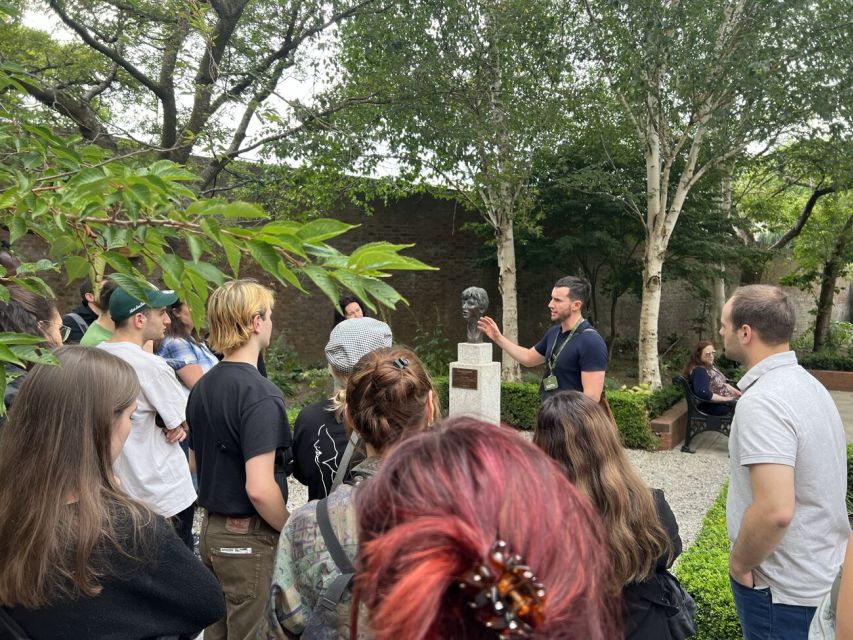
The tour then stops at the Molly Malone statue. The guide shares the folklore connected with Dublin’s well-known Cockles and Mussels song and explains why Molly Malone has become such a familiar figure in the city.
This is a short stop, but it adds a lighter piece of local tradition to the route. Molly Malone belongs to the popular side of Dublin culture, just as College Green represents its formal side. Together, the two stops show how the city’s identity is built from institutions, songs, stories, and public symbols.
Do not expect a long museum-style explanation here. The value is in hearing the local story at the statue itself, then seeing how a song has become part of Dublin’s image. If you enjoy folklore and city legends, this should be one of the more entertaining pauses.
The statue also helps make the walk varied. You are not spending three hours hearing only about buildings or political events. Music, folklore, architecture, and street life all have a place in the route.
Finishing on Grafton Street with music in the air

The final stop is Grafton Street, one of Europe’s busiest shopping streets. The walk ends here, although the meeting point at 23 Wellington Quay is also listed as the end point, so check the exact route details and meeting instructions when booking.
Grafton Street gives the tour a lively finish. Shops bring a steady flow of people, while street performers and musicians add sound and movement to the scene. After the quieter formality of Trinity College and the folklore at Molly Malone, the street feels like a return to present-day Dublin.
This is a useful place to finish because you can continue exploring on your own. You may want to stay for the performers, browse the shops, or use the area as a base for the next part of your day. The tour does not include shopping time, so consider the stop an orientation to the street rather than a guided retail visit.
The atmosphere can be busy, and that is worth noting if you prefer slow sightseeing. Grafton Street is best appreciated as a public stage where music, shopping, and city traffic meet. You get a strong sense of Dublin’s daily energy, but not a quiet ending.
What $62 buys you in practical terms

The price is $62 per person for a three-hour walking experience. That is not the cheapest way to see central Dublin, especially because the route does not include paid entry to Trinity College or another major attraction.
The value comes from the guide. You are paying to connect several well-known places into one understandable story, with explanations of the Claddagh ring, Irish musicians, Temple Bar, the Ha’penny Bridge, College Green, Molly Malone, and Grafton Street.
I would consider the price reasonable if you are visiting Dublin for the first time and want a structured introduction. It can also suit you if you prefer walking to sightseeing buses and want the chance to ask questions as you go. The price is harder to justify if you already know central Dublin, plan to visit only the landmarks for photographs, or prefer exploring independently.
A private group option is available. That may make the experience more appealing for families, friends, or a small party that wants a more personal format. The standard option may be the better value if you are comfortable sharing the walk with others.
The tour lasts three hours, so the time commitment is significant but manageable. You should be ready to walk through busy central streets for the full session. The activity is listed as wheelchair accessible, which is important for visitors who need an accessible route, though you may still want to confirm current route conditions and any street-level details before booking.
Language choices, cancellation, and who will enjoy it most
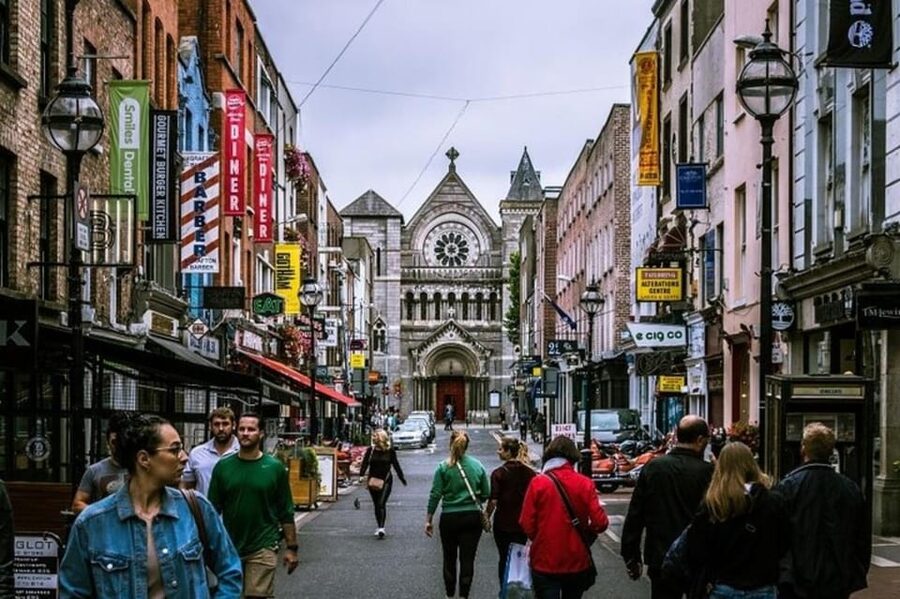
Live guiding is available in English, Spanish, French, and Italian. Choose the language that lets you follow stories and ask questions most comfortably. The experience is also available as a private group, giving you another way to match the format to your party.
You can cancel up to 24 hours before the activity for a full refund. The reserve now and pay later option allows you to hold a place without paying immediately, which is useful when your Dublin schedule is still changing.
This tour suits you best if:
- You want a first look at central Dublin in one three-hour walk.
- You enjoy music, folklore, street life, and public landmarks.
- You prefer explanations from a live guide rather than a self-guided route.
- You are comfortable seeing several sights from the outside.
- You want a choice of four guiding languages.
- You need a wheelchair-accessible activity or want the option of a private group.
It may not suit you if your main goal is entering Trinity College, touring museums, or spending long periods at one site. The route gives you a broad city introduction, not an in-depth visit to any single attraction.
Should you book this Dublin walking tour?
Book it if you want Dublin’s central sights tied together by music, folklore, and local stories. The route is especially useful early in your visit, when you need to understand how Temple Bar, the Liffey, Trinity College, Molly Malone, and Grafton Street fit into the city.
The strongest reason to choose it is the combination of cultural subjects. You move from Claddagh Records and Irish musicians to Temple Bar, then across the Ha’penny Bridge and into the more formal world of College Green and Trinity College. The finish on Grafton Street brings you back to street performers and everyday Dublin.
Skip it if you want extensive time inside attractions or a quiet, slow-paced walk. At $62, the tour makes sense when the guide’s stories are central to what you want. If Catherine is leading your group, her noted passion for Dublin and Ireland’s past could add particular warmth to the experience, but guide assignments are not guaranteed.
FAQ
How long is the Dublin Highlights and Hidden Gems Walking Tour?
The tour lasts three hours. Starting times vary, so check availability for the date you want.
Where does the tour start?
Meet your guide at 23 Wellington Quay in Dublin.
Where does the tour end?
The activity information lists the end at the meeting point. The route itself finishes with Grafton Street, so check the final meeting instructions when booking.
What sights are included?
The walk includes Claddagh Records, the Wall of Fame, Temple Bar, the Ha’penny Bridge, College Green, Trinity College’s grounds, the Molly Malone statue, and Grafton Street.
What languages are available?
Live guiding is available in English, Spanish, French, and Italian.
Is the tour wheelchair accessible?
Yes, the activity is listed as wheelchair accessible.
Can I book a private group?
Yes. A private group option is available, alongside the regular group format.
Just added around Dublin
- Wicklow: Private Day Tour from Dublin★ 5.0 · 5 reviews
- Wicklow Mountains Private Day Tour including Glendalough★ 5.0 · 7 reviews
- Wicklow Mountains & Glendalough Luxury Private Day Tour★ 5.0 · 23 reviews
- Wicklow tour of Glendalough★ 4.5 · 8 reviews
- Women Of Ireland: Trailblazers & Pioneers★ 5.0 · 4 reviews
- Full Day Private Wicklow Tour★ 5.0 · 12 reviews
- Dublin To Kilkenny Castle Waterford Crystal Private Car – Day Tour★ 5.0 · 8 reviews
- Waterford Crystal and Kilkenny Full-Day Rail Tour from Dublin★ 5.0 · 3 reviews
Dublin City Walking Tours, compared.
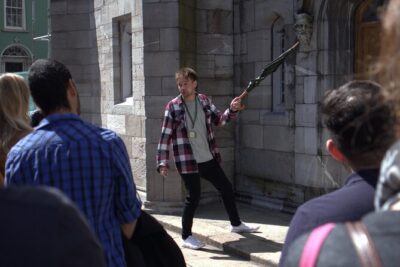
Dublin Highlights and Hidden Gems Guided Walking Tour
Read our review →
90 Minute Dublin Walking tour and Sightseeing tips
Read our review →

Historical 2-Hour Guided Walking Tour of Dublin
Read our review →
Dublin Traditional Irish 3 Course Meal Walking Tour with Local
Read our review →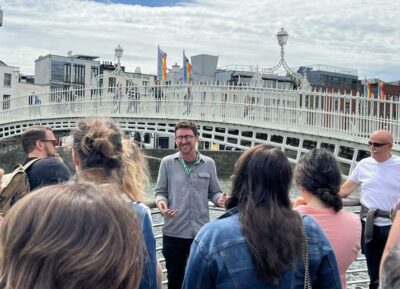
Browse the lists this tour appears in