
Reviewed · DUBLIN CITY WALKING TOURS
Dublin: Dublin City Highlights Private Guided Walking Tour
Dublin’s best sights sit close together, and this private three-hour walk turns that compact center into a story you can follow on foot. You move from music history at Claddagh Records and the Wall of Fame to Temple Bar, Trinity College, Georgian government buildings, and Oscar Wilde’s corner of Merrion Square.
I like the chance to shape the route around your needs, rather than follow a fixed group schedule. I also like the guide’s focus on both famous sights and small cultural details, from the Claddagh ring connection to the best places for traditional Irish music. The main consideration is price: at $153 per person, this is a serious spend for a short walk, especially for one or two people.
Key points at a glance
- Private and adjustable: You can request changes to the itinerary based on your interests and needs.
- Music runs through the route: Claddagh Records and the Temple Bar Wall of Fame bring U2, Phil Lynott, Rory Gallagher, Sinead O’Connor, Shane MacGowan, and others into the story.
- Dublin’s classic center: The walk covers Temple Bar, Ha’penny Bridge, Trinity College, Molly Malone, Grafton Street, and St. Stephen’s Green.
- History beyond the postcard: You see the former Irish Parliament at College Green, Leinster House, Government Buildings, and Oscar Wilde’s memorial.
- English or Italian: The authorized guide leads the private group in either language.
- Good for a first visit: The route gives you a useful introduction to central Dublin without needing buses or taxis between stops.
Why this private Dublin walk works
Dublin is easy to cross on foot, but easy to misunderstand without context. A pub-lined street may be famous for one reason, a bridge may carry a surprisingly old story, and a university courtyard may connect to Ireland’s literary and political past. This tour links those pieces in a single route.
You are not simply checking off sights. You can ask questions as you go, pause over the subjects that interest you, and request a different emphasis. A music fan could give more attention to Claddagh Records and Temple Bar. Someone interested in politics could focus on College Green, Leinster House, and the Department of the Taoiseach.
The guide is described as competent, friendly, cultured, and willing to personalize the experience. Those qualities matter more on a walking tour than a long list of dates. You need someone who can explain why a place matters, not just point at it.
The route is private, which gives you more breathing room than a large public group. You are still covering a lot in three hours, though. The many stops mean most visits are short, so this tour is best for orientation and storytelling rather than extended time inside museums or historic buildings.
More Dublin walking tours:
- Dublin Highlights and Hidden Gems Guided Walking Tour
★ 5.0 · 6,020 reviews - Dublin: Highlights and Hidden Gems Walking Tour
★ 4.9 · 2,140 reviews - 1916 Rebellion Walking Tour
★ 5.0 · 1,605 reviews
Starting with Dublin’s music story
The first music stop is Claddagh Records on Cecilia Street. Today it is a music shop, but the place is linked with Irish popular music and the U2 band, who used to meet there and recorded some songs there.
The stop also gives your guide a chance to explain the Claddagh ring. The ring was created in Galway, not Dublin, but its name is closely tied to Irish culture. That makes the shop a useful opening point: you get music, local identity, and a small piece of Irish design history in one place.
You spend about 10 minutes here. That is enough for an introduction and a look around, but not a long browsing session. If you are particularly interested in Irish music, ask to keep the conversation going as you walk toward Temple Bar.
The next 10-minute stop is the Wall of Fame on Temple Lane South. It honors Irish bands and singers including U2, Phil Lynott, Rory Gallagher, Sinead O’Connor, Shane MacGowan, Bob Geldof, The Undertones, and Luke Kelly.
This is not a formal museum visit. Think of it as a compact outdoor tribute that helps you connect Dublin streets with the musicians who shaped Irish music. The stop will mean more if you know some of those names, but your guide can help put them in context.
Temple Bar without the usual shortcuts
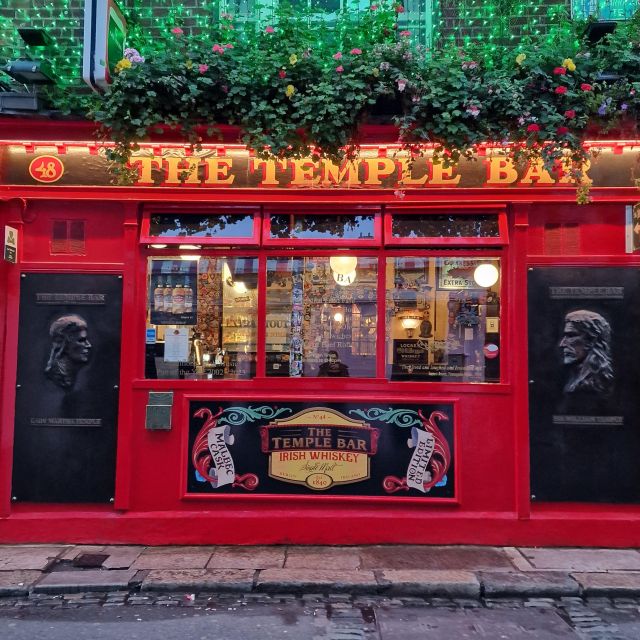
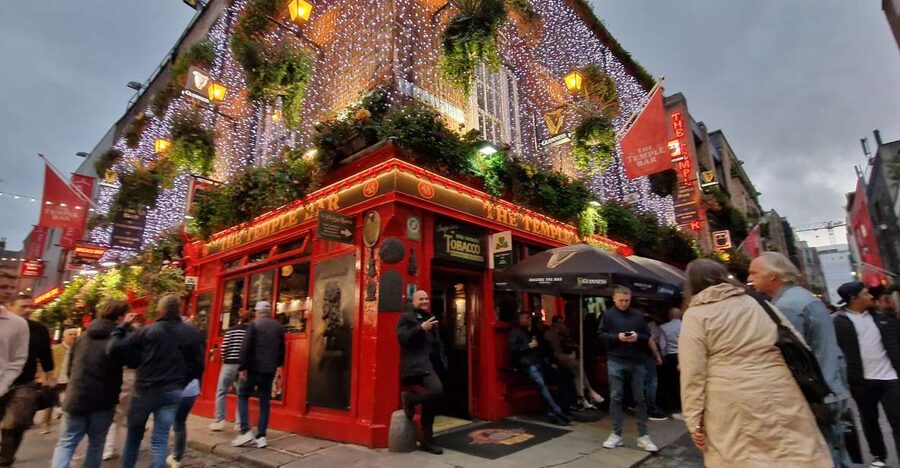
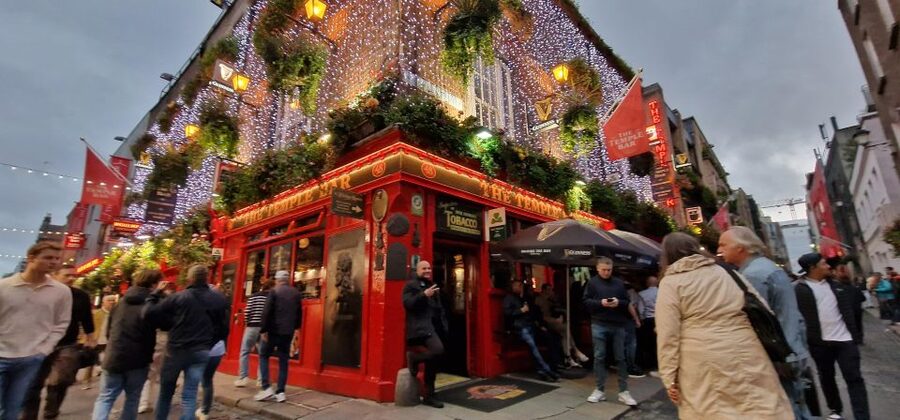
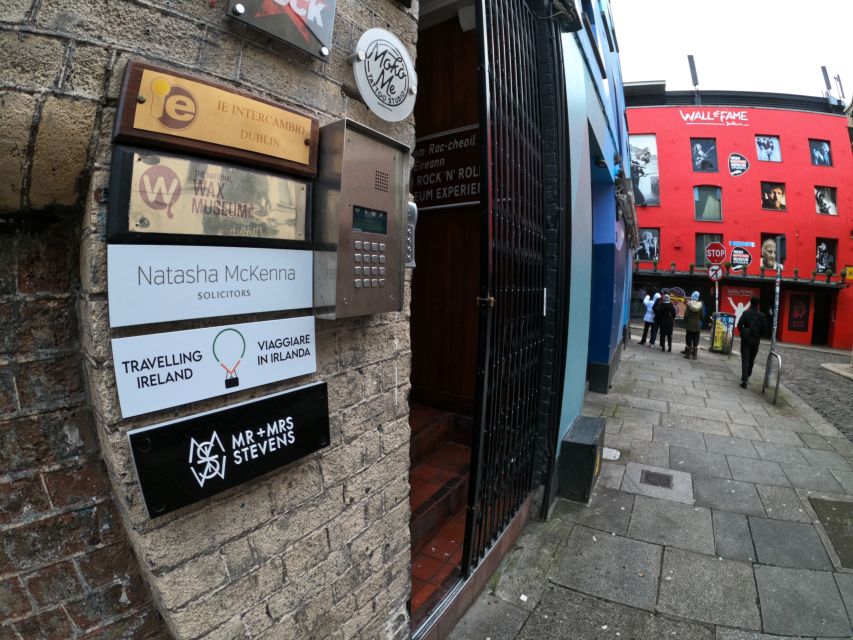
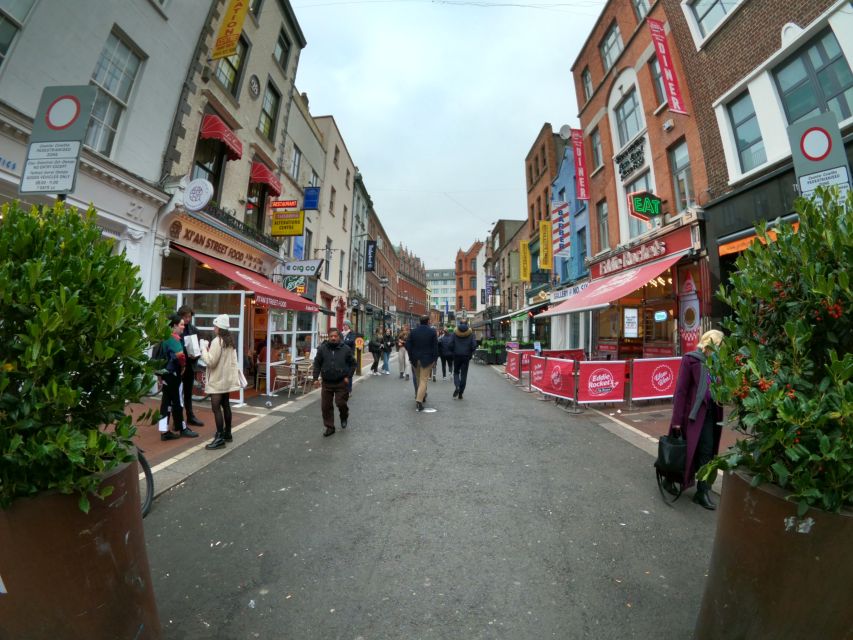
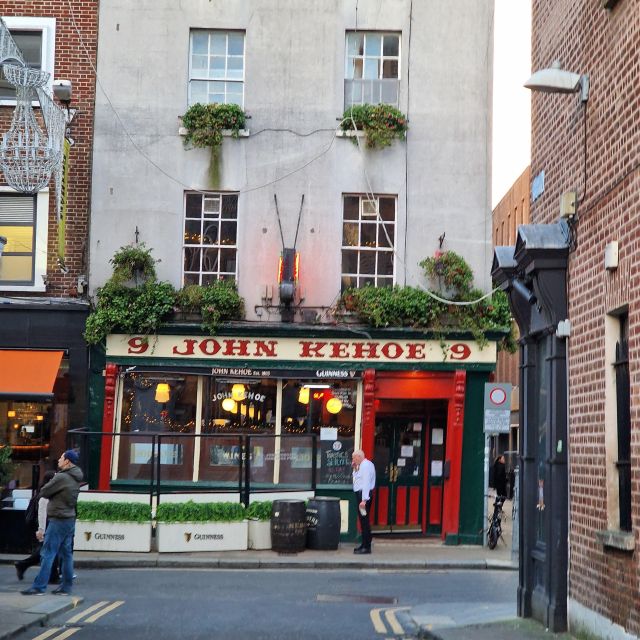
You spend about 20 minutes walking through Temple Bar, Dublin’s best-known visitor district. The area is famous for its pubs, cobbled streets, food, and live music, but its reputation can also make it feel overly packaged.
A good guide helps you separate the tourist image from the useful experience. You can hear how Temple Bar became famous, where to eat, and where to find a traditional Irish music session. That practical advice may be more valuable than another photograph of the district’s colorful pub fronts.
I would use this part of the tour to ask direct questions. If you want a traditional session rather than a loud bar with a generic playlist, say so. If you want a quick lunch, ask where to look. The guide can adjust the conversation to your priorities, one of the strongest reasons to choose a private tour.
The short stop also means you will not spend half the tour in one neighborhood. After Temple Bar, the route moves toward the River Liffey and Ha’penny Bridge.
Crossing Ha’penny Bridge and College Green
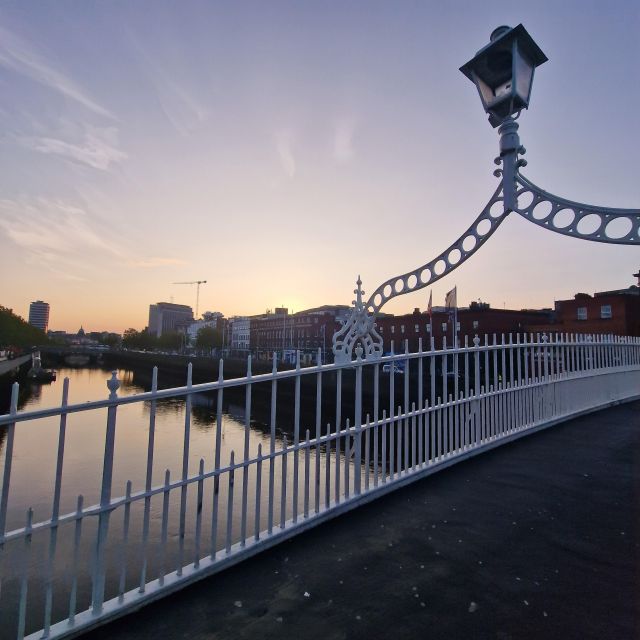
Ha’penny Bridge is one of Dublin’s most recognizable sights. Built in 1816, it crosses the Liffey between Wellington Quay and Bachelors Walk. The tour allows about 10 minutes for the bridge and its story.
The bridge is a quick stop, but it provides a clear sense of Dublin’s geography. You can look along the river, see how close the central districts are, and understand why this crossing has become part of the city’s visual identity. It is especially attractive at night, though this tour’s exact starting time depends on availability, so you should not assume you will see it after dark.
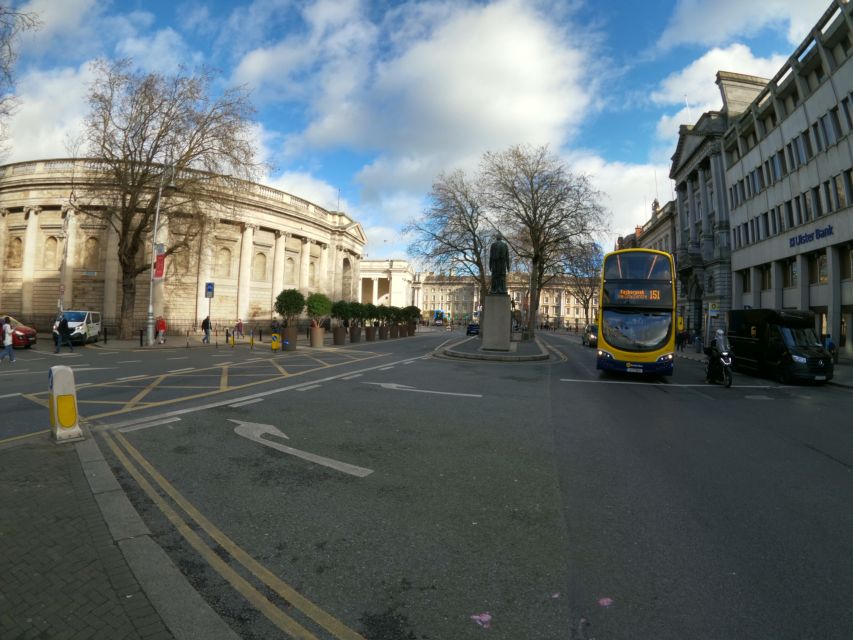
From the river, the walk heads toward College Green and the former Irish Parliament. The Bank of Ireland building occupies the old Parliament House, which served as Ireland’s Parliament until 1800. Trinity College lies to the east, while 19th-century buildings fill the southern side of the plaza.
You spend about 20 minutes here. This is one of the better history stops because the architecture presents Ireland’s political story in plain view. The former Parliament building is not just a handsome facade. It points to a major change in the country’s political structure.
A completely different kind of day out of Dublin:
- Dublin to Cliffs of Moher, including Wild Atlantic Way and Galway
★ 5.0 · 23,331 reviews - From Dublin: Cliffs of Moher, Burren & Galway City Day Tour
★ 4.8 · 18,888 reviews - Dublin: Guinness Storehouse Entry Ticket
★ 4.6 · 16,863 reviews - Dublin to Cliffs of Moher, Burren, Wild Atlantic Way, Galway Tour
★ 5.0 · 12,924 reviews
Trinity College, Molly Malone, and Grafton Street
Trinity College receives about 25 minutes. The university was founded in Ireland by Elizabeth I, and the stop brings together the Book of Kells, the Brian Boru Harp, and the college’s wider cultural role.
The experience includes an explanation of Trinity College, but entrance is not included. That distinction matters. If you want to see the Book of Kells exhibition or enter areas that require a ticket, you will need to pay separately. The walk can still give you useful context from outside, but you should budget extra if the interior is a priority.
A private guide is helpful here because you can decide how much time to give the university. Some people want the literary and historic background. Others mainly want to understand where to buy admission and how Trinity fits into Dublin’s center. Three hours is not enough for a full college visit plus every other stop, so set your expectations accordingly.
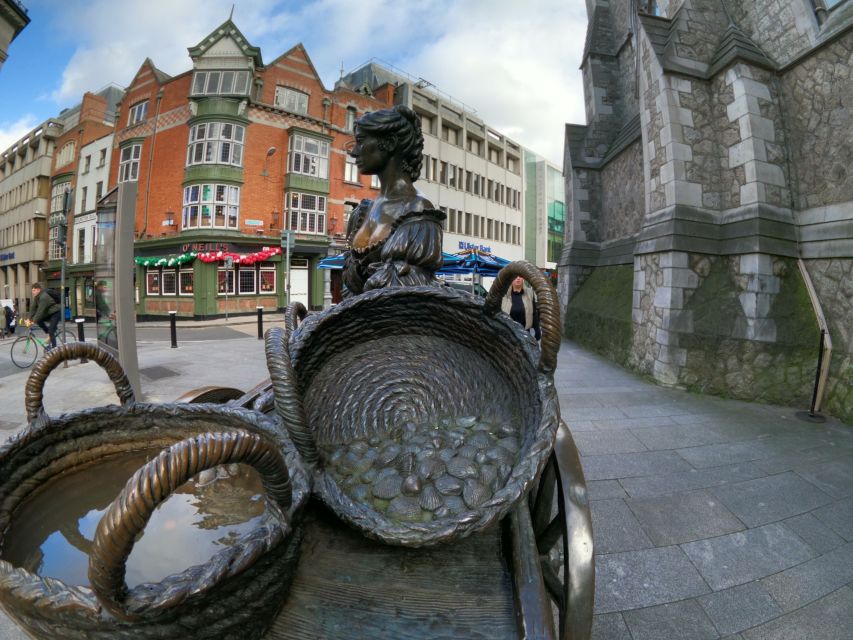
The Molly Malone statue on Suffolk Street gets about 15 minutes. Molly Malone is one of Dublin’s best-known figures, though her life and folklore are closely mixed together. The statue is set in a lively central corner, and the stop gives your guide room to explain how a fictional or partly legendary figure can become a city symbol.
Next comes Grafton Street, with about 20 minutes for strolling, shopping, street artists, and food options. This is Dublin’s high street, so the value here is not one single monument. You get a feel for the city’s everyday center, where shops, performers, and places to eat share the same pedestrian route.
If shopping is not your interest, you can ask the guide to keep this part moving. If you want food suggestions or time to watch street performers, the private format makes that easier than a rigid group schedule.
St. Stephen’s Green and Dublin’s political quarter
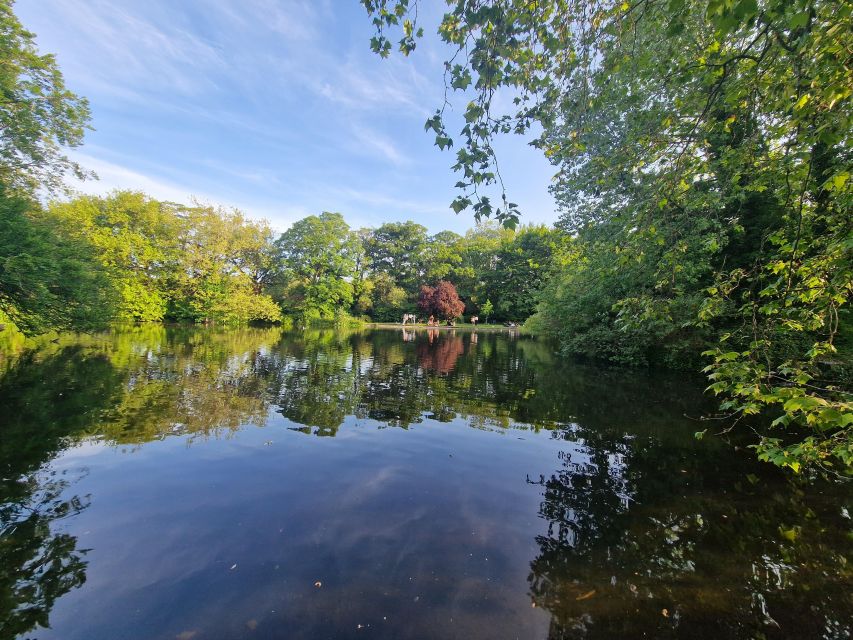
The route continues to St. Stephen’s Green Shopping Centre and the nearby park, with about 25 minutes allocated to the area. The park is often compared to a small Central Park, and the description fits its role as a calm open space in the middle of the city.
You can expect flowers, animals, and people using the park as a break from the surrounding streets. This is a welcome change of pace after Temple Bar, Grafton Street, and the more crowded central sights. The shopping center itself gives you a practical place to browse or find food, while the park offers the more pleasant walking.
The final section shifts toward Ireland’s modern government. The Department of the Taoiseach is based in Government Buildings on Merrion Street. The Taoiseach is Ireland’s head of government, so this stop gives you basic political context rather than a standard tourist photo opportunity.
Leinster House, the Irish Parliament, is next. It was once the Dublin residence of the Duke of Leinster and has served as the parliament building of the Irish Free State since 1922. Together, Government Buildings and Leinster House show how Dublin’s elegant Georgian and civic architecture still serves public life.
You spend about 10 minutes at each location. That is enough for an explanation from the street, but not an interior government visit. You should treat these as orientation stops, not tours inside working political buildings.
Oscar Wilde in Merrion Square
The last listed stop is the Monument to Oscar Wilde, at the corner of Merrion Square Park. The memorial uses bronze statues, and the area also connects with Oscar Wilde’s house.
The 10-minute visit is brief, but it adds a literary finish to the route. After music, commerce, religion, politics, and city life, you get a reminder of Dublin’s role in Irish writing and theater. Merrion Square Park also provides another pleasant pause from the hard surfaces of central streets.
This stop will appeal most if you like literary history or want to see a quieter, more elegant side of Dublin. It is less useful if your main goal is entering buildings, since the experience is primarily an outdoor walk.
What the three-hour schedule really means
The tour is advertised as three hours, with starting times available based on the date you choose. The listed stops add up to a brisk route, so you should wear comfortable shoes and expect regular movement.
The timing also explains what this experience can and cannot do. It can introduce you to many important places and help you decide where to return later. It cannot provide long visits inside Trinity College, a full museum tour, or a slow meal in Temple Bar.
That tradeoff is reasonable for a first look at Dublin. You get a broad route without arranging transport between each area. Still, you should tell the guide early if one subject matters most. The route can be changed to fit your needs, and that flexibility is more useful when you use it clearly.
The tour starts and ends at Viaggiare in Irlanda. It is wheelchair accessible, and the private group format means you are not tied to strangers’ pace. The guide speaks English or Italian, and the service includes an official national guide and insurance.
Cancellation is flexible up to 24 hours before the activity for a full refund. You can also reserve now and pay later, which helps if your Dublin schedule is still taking shape.
Is $153 per person a fair price?
At $153 per person, this is not a budget walk. You are paying for a private guide, an adjustable route, official guiding, and insurance, rather than simply joining a standard group stroll.
The value improves if you care about personal attention or need an Italian-speaking guide. It also makes more sense if you want to focus on a particular mix of music, politics, literature, shopping, and food. A private experience lets you ask more questions and change the emphasis, which is hard to price into a large group tour.
The price is harder to justify if you only want a basic introduction to Temple Bar, Trinity College, and Ha’penny Bridge. You could see the outside of several sights on your own. You also need to pay separately for entry to Trinity College and the General Post Office if those interiors are part of your plan.
I would compare the cost with the number of people in your private group and with the value of your time in Dublin. If you have only a short visit and want a strong orientation, a guide can save you from wandering between disconnected sights. If you have several days and enjoy researching your own route, the expense may feel less necessary.
Who should book this Dublin walk?
I would recommend it to first-time visitors who want to understand central Dublin quickly. It suits families, couples, and private groups who prefer to ask their own questions instead of following a large crowd.
It is also a good match for people with a clear interest in Irish music. Claddagh Records, the Wall of Fame, Temple Bar’s music scene, and the names of major Irish performers give the route a useful musical thread.
Italian-speaking visitors have a practical reason to consider it, since Italian is available alongside English. The tour also suits visitors who need a wheelchair-accessible option and want the route handled by an official guide.
I would hesitate if you want deep interior access at Trinity College, a long stop at every sight, or the lowest possible price. The route is broad and brisk. Its strength is the personal guide and the ability to adjust the emphasis, not extended time at one attraction.
Should you book it?
Book this tour if you want a private introduction to Dublin’s center with a guide who can connect music, politics, literature, and daily city life. The ability to change the itinerary is the key feature, so use it: tell the guide what matters most before the walk begins.
Skip it if you are happy exploring on your own and mainly want entry tickets. For everyone else, the tour offers a useful three-hour framework, especially early in a Dublin visit. You can see the major sights, learn where to return, and finish with a much clearer sense of how the city fits together.
FAQ
How long is the Dublin City Highlights Private Guided Walking Tour?
The tour lasts three hours. Starting times depend on availability when you book.
Where does the tour start?
The meeting point is Viaggiare in Irlanda.
Where does the tour end?
The activity ends back at the meeting point.
Is this a private tour?
Yes. The experience is arranged for a private group.
Can the itinerary be changed?
Yes. The itinerary can be adjusted based on your needs.
What languages does the guide speak?
The live guide is available in English or Italian.
Are Trinity College and the General Post Office entrance fees included?
No. Entrance to Trinity College and the General Post Office is not included.
Is the tour wheelchair accessible?
Yes. The activity is listed as wheelchair accessible.
Just added around Dublin
- Wicklow: Private Day Tour from Dublin★ 5.0 · 5 reviews
- Wicklow Mountains Private Day Tour including Glendalough★ 5.0 · 7 reviews
- Wicklow Mountains & Glendalough Luxury Private Day Tour★ 5.0 · 23 reviews
- Wicklow tour of Glendalough★ 4.5 · 8 reviews
- Women Of Ireland: Trailblazers & Pioneers★ 5.0 · 4 reviews
- Dublin To Kilkenny Castle Waterford Crystal Private Car – Day Tour★ 5.0 · 8 reviews
- Waterford Crystal and Kilkenny Full-Day Rail Tour from Dublin★ 5.0 · 3 reviews
- Full Day Private Wicklow Tour★ 5.0 · 12 reviews
Dublin City Walking Tours, compared.
Dublin Highlights and Hidden Gems Guided Walking Tour
Read our review →
90 Minute Dublin Walking tour and Sightseeing tips
Read our review →

Historical 2-Hour Guided Walking Tour of Dublin
Read our review →
Dublin Traditional Irish 3 Course Meal Walking Tour with Local
Read our review →
Browse the lists this tour appears in