
Reviewed · DUBLIN CITY WALKING TOURS
Small Group-Dublin Walking Tours
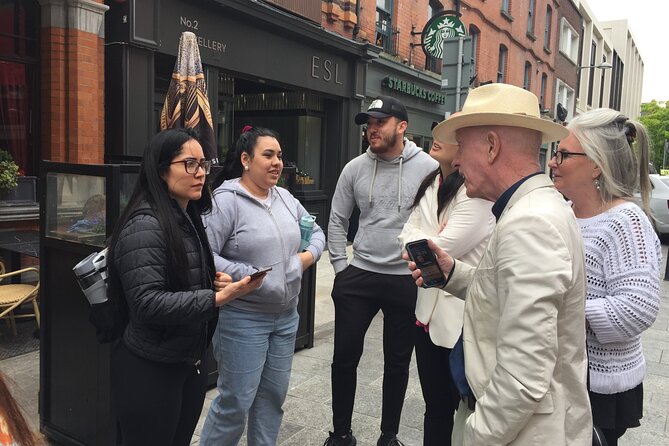
Dublin’s story unfolds in a compact two-hour walk, from the Viking beginnings beside Dublin Castle to the political drama of O’Connell Street and the polished Georgian streets around St. Stephen’s Green. Guide Damian McGrath adds music, short skits, and well-timed stories, giving the route more life than a standard roll call of buildings.
I like the small maximum of eight people, which makes it easier to ask questions and adjust the conversation to your interests. I also like the route’s variety: you move from castle gardens and a cathedral to a river crossing, university buildings, shopping streets, and a city park.
The main thing to consider is pace. The walk covers a lot of central Dublin in about two hours, with cobblestones and frequent stops, so comfortable shoes matter. If you want to go inside every major sight, this is not that tour. It is an orientation walk with time to decide what deserves a longer visit later.
Key points to know before booking
- Damian McGrath leads a capped group of eight, giving the walk a personal feel and room for questions.
- Music and small skits are part of the storytelling, a useful change from a lecture-style city tour.
- The route links Dublin’s major eras, from Viking origins and medieval churches to the 1916 Easter Rising and modern city life.
- You finish at Powerscourt Townhouse, close to Grafton Street, cafés, and central shopping.
- The tour is best early in your stay, since it gives you a useful map of central Dublin and ideas for later exploring.
- You walk on cobblestones and city streets, so supportive shoes are more important than smart footwear.
Why this short Dublin walk works well
At $60.47 per person, this is not the cheapest way to look at Dublin from the outside. It is a fair price if you want a private-feeling introduction, a local guide who can tailor the conversation, and a fast survey of central sights without spending half a day on your feet.
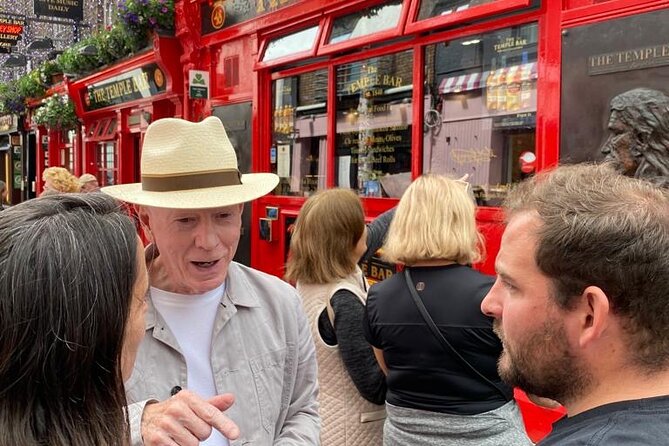
The group limit matters. With no more than eight people, Damian can respond to questions, slow down for a point of interest, or shape the conversation around your family or group. One family with children aged 11 and 13 found the pace manageable, while another group appreciated that he took account of a hip problem. That does not make the walk effortless, but it suggests the format allows for some human judgment rather than forcing everyone into a fixed script.
The walk is also useful for first-time visitors because it connects places that can seem separate on a map. Dublin Castle, Christ Church Cathedral, the Liffey, Trinity College, Georgian streets, and St. Stephen’s Green all sit within the central area, but the links between them are easier to understand when someone explains the city’s development as you go.
More Dublin walking tours:
- Dublin Highlights and Hidden Gems Guided Walking Tour
★ 5.0 · 6,020 reviews - Dublin: Highlights and Hidden Gems Walking Tour
★ 4.9 · 2,140 reviews - 1916 Rebellion Walking Tour
★ 5.0 · 1,605 reviews
Starting behind Dublin Castle at Chester Beatty
The meeting point is the Chester Beatty Library in the Dubh Linn Garden behind Dublin Castle. This is a practical place to begin because it is easy to identify, and the garden gives the group a calmer setting before heading into the city streets.
Damian starts with an outline of the walk, then uses the castle grounds to explain the origins of Dublin’s name and the physical setting where the city began. The name is tied to the old pool or dark water associated with the area, and the opening gives you a sense that Dublin grew from a particular place rather than appearing fully formed around today’s shopping streets.
The stop at Chester Beatty is brief and does not include an admission visit. If you have an interest in the library’s collections, you will need to return separately. That is typical of this tour: it points out the city’s important places, then leaves you to choose which ones deserve more time.
Dublin Castle and Christ Church Cathedral
The next look at Dublin Castle focuses on the gardens and grounds. You hear more about the early city and the role of the castle site, but you do not spend time on an indoor castle tour. That keeps the walk moving, though anyone wanting rooms, exhibitions, or a longer architectural visit should plan another stop.
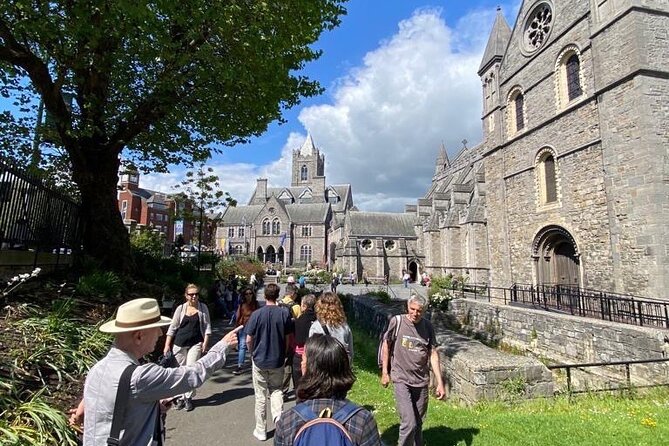
Christ Church Cathedral brings the story into medieval Dublin. From outside, Damian discusses the Catholic Church in Ireland, the Viking invasions from the north, and the mark those early settlers left on the city. You also learn about the venue’s link with Handel’s Messiah, which adds a musical thread to the stop.
This is one of the more useful parts of the route because Dublin’s early story can feel scattered when you read about it in isolation. Here, church, Viking settlement, and the city’s beginnings are placed close together. The ten-minute stop is enough for context, not enough for a full examination of the cathedral.
Temple Bar, the Ha’penny Bridge, and the River Liffey
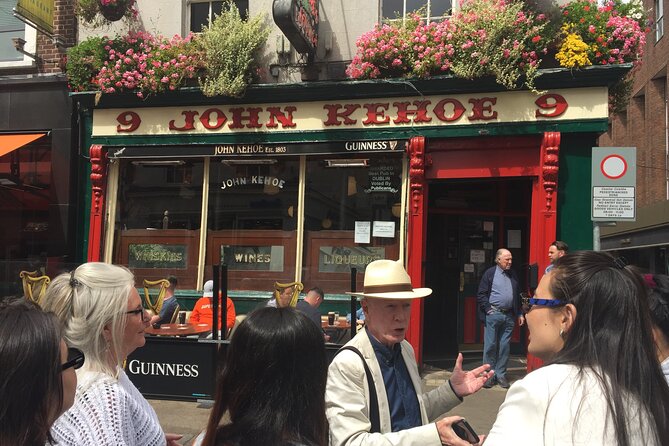
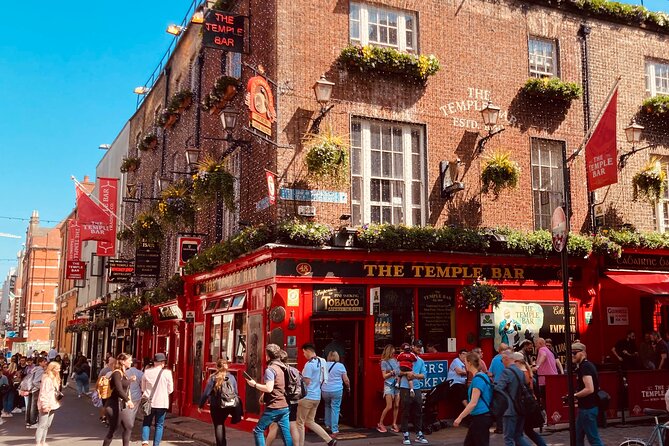
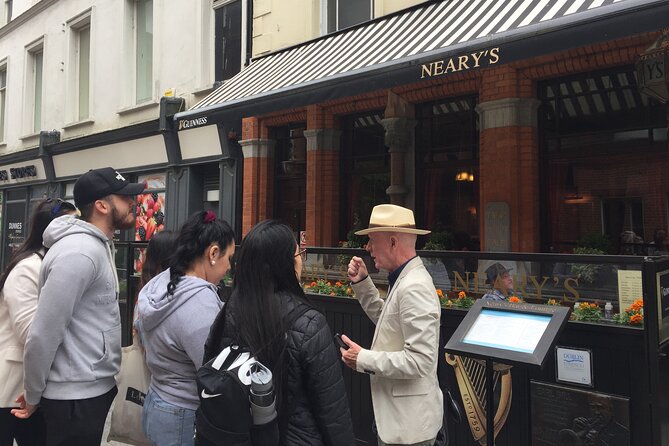
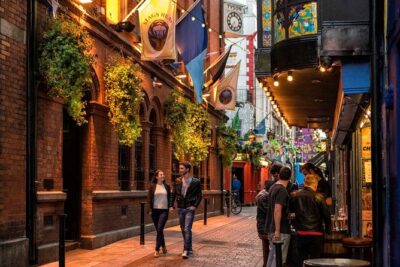
Temple Bar is the liveliest part of the walk. You pass through Dublin’s best-known nightlife quarter, with its pubs, music venues, and heavy foot traffic. During the day, it gives you a sense of where many people come for a pint and live music. At night, the character changes again, though this tour takes place as a walking visit rather than a pub crawl.
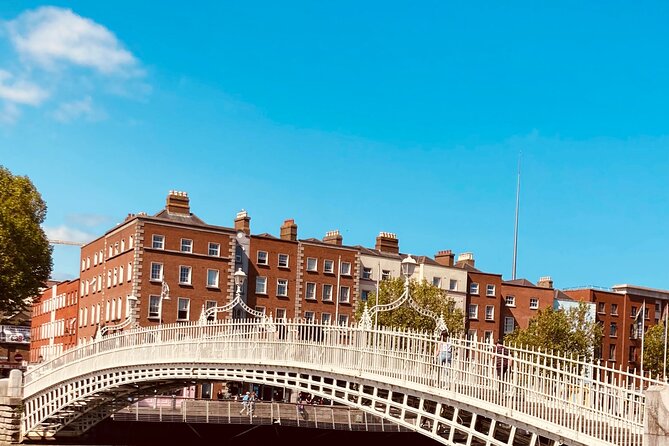
The useful part of the stop is not just the familiar pub district. Damian explains how trade and travel shaped the town centre, then leads you across the Ha’penny Bridge. The crossing offers a clear point of connection between Dublin’s north and south sides, and the route continues along the River Liffey.
You should expect crowds around Temple Bar and the bridge. If you prefer quiet lanes and little-known corners, this section may feel busy. Still, it earns its place because it helps you understand Dublin’s modern social centre and its older commercial roots.
A completely different kind of day out of Dublin:
- Dublin to Cliffs of Moher, including Wild Atlantic Way and Galway
★ 5.0 · 23,331 reviews - From Dublin: Cliffs of Moher, Burren & Galway City Day Tour
★ 4.8 · 18,888 reviews - Dublin: Guinness Storehouse Entry Ticket
★ 4.6 · 16,863 reviews - Dublin to Cliffs of Moher, Burren, Wild Atlantic Way, Galway Tour
★ 5.0 · 12,924 reviews
O’Connell Bridge and the story of 1916
Crossing O’Connell Bridge brings the tour toward the centre of Ireland’s political story. You see the statue of Daniel O’Connell, the Irish parliamentarian whose name is attached to the bridge and the broad avenue beyond it.
Damian also talks about the River Liffey and the famous Liffey Swim. This is a small detail, but it gives the river a role in daily Dublin life rather than treating it as scenery. From here, the walk approaches the area connected with the 1916 Easter Rising, adding modern Irish independence to the earlier Viking and medieval material.
The stop lasts about ten minutes, so expect an introduction rather than a full account of the rebellion. If 1916 is a major interest for you, note the places that catch your attention and return later with more time.
Trinity College and Parliament House
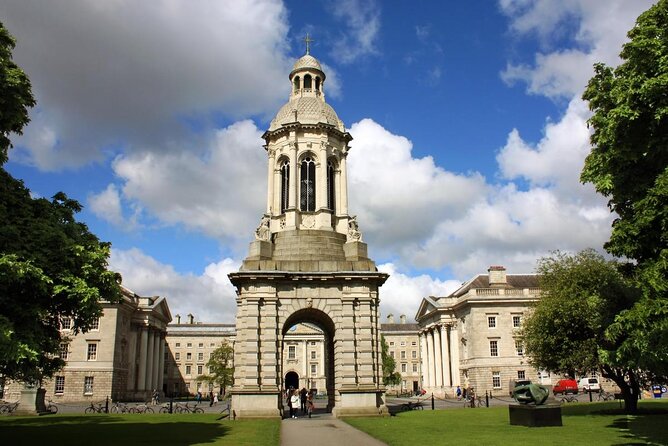
Trinity College is one of the route’s strongest visual stops. You pause to see the university and enter the courtyard for a few minutes, taking in its original architecture. Damian also discusses notable historical figures who studied there.
The tour does not include a visit to the Book of Kells or a full Trinity College admission experience. That distinction matters. You get a look at the setting and its history, but you should arrange a separate visit if the library and manuscript are high on your list.
The route also offers a view of Parliament House, often called the House of Lords, on Dame Street. These nearby buildings help explain how Dublin’s academic, political, and commercial centres sit within a fairly small area.
Families may find this stop especially useful because it gives children a recognizable university setting without requiring a long indoor visit. The short duration also helps keep the overall walk moving.
St. Anne’s Church and Dawson Street
Outside St. Anne’s Church on Dawson Street, the subject shifts from national institutions to a literary connection. Damian discusses the wedding of Bram Stoker, author of Dracula, which took place at the church.
From there, the route moves toward Bewley’s Café on Grafton Street. This is a good change of mood after the castle, cathedral, and university stops. You see a famous café frontage and reach Dublin’s main high-end shopping district, where the city feels more commercial and contemporary.
The stop itself is short, so do not expect an indoor café visit or a long literary lecture. The value is in noticing how much of Dublin’s cultural story is tucked into ordinary streets. You may otherwise walk past the church without knowing why it matters.
Leinster House, Bram Stoker’s home, and the National Museum
Kildare Street brings together several different strands of Dublin. You pass the former home associated with Bram Stoker, see Leinster House, and walk by the National Museum of Archaeology.
Damian explains Leinster House’s history and its relationship to the White House in Washington, DC. This gives the political section of the tour a practical point of comparison, while the nearby museum adds another reminder of Ireland’s archaeological past.
Again, these are exterior views rather than full admissions. That is both a strength and a limitation. You cover more ground and keep the two-hour schedule intact, but you will need additional time if you want to explore the museum or examine Leinster House in detail.
Grafton Street and St. Stephen’s Green
Grafton Street is one of Dublin’s main shopping streets, and the tour uses it as a link to St. Stephen’s Green. Along the way, you see the Royal College of Surgeons and pass Georgian-era architecture before reaching the compact city park.
This part gives you a better feel for Dublin’s street life. The route is not only about monuments with plaques. It shows how shopping, education, medicine, public space, and older residential architecture sit side by side.
St. Stephen’s Green also offers a welcome visual pause after the harder surfaces of the city centre. You do not get a long park visit, but the stop helps round out the city picture. Dublin is not just pubs and political buildings. It also has formal squares, planted public space, and Georgian design.
Powerscourt Townhouse and the end of the walk
The tour ends at Powerscourt Townhouse Centre on South William Street, between South William Street and Clarendon Street. The building is an architectural highlight, with boutique shops and a café or restaurant in its atrium.
Ending here is convenient. You are close to Grafton Street, St. Stephen’s Green, restaurants, and other central Dublin sights. It is a better finish than dropping you at an isolated street corner because you can continue exploring immediately.
The end point also gives you a choice. You can stop for food, browse the centre, return to a sight that caught your interest, or use the area as a base for the next part of your day. One participant appreciated Damian helping with the way back to a hotel, but that should be treated as a kind personal touch, not a guaranteed transfer service.
Damian’s style: music, stories, and room to personalize
Damian’s approach is the main reason to choose this walk over a basic city orientation. He uses music that fits the sights and the people in the group, and he adds short skits to keep the history from becoming a list of dates.
That style will not suit everyone. If you prefer a quiet, formal guide who gives only concise facts, the musical interludes may feel like too much. If you enjoy a guide who performs a little and responds to questions, they give the walk a distinct character.
The personal element also appears in the way Damian handles different groups. He has adjusted the experience for family interests, answered questions at length, and made the route feel more personal for people on a short Dublin layover. The limited group size helps make that possible.
Pace, shoes, and practical planning
Wear comfortable shoes with good support. The route includes cobblestone streets and roughly two hours of continuous city walking, with short stops of about ten to fifteen minutes. You should be ready to walk between sights rather than spend long periods seated.
The walk is offered in English and uses a mobile ticket. Service animals are allowed, and the route is near public transportation. Most people can take part, but the cobblestones and steady pace are worth considering if you have mobility concerns.
The tour is especially useful on your first day in Dublin. You get a quick sense of where the main central districts sit, then you can return to Trinity College, the castle, the cathedral, the museum, or the shopping streets that interest you most.
Free cancellation is available when you cancel at least 24 hours before the local start time. Changes or cancellations inside that window are not accepted for a refund.
Who should book this Dublin tour?
Book it if you want a short, social introduction to central Dublin with a guide who uses music, humor, and personal conversation. It suits first-time visitors, families with older children, couples on a short stay, and people with only a Dublin layover.
It is less suitable if you want lengthy indoor visits, a slow architectural study, or a focused tour of one subject such as the Easter Rising, Irish literature, or the Book of Kells. The route gives you a broad first look, not a deep examination of each stop.
At $60.47, the value depends on how much you prize the guide’s storytelling and the small group. If you want a map in your head, a lively introduction, and a list of places to revisit, I think it is a sensible early-trip choice. If you mainly want entry tickets and long time inside major sights, spend the money on those individual visits instead.
FAQ
How long does the Dublin walking tour last?
The tour lasts approximately two hours.
Where does the tour start?
It starts at the Chester Beatty Library in the Dubh Linn Garden behind Dublin Castle, at Castle Street in Dublin 2.
Where does the tour finish?
The walk ends at Powerscourt Townhouse Centre at 59 William Street South, Dublin 2. The centre is between South William Street and Clarendon Street.
How many people can join the tour?
The tour has a maximum of eight participants.
Is the tour offered in English?
Yes. The tour is offered in English.
Do I need comfortable shoes?
Yes. The route includes cobblestone streets and regular walking between stops, so comfortable shoes are recommended.
Is admission to the listed stops included?
The listed stops are described as outside visits or brief views, and the itinerary shows no admission charge for them. The tour does not list separate entry to attractions such as the Chester Beatty Library, Trinity College exhibitions, or the National Museum.
What is the cancellation policy?
You can cancel for a full refund up to 24 hours before the experience start time. Cancellations or changes made less than 24 hours before the start are not accepted for a refund.
Just added around Dublin
- Wicklow: Private Day Tour from Dublin★ 5.0 · 5 reviews
- Wicklow Mountains Private Day Tour including Glendalough★ 5.0 · 7 reviews
- Wicklow Mountains & Glendalough Luxury Private Day Tour★ 5.0 · 23 reviews
- Wicklow tour of Glendalough★ 4.5 · 8 reviews
- Women Of Ireland: Trailblazers & Pioneers★ 5.0 · 4 reviews
- Full Day Private Wicklow Tour★ 5.0 · 12 reviews
- Dublin To Kilkenny Castle Waterford Crystal Private Car – Day Tour★ 5.0 · 8 reviews
- Waterford Crystal and Kilkenny Full-Day Rail Tour from Dublin★ 5.0 · 3 reviews
Dublin City Walking Tours, compared.
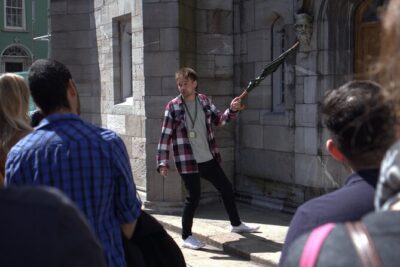
Dublin Highlights and Hidden Gems Guided Walking Tour
Read our review →
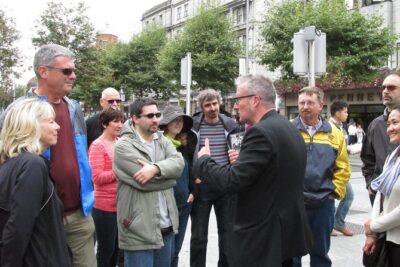
90 Minute Dublin Walking tour and Sightseeing tips
Read our review →

Historical 2-Hour Guided Walking Tour of Dublin
Read our review →
Dublin Traditional Irish 3 Course Meal Walking Tour with Local
Read our review →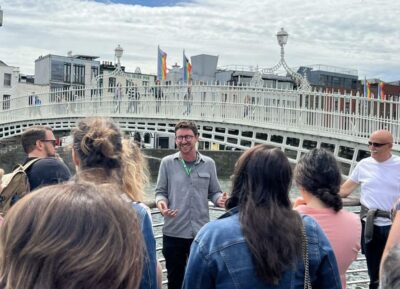
Browse the lists this tour appears in