
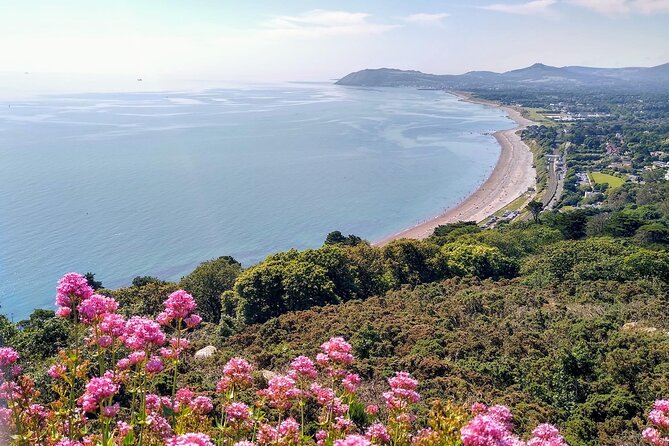
Reviewed · HOWTH AND THE DUBLIN COAST TOURS
Dublin (Dun Laoghaire) Top-Rated Coastal Walking Tour
Dublin’s coast feels a world away from the city center, and this Dun Laoghaire to Dalkey walk shows you why. You follow harbors, village lanes, old railway paths, swimming spots, and castle ruins while local guide Marina Boyle explains how the area grew from a maritime outpost into one of Dublin’s most desirable corners.
I like the easy meeting point near the DART station, and I like the way the route mixes scenery with real local stories. You get the James Joyce Tower, a medieval castle, a farmers market on Sundays, and a chance to see seals at Bulloch Harbour. The main drawback is simple: this is a long walk, with roughly 10,000 steps and some uneven paths.
I also like that the tour finishes at Dalkey DART station rather than returning you to the start. That makes the walk useful for cruise passengers and for anyone who has already seen central Dublin. Just remember that train fare, food, and drinks are extra, and the walk can take close to four hours depending on the pace and stops.
Key points to know before booking
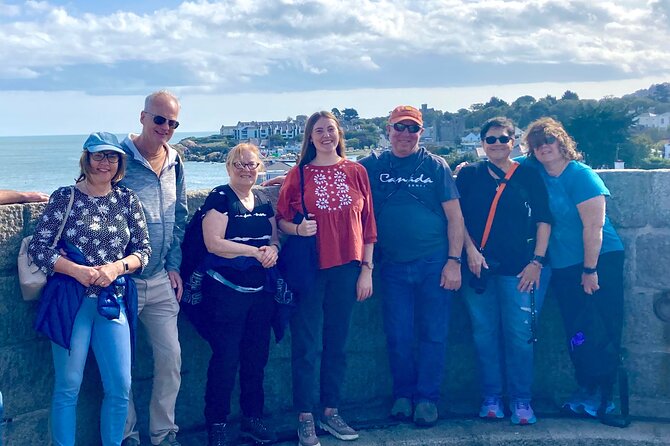
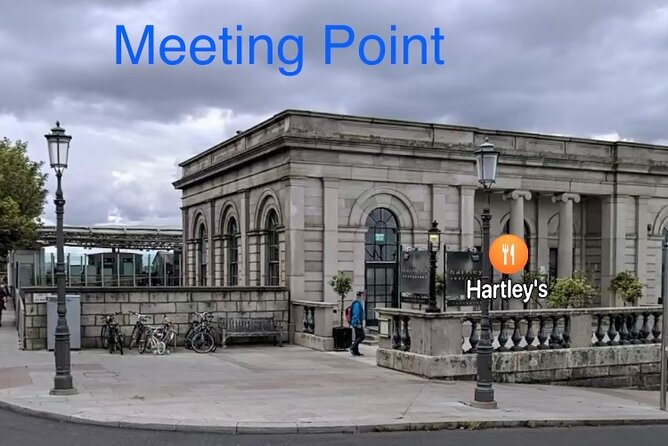
- Start beside the Dun Laoghaire DART station: The meeting point at 1 Harbour Road is easy to reach from the port and public transport.
- Walk from harbor to village: The route covers Dun Laoghaire, Sandycove, Bulloch Harbour, and Dalkey.
- Climb the James Joyce Tower: Admission is included, along with access to the rooftop viewing point.
- Expect a proper half-day walk: The advertised time is about 3 hours 30 minutes, but one account describes nearly four hours from start to finish.
- Finish at Dalkey DART station: You can continue by train to central Dublin, Dun Laoghaire, or another DART stop.
- Marina Boyle leads the way: She combines Irish history, local customs, practical advice, and recommendations for food and nightlife.
Why this coastal walk is different from central Dublin
Many Dublin tours stay within the city center, moving between famous streets, museums, and historic buildings. This one takes you south along the coast, where the rhythm is slower and the views do more of the talking.
You will hear about maritime trade, railway development, Viking settlement, Norman castles, Irish swimming habits, and the literary connection of James Joyce. That range gives the walk a good balance. You are not standing in one place while someone delivers a long lecture. You keep moving, with short stops that connect the scenery to the story.
The route also gives you a look at everyday Dublin life. You pass a local park, a village lane, a beach used by swimmers, a harbor with working and leisure connections, and Dalkey’s polished streets. It feels less like a checklist of major sights and more like a guided introduction to the coastal suburbs.
That is particularly useful if you have already explored Trinity College, Dublin Castle, and the main city streets. It is also a smart choice from a cruise ship, since the starting point is close to the Dun Laoghaire port area.
More Howth and Dublin coast trips:
- From Dublin: Half-Day Guided Coastal Tour to Howth Village
★ 4.4 · 1,331 reviews - Howth Coastal Half-Day Bus Tour from Dublin with Live Guide
★ 4.5 · 652 reviews - Dublin: Howth Coastal Boat Tour
★ 4.7 · 644 reviews
Beginning at Dun Laoghaire Harbour
The tour starts at Dun Laoghaire Harbour, close to the DART station and at 1 Harbour Road. This is one of the most practical features of the outing. You do not need to hunt for a hotel lobby or a tucked-away city address. From the station, the meeting area is straightforward to find.
The opening stop focuses on the piers and harbor. You hear how Dun Laoghaire developed as a major maritime point and why the harbor matters to Dublin’s story. The stop itself is brief, about ten minutes, but it sets up the rest of the walk.
A nearby maritime museum is discussed from outside. You will not receive a museum visit as part of this portion, so think of it as context rather than an indoor attraction. The harbor views provide the main reward here, especially for anyone interested in ships, coastal engineering, or Dublin’s connection with the Irish Sea.
The route soon moves away from the broad harbor setting and into more local surroundings. This change is one of the pleasures of the tour. You get public waterfront scenery, then quieter streets and village paths without needing to arrange separate transport.
People’s Park and the Sunday market
People’s Park is a short stop, usually around ten minutes. It offers a change of pace from the coast, with greenery and a local gathering place rather than another historic structure.
If you take the tour on a Sunday, the guide spends extra time at the farmers market. This is one of the few parts of the route that varies by day, so Sunday can add a livelier local dimension. The market also gives you a chance to see the area as a place where people live, shop, and meet, not simply as a sightseeing district.
Food is not included, and the tour does not promise a dedicated meal stop. If you need lunch at a set time, eat a solid breakfast and carry anything you require. One review specifically warns that the meal may not come until around 3 p.m. depending on the schedule.
The Metals and Dun Laoghaire’s railway story
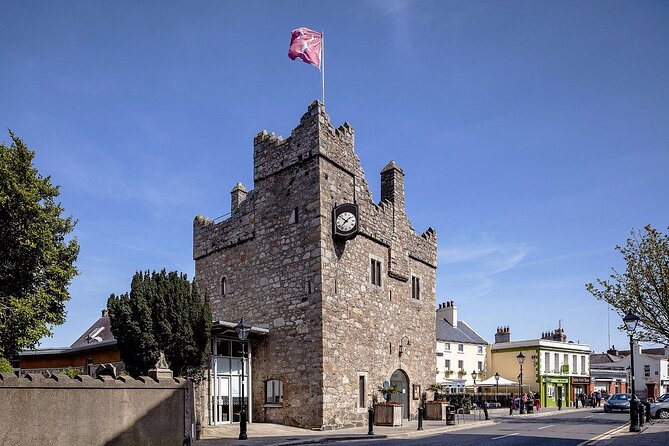
The Metals is a historic lane connected with the railway. The stop lasts only about five minutes, but it helps explain how transport shaped the coast.
This is the kind of detail that can easily be missed when you explore alone. A lane may look like a shortcut, yet it can reveal how workers, goods, and passengers once moved between the harbor and the railway. Marina uses these smaller locations to connect the visible streets with broader Irish history.
From there, the walk continues through a typical Irish village setting. The route is not only about grand monuments. Its appeal comes from the repeated movement between modest lanes, coastal views, public spaces, and old buildings.
You should expect some uneven pavement and paths. Good trainers or walking shoes are the right choice. Hiking boots are not needed according to the practical experience shared, but flip-flops would be a poor match.
More Dublin walking tours:
- Dublin Highlights and Hidden Gems Guided Walking Tour
★ 5.0 · 6,020 reviews - Dublin: Highlights and Hidden Gems Walking Tour
★ 4.9 · 2,140 reviews - 1916 Rebellion Walking Tour
★ 5.0 · 1,605 reviews - 90 Minute Dublin Walking tour and Sightseeing tips
★ 5.0 · 916 reviews
Sandycove, swimmers, and the James Joyce Tower
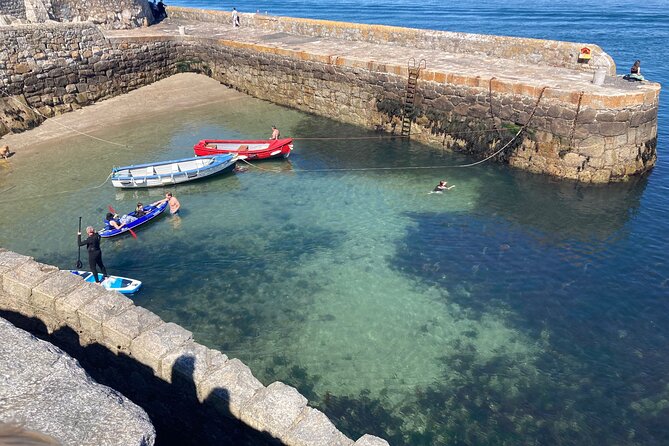
One of the memorable moments comes at Dublin’s famous swimming point. Sandycove is known for people entering the water even when conditions look cold and windy. The water temperature mentioned in the tour feedback was around 40 degrees Fahrenheit, so you may be watching rather than joining in.
This stop gives the tour a strong local character. You see a coastal habit that may seem surprising to visitors, then hear why sea swimming is part of life here. It is a good example of the tour’s approach: scenery first, with cultural context added by the guide.
The James Joyce Tower and Museum is the main indoor attraction. Admission is included, and the visit includes the history of the tower and a climb up its spiral staircase to the rooftop viewing point. The climb is part of the experience, so this stop may be less comfortable for anyone who has difficulty with stairs.
From the top, you get a broad view of the coastline. The tower also adds a literary thread to a walk that otherwise moves through maritime and village history. The stop lasts around 20 minutes, enough to see the museum and enjoy the view without turning the tour into a long indoor visit.
The museum is closed on Mondays, so the exact experience depends on your day. On a Monday, you can still see the tower area and continue with the coastal route, but you should not expect the full museum visit.
Bulloch Harbour and the chance to spot seals
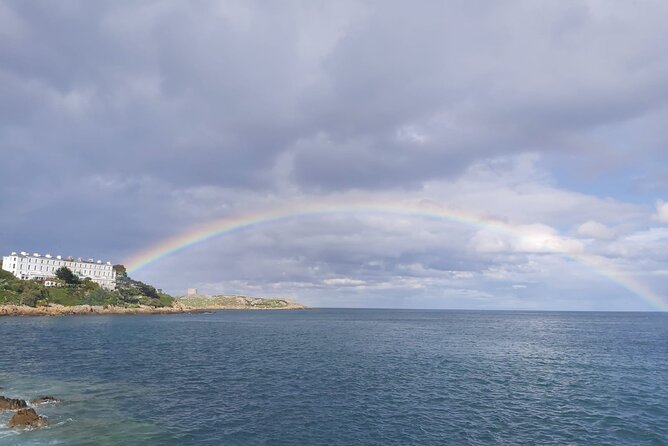
Bulloch Harbour is one of the prettiest stops on the route. The guide explains its industrial past and how the harbor is used today. That combination gives the place more meaning than a quick photo stop.
Keep an eye on the water and rocks. Seals are often seen here, either swimming near the harbor or resting on the rocks. Wildlife sightings are never guaranteed, but this is one of the tour’s most appealing possibilities.
The stop lasts about ten minutes. You have enough time to take in the harbor, listen to the explanation, and look for movement in the water. The setting also makes a useful contrast with Dun Laoghaire. The first harbor feels larger and more formal, while Bulloch has a smaller village-harbor character.
Bulloch Castle and Dalkey’s medieval past
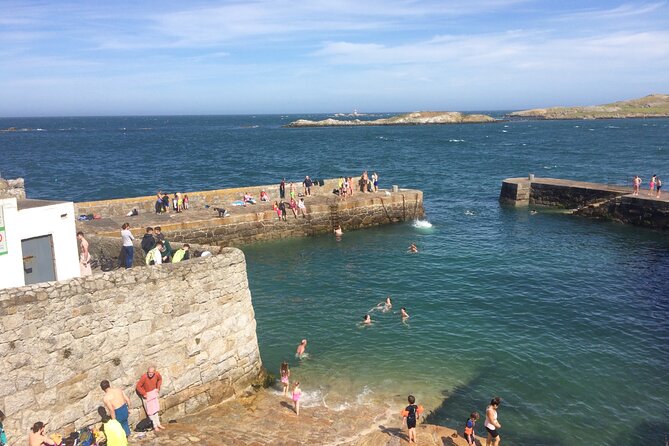
At Bulloch Castle, you see a medieval ruin and hear about Dalkey’s former castle network. Dalkey once had seven castles, and the tour points out three of them along the route.
The castle stop is brief, around five minutes, so this is not a full archaeological visit. You will not spend a long time inside a preserved fortress. Instead, the ruin works as a visible clue to the area’s medieval importance.
That brevity is worth keeping in mind if you are hoping for extended castle exploration. The strength here is the way the castle fits into the walking route. You encounter the remains in the village itself, then continue on foot to other historic points.
Dalkey’s history includes Viking connections and Norman influence. Marina explains these layers while also pointing out present-day places for food and nightlife. That mix of old and new makes the final section useful for anyone staying in Dublin for more than a day.
Ending in Dalkey with food and train options
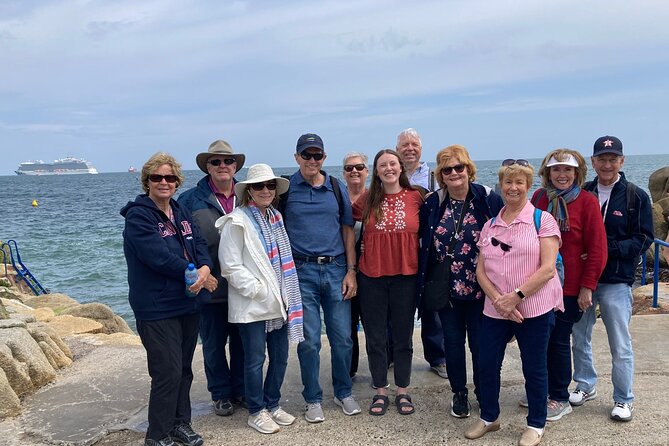
The walk finishes in Dalkey, one of Dublin’s most affluent villages. Its polished streets, restaurants, pubs, and historic buildings make it a pleasant place to end a half-day outing.
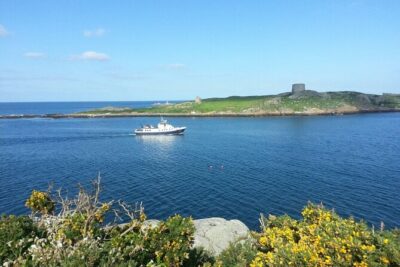
The tour includes a look at one of Dalkey’s seven castles, including the story of the Norman castle and its heritage center. Another nearby viewpoint connects with the area’s Viking and Catholic past. The route also includes views toward a village island, with its own historical associations.
Dalkey is a practical ending point. You can stop for lunch, a pub meal, coffee, or ice cream at your own cost, then use the DART from Dalkey station. The guide can show you how to buy a ticket from the machine, which is helpful when the ticket office is closed. Contactless payment is available, and a return trip to Dun Laoghaire was reported at about 5 euros for two adults, though fares can change.
You can also take the train toward central Dublin or another DART station. Since the tour does not include transportation back to Dun Laoghaire, factor that small extra cost into your budget.
Pace, group size, and what the price covers
The advertised duration is about 3 hours 30 minutes. The actual walking time can feel substantial, with one experience totaling about 2.5 hours of walking and another describing roughly 10,000 steps. Allow extra time if you plan to eat in Dalkey or need to return to a ship.
The maximum group size is 20 people. That is large enough for a social group but small enough for a local guide to answer questions and keep everyone together. The tour is offered in English.
At $114.65 per person, this is not a bargain-priced stroll. The value depends on how much use you make of the guide and the route. You are paying for a local host, organized access to the James Joyce Tower, a carefully connected coastal walk, and practical orientation in an area that can be hard to understand from a quick train ride.
All fees and taxes are included, but snacks, train fare, and transport to the meeting point are not. If you want only harbor views, you could visit parts of the route independently for less. If you want the historical links, village context, and a guide who can adjust the pace, the price is easier to justify.
Who should book this walk
I would recommend it to people who enjoy steady walking and prefer local neighborhoods to a bus tour. It is also well suited to cruise passengers looking for an outing near Dun Laoghaire instead of heading straight into central Dublin.
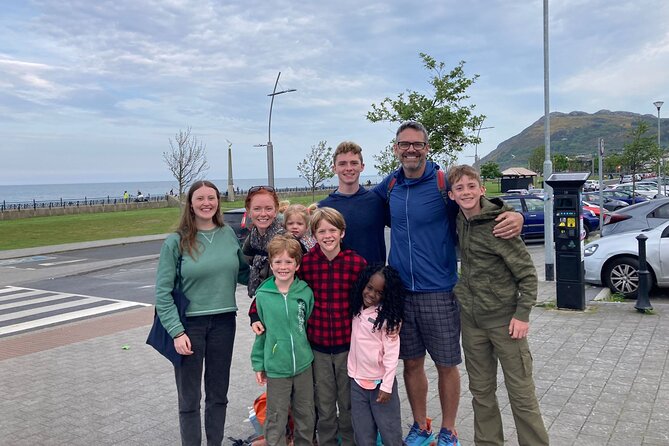
Families can manage the route, and Marina has accommodated larger family groups with children. Still, the distance and uneven sections mean you should judge the walk by your own stamina. Most people can participate, but this is not a short, flat promenade.
You should also book it if you like practical recommendations. Marina provides suggestions for places to eat and spend time after the walk, and she can help with the train connection at the end.
The route may be less suitable if you need a guaranteed lunch break, dislike stairs, or want extended visits inside museums and castles. The James Joyce Tower visit is short, the medieval ruins are viewed briefly, and much of the value comes from walking between the stops.
Weather, clothing, and booking details
The experience requires good weather. If poor conditions cancel the tour, you are offered another date or a full refund. The same applies if the minimum number of participants is not met.
Wear comfortable shoes with grip, bring a rain layer, and prepare for coastal wind. The route includes outdoor stops throughout, and Irish weather can change quickly. A Sunday booking adds the possibility of extra time at People’s Park and its farmers market.
Free cancellation is available up to 24 hours before the start time. Changes or cancellations within 24 hours are not refunded.
Should you book the Dun Laoghaire coastal tour?
Book this tour if you want to trade Dublin’s central sights for harbors, village lanes, sea views, castles, and local stories. Marina Boyle is the main reason the route works so well: she brings together Irish history, personal local knowledge, practical advice, and a comfortable pace.
Skip it if you want a short outing or a formal museum-heavy tour. The walk covers real ground, and the final train fare and food are extra.
For a first visit focused on central Dublin, it is a useful second-day choice. For a cruise stop, it may be one of the best ways to spend time close to the port without wasting the day in transit. Bring good shoes, eat breakfast, and leave room for a pub lunch in Dalkey.
FAQ
Where does the tour start?
It starts at 1 Harbour Road in Dun Laoghaire, Dublin, near the DART station.
Where does the tour finish?
The walk finishes at Dalkey DART station in County Dublin.
How long does the tour last?
The advertised duration is approximately 3 hours 30 minutes. Plan for extra time, since the walking and stops can bring the outing closer to four hours.
Is the James Joyce Tower entry included?
Yes. Admission to the James Joyce Tower and Museum is included, along with the climb to the rooftop viewing point.
Is train fare included?
No. Train fare is not included. You can take the DART from Dalkey to central Dublin, Dun Laoghaire, or another station after the tour.
Is food included?
No. Snacks and meals are not included. You can buy food or drinks in Dalkey after the walk.
How many people can join the tour?
The maximum group size is 20 participants.
What happens if the weather is poor?
The tour requires good weather. If it is canceled because of poor conditions, you are offered a different date or a full refund.
Just added around Dublin
- Wicklow: Private Day Tour from Dublin★ 5.0 · 5 reviews
- Wicklow Mountains Private Day Tour including Glendalough★ 5.0 · 7 reviews
- Wicklow tour of Glendalough★ 4.5 · 8 reviews
- Women Of Ireland: Trailblazers & Pioneers★ 5.0 · 4 reviews
- Wicklow Mountains & Glendalough Luxury Private Day Tour★ 5.0 · 23 reviews
- Dublin To Kilkenny Castle Waterford Crystal Private Car – Day Tour★ 5.0 · 8 reviews
- Waterford Crystal and Kilkenny Full-Day Rail Tour from Dublin★ 5.0 · 3 reviews
- Full Day Private Wicklow Tour★ 5.0 · 12 reviews
Howth and the Dublin Coast Tours, compared.

Half-Day Guided Coastal Tour to Howth Village
Read our review →
Howth Coastal Half-Day Bus Tour from Dublin with Live Guide
Read our review →


Browse the lists this tour appears in