
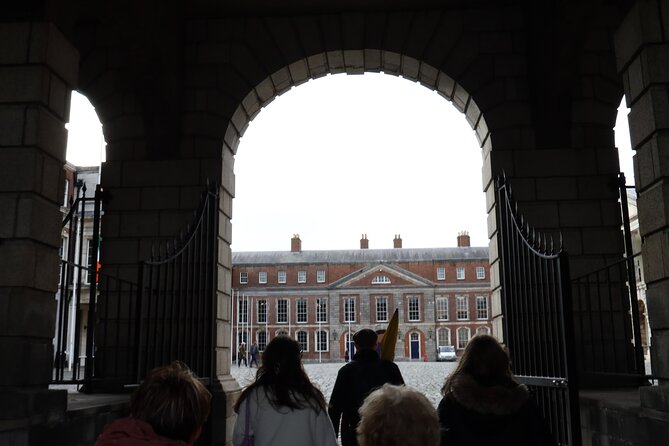
Reviewed · DUBLIN GHOST AND DARK HISTORY TOURS
Macabre, Ghostly & Bloody Walking Tour
Dublin’s darker past comes alive on this two-hour evening walk, which leaves the usual pub-and-literature story behind. You’ll hear about Viking ritual, plague cages, grave robbers, mummified corpses, and a legless serial killer, all while crossing ordinary city streets.
I like the compact route and the strong sense of place. You move from the Spire to Fishamble Street, with each stop tied to a specific tale. I also like that guides such as Peter and Rob add broader Dublin history, local context, and practical suggestions instead of simply reciting horror stories.
The main drawback is the subject matter. This is not a gentle ghost walk. Stories involve death, disease, violence, burial, and execution, and some stops are more about spoken storytelling than dramatic sights. The walk also ends away from the starting point, so wear comfortable shoes and plan your route afterward.
Key points about Dublin’s macabre walking tour

- Eight historic stops in two hours: The route runs from the Spire on O’Connell Street to Fishamble Street near Christchurch Cathedral and Temple Bar.
- Dark stories tied to real locations: Hear about Cuchulainn at the General Post Office, grave robbers at Wolfe Tone Park, and plague cages at St. Audoen’s Church.
- A strong mix of eras: The walk touches on Viking Dublin, the Black Death, Victorian grave robbing, Georgian and Victorian crime, and old Dublin folklore.
- Small-group format: The maximum group size is 25 people, which should make it easier to hear the guide in busy central streets.
- Evening timing: The tour starts at 6 pm, when Dublin’s streets take on a fittingly shadowy mood.
- Good value for a focused walk: At $20.43 per person, you pay for a professional guide and two hours of local stories rather than entry to indoor attractions.
Why this Dublin walk feels different
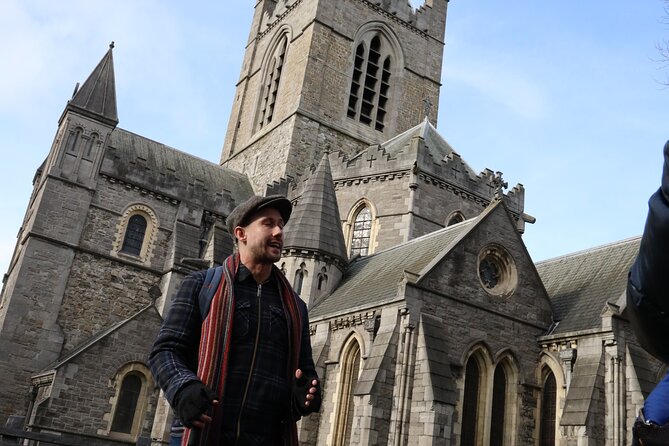
Many Dublin walking tours focus on writers, rebellion, pubs, or grand public buildings. This one takes a less polished route through the city’s past. Its stories concern bodies, burials, disease, crime, ritual, and punishment.
That gives the walk a clear identity. You are not simply being shown old streets. You are being asked to look at familiar places through the fears of earlier Dubliners. A church wall becomes a reminder of plague control. A bridge recalls a grisly military death. A cellar raises questions about how the dead were treated after burial.
I like that the route does not stay in one period. The story of Cuchulainn reaches into Irish legend, while the Viking stop looks at ritual and violence. Later sections move into Victorian grave robbing, notorious crime, and mummified bodies. You get a broad view of how Dublin handled death across several centuries.
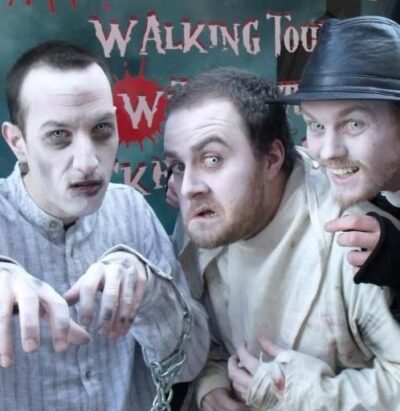
The tone also seems flexible. Peter is described as adding general history and useful area tips, while Rob is described as enthusiastic and funny. That matters here. A tour built around grim subjects can become heavy or theatrical if the guide pushes too hard. A good guide gives you context and lets the strange details speak for themselves.
More Dublin ghost and dark history walks:
- Dark Dublin: Torture, Murder & Mystery
★ 5.0 · 2,231 reviews - Dublin Ghost Bus Tour with Professional Actors
★ 4.5 · 949 reviews - The Dublin Ghostbus Tour
★ 4.6 · 634 reviews
Starting beside the Spire at 6 pm
The meeting point is beside the Spire on O’Connell Street Upper, in central Dublin. The Spire is hard to miss: a 120-metre sculpture rising above the city center. You meet there at 6 pm, then begin the walk through the north side of the city.
The Spire itself is not a macabre sight, but it is a practical starting point. It gives the group a clear landmark and places you near public transportation. From here, the tour moves through central streets rather than requiring a taxi or a long transfer between stops.
Because the activity is outdoors, the weather matters. The tour takes place on foot, and the supplied details do not list indoor shelter or a weather backup. Bring a coat or rain layer if Dublin’s forecast looks uncertain. Comfortable shoes are more useful than anything theatrical.
The General Post Office and the death of Cuchulainn
The first historical stop is the An Post General Post Office. Here, you view the statue and hear the story of the death of Cuchulainn.
This adds an important Irish legend to a tour otherwise filled with crime and bodily horror. Cuchulainn is a major figure in Irish mythology, so the stop connects the modern city center with an older layer of storytelling. The point is not just the statue itself. It is the contrast between a busy civic building and an old tale of heroic death.
The stop lasts about 15 minutes. That is long enough for a focused story, but not so long that the group remains planted on a single street corner. The GPO is also a useful early marker. From this point, the walk becomes less about Dublin’s broad public image and more about the stories tucked around its older quarters.
Wolfe Tone Park, grave robbers, and a Guinness wedding
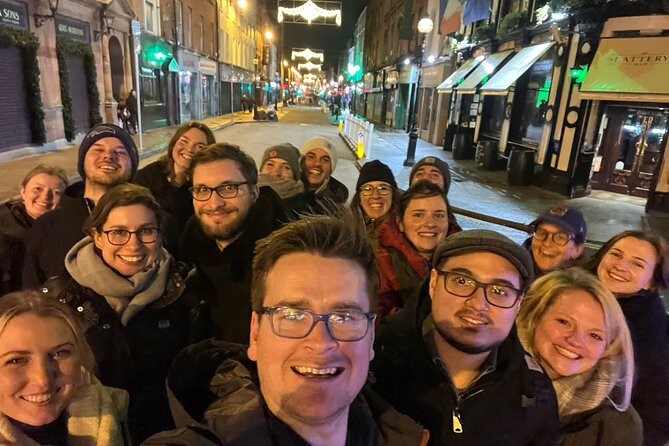
At Wolfe Tone Park, the subject turns to Victorian-era grave robbers. You also hear about the wedding venue of Arthur Guinness.
This is one of the tour’s more interesting contrasts. Grave robbing raises practical questions about burial, medicine, poverty, and the value placed on human remains. The Arthur Guinness connection adds a social detail from a very different part of Dublin’s past. One stop, then, places crime beside wealth and ceremony.
You should expect the guide to do most of the work here. The stop description does not promise an indoor visit or a major structure to enter. Instead, the value comes from standing in the area while the guide explains what happened and why it mattered.
The 15-minute format keeps the story moving. It also means you will not get a long lecture on every subject. If you enjoy compact anecdotes with a clear setting, that pace should suit you. If you want extended historical analysis, this tour may feel brisk.
More Dublin walking tours:
- Dublin Highlights and Hidden Gems Guided Walking Tour
★ 5.0 · 6,020 reviews - Dublin: Highlights and Hidden Gems Walking Tour
★ 4.9 · 2,140 reviews - 1916 Rebellion Walking Tour
★ 5.0 · 1,605 reviews - 90 Minute Dublin Walking tour and Sightseeing tips
★ 5.0 · 916 reviews
Oxmantown and the brutal side of Viking Dublin
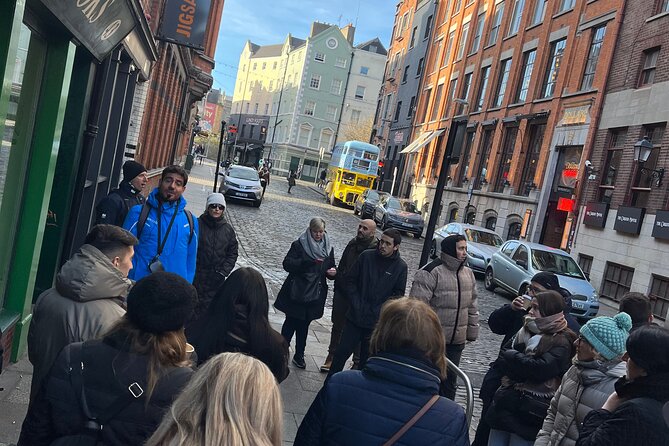
Outside the old fruit and vegetable market in Oxmantown, the walk turns to the Vikings. You hear about the history of this part of Dublin and some of the gorier aspects of Viking ritual.
This is a useful stop because it places Viking Dublin in a working urban setting rather than treating the Vikings as a distant legend. The subject is not limited to trade or settlement. The guide also addresses ritual and violence, which fits the tour’s darker purpose.
The wording suggests that this is one of the more graphic sections. If you are sensitive to descriptions of ritual death or bodily harm, keep that in mind. The tour does not present the Viking past as a tidy museum display. It focuses on the unsettling details that are often left out of standard city tours.
Again, expect about 15 minutes. The old market setting provides atmosphere, but the experience depends heavily on the guide’s storytelling. That is one reason the individual guide matters. Peter and Rob are both named in the available feedback, and both are described as adding energy and wider historical context.
Father Matthew Bridge and the man-eating rats
At Father Matthew Bridge, the guide tells the story of a soldier who was devoured by man-eating rats.
This is the kind of tale that gives the tour its memorable edge. The bridge is not presented only as a crossing point. It becomes the scene of a bizarre and gruesome death, turning an ordinary piece of city infrastructure into part of Dublin’s darker story.
The stop also shows how varied the tour is. You move from mythology and Viking ritual to a specific military death. That mix prevents the walk from feeling like eight versions of the same ghost story.
The details provided do not say that the soldier’s story is presented as a ghost encounter. It is safer to think of the walk as a macabre history tour with folklore and crime, rather than a guaranteed paranormal investigation. If you want haunted-house effects or actors in costume, this may not be your style.
St. Audoen’s Church and the Black Death cages
At St. Audoen’s Church, you see quarantine cages set into the old city walls, connected with the Black Death.
This is likely one of the route’s strongest physical sights. Unlike a story that exists only through narration, the cages give you something concrete to examine. They also show how fear of disease changed the way cities controlled movement and treated sick people.
The subject is grim, but it has clear historical value. Plague stories can become vague and sensational. Here, the setting helps ground the discussion in a visible part of Dublin’s old defenses.
The stop lasts about 15 minutes. You will not be taking a full church tour based on the information provided, so expect an exterior-focused explanation rather than an admission visit. Still, this is the sort of stop that makes the $20.43 price easier to justify. You are not only hearing a strange tale. You are connecting it to a surviving feature in the city.
Fishamble Street and the fire at the stake
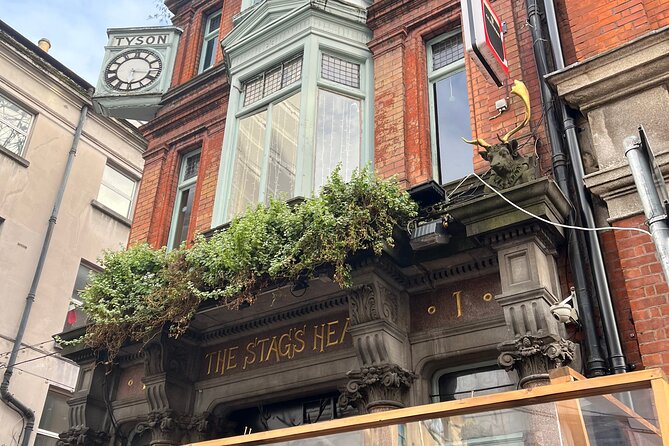
Fishamble Street brings the tour to the story of an infamous brothel keeper and her death by fire at the stake.
This is a harsh ending to the historical route. The tale combines sex work, public punishment, crime, and execution, all subjects that reveal the fears and power structures of older societies. It also brings the walk into one of Dublin’s oldest central areas.
The tour finishes on Fishamble Street, near Christchurch Cathedral and the Temple Bar District. That is convenient if you want dinner or evening drinks afterward, though the mood of the last story may put a different cast on your next stop.
Because this is the final listed stop, you can treat it as both an ending and a useful orientation point. The guide is not leaving you far outside the center. You finish in a part of Dublin that is easy to recognize and well placed for continuing your evening.
St. Michan’s Church, mummies, and a legless serial killer
The tour also includes St. Michan’s Church, where you learn about mummified corpses in the cellar and a legless serial killer.
This is arguably the most distinctive stop on the route. Mummified bodies already give the church a strong macabre identity, and the serial-killer story adds another layer of crime and anatomy. The pairing is unusual, and it is likely to be the section many people remember most clearly.
The information supplied does not state that you enter the cellar or receive admission to the church. Plan on hearing the story and seeing the relevant setting as described by the guide, rather than assuming an included interior visit. If access changes, the guide will be the person to clarify what the group can see.
This stop also shows why the tour is not simply for people seeking ghost stories. The appeal is broader: local crime, old burial practices, church history, urban legends, and the uneasy relationship between Dublin’s living city and its dead.
How the route works in practice
There are eight stops, each listed at about 15 minutes. That accounts for two hours of storytelling, though the group will also spend time walking between locations.
The start and finish are different. You begin beside the Spire and finish on Fishamble Street near Christchurch Cathedral and Temple Bar. That point-to-point route is useful because it takes you across several central areas instead of circling back to the meeting place.
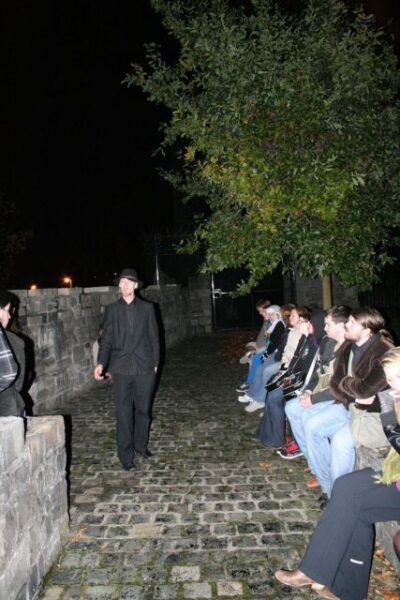
The group maximum is 25 people. That is not a private tour, but it is small enough to remain manageable on city streets. Your ability to hear will still depend on where you stand and how busy the street is, so staying near the guide is sensible.
The tour is offered in English and includes a professional guide. Mobile tickets make arrival simple, and confirmation is provided at booking. Service animals are allowed, and the activity is near public transportation. Most people can participate, though you should be prepared for a two-hour urban walk with no stated seated portion.
Is $20.43 a fair price?
At $20.43 per person, this tour is priced as an affordable guided city walk rather than a major attraction. There are no admission fees listed for the stops, so you are paying mainly for the guide’s research, storytelling, route planning, and local interpretation.
That can be good value if you enjoy history told through specific places. In two hours, you get eight subjects covering legends, Vikings, plague, crime, burial, and execution. You also finish in a useful central location.
The value is less clear if you want access to interiors, museum displays, or staged effects. The supplied details list free admission at each stop, and the experience is built around outdoor viewing and narration. You should book it for the stories, not for included entry tickets.
The guide can make a large difference. Peter wrote the tour and is described as offering wider Dublin history and area recommendations. Rob is described as enthusiastic and funny. Those details suggest a personal, guide-led experience rather than a fixed audio script, but individual delivery can still vary.
Who should book this evening walk?
I would recommend it to adults and older children who enjoy unusual history and do not mind grim subjects. It suits people who have already seen Dublin’s main landmarks and want a different way to understand the center.
It is also a good fit for first-time visitors who want a short evening activity with a clear endpoint near Christchurch Cathedral and Temple Bar. You can combine it with dinner or another central Dublin plan, though you may prefer a little time afterward to reset from the darker stories.
I would hesitate to recommend it to very young children or anyone who dislikes descriptions of death, disease, grave robbing, execution, or bodily remains. The title is direct about the tone, and the content follows through.
The tour has a 4.9 rating from 15 reviews, with 100 percent recommending it. That is a small sample, but it supports the strongest practical point: the guide’s delivery appears to be central to the experience. Peter and Rob are both singled out by name, and the most praised qualities are enthusiasm, humor, clear local knowledge, and the ability to add useful background beyond the macabre material.
Final call: book it for stories, not spectacle
You should book this tour if you want a compact, affordable walk through Dublin’s unsettling past. The best parts are the specific locations: plague cages at St. Audoen’s, mummies at St. Michan’s, Viking ritual in Oxmantown, and the final Fishamble Street story.
You should skip it if you want a purely paranormal experience, a museum admission, or a relaxed sightseeing stroll. This is a spoken history walk with strong horror elements. For the right audience, the $20.43 price buys a memorable new way to read Dublin’s streets, and the 6 pm start gives the subject matter the right mood.
FAQ
How long does the Macabre, Ghostly & Bloody Walking Tour last?
The tour lasts approximately two hours.
Where does the tour begin?
The meeting point is beside the Spire on O’Connell Street Upper in North City, Dublin.
What time does the tour start?
The tour starts at 6:00 pm.
Where does the tour finish?
The tour finishes on Fishamble Street, near Christchurch Cathedral and the Temple Bar District.
What language is the tour offered in?
The tour is offered in English.
How many people can join the tour?
The maximum group size is 25 people.
Are admission tickets to the stops included?
The listed stops have free admission. The experience includes a professional guide.
Can I cancel for a full refund?
Yes. You can cancel up to 24 hours before the experience start time for a full refund. Cancellations or changes made less than 24 hours before the start time are not accepted for a refund.
Just added around Dublin
- Wicklow: Private Day Tour from Dublin★ 5.0 · 5 reviews
- Wicklow Mountains Private Day Tour including Glendalough★ 5.0 · 7 reviews
- Wicklow tour of Glendalough★ 4.5 · 8 reviews
- Women Of Ireland: Trailblazers & Pioneers★ 5.0 · 4 reviews
- Wicklow Mountains & Glendalough Luxury Private Day Tour★ 5.0 · 23 reviews
- Dublin To Kilkenny Castle Waterford Crystal Private Car – Day Tour★ 5.0 · 8 reviews
- Waterford Crystal and Kilkenny Full-Day Rail Tour from Dublin★ 5.0 · 3 reviews
- Full Day Private Wicklow Tour★ 5.0 · 12 reviews
Dublin Ghost and Dark History Tours, compared.

Hidden Dublin: Haunted History Walking Tour v2.0 2026
Read our review →
Browse the lists this tour appears in