
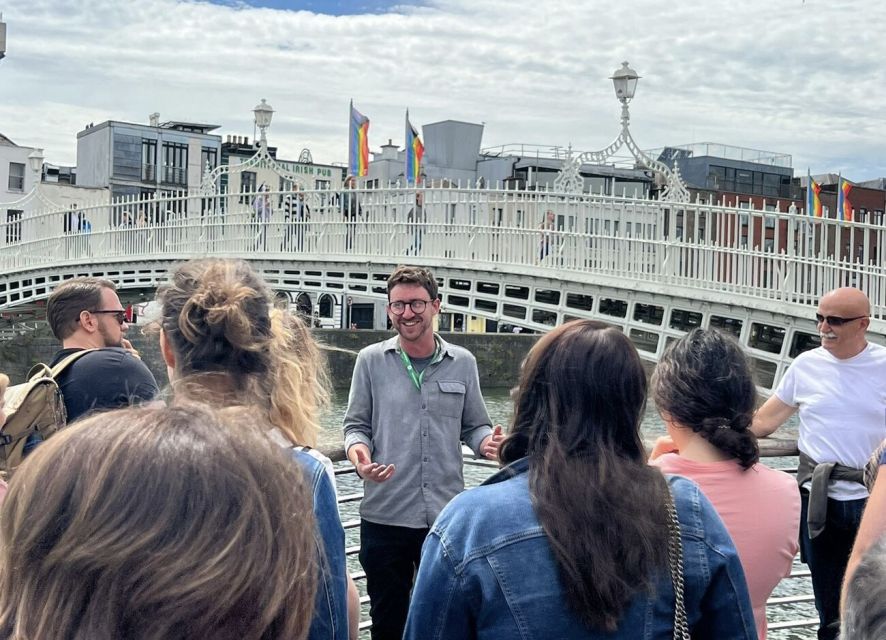
Reviewed · DUBLIN MYTHOLOGY AND STORYTELLING TOURS
Dublin: Mythology, Folklore and Legends Walking Tour
Irish folklore is not kept behind glass in a museum. On this two-hour walk, it appears in the streets, theaters, language, rebellions, and stories that shaped Dublin. You begin in Temple Bar and finish on O’Connell Street, with stops in less-visited corners along the way.
I like the way the tour connects mythical Ireland with modern Dublin, rather than treating old legends as simple fairy tales. I also like the range: fairies and banshees share the route with grave robbing, the Abbey Theatre, Gaelic revival, and contemporary street life. The main consideration is that this is a storytelling walk, not a major monument tour, so you should choose another experience if you want long interior visits or famous sights with detailed architectural commentary.
Key points at a glance
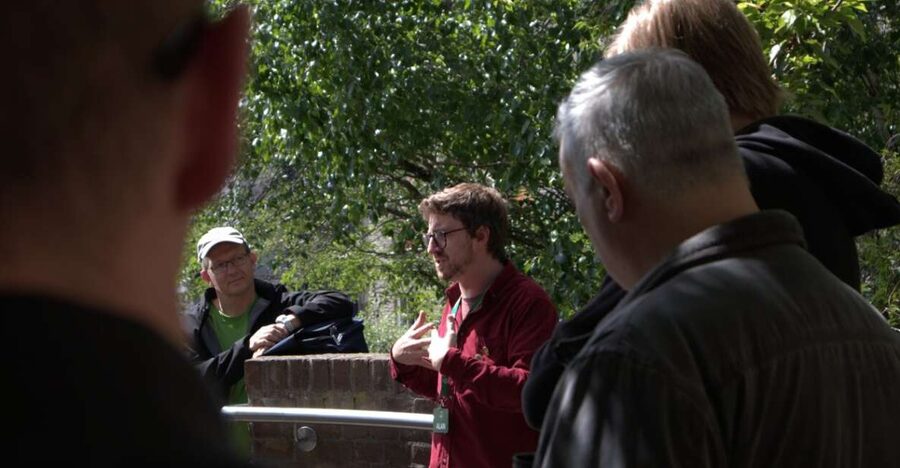
- Temple Bar starting point: Meet outside The Old Storehouse pub under the green umbrella and begin with Ireland’s mythical origins.
- Irish creatures and heroes: Learn about fairies, banshees, púca, leprechauns, and ancient warriors.
- A darker Georgian Quarter: Hear about rebellions, grave robbing, revolutions, and Dublin’s macabre side.
- The Abbey Theatre connection: Explore the tragic story of one of Ireland’s important cultural institutions.
- Gaelic culture on O’Connell Street: Finish with the revival of the Irish language and national culture.
- Strong storytelling guides: Helena, Emily, and Dave are praised for humor, warmth, clear explanations, and keeping children and tired walkers engaged.
Why this Dublin folklore walk feels different
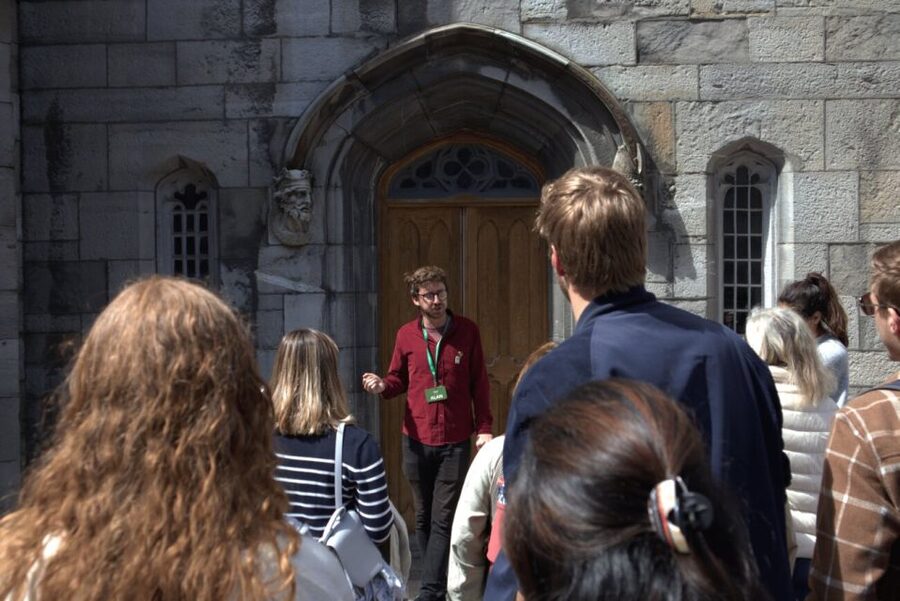
Many Dublin tours follow a familiar pattern: Trinity College, Dublin Castle, Guinness, literary landmarks, and a few famous pubs. This walk takes a different route through the city’s imagination. You still see well-known areas such as Temple Bar and O’Connell Street, but the guide gives them another layer.
That layer matters. Irish folklore is tied to identity, language, politics, religion, and everyday behavior. A story about a fairy or a banshee is not only an amusing tale. It can show how people explained danger, death, luck, place, and the unknown before modern ideas took hold.
The guides also connect old stories with later events. You hear about mythical origins and ancient warriors, then move into rebellions, revolutions, the Gaelic revival, and the living culture of Dublin today. The result is less a list of legends and more a walk through the ideas that helped shape Ireland.
The tone is friendly rather than academic. Helena is repeatedly praised for her enthusiasm, humor, and ability to make complex material easy to follow. Emily brings warmth and strong storytelling, while Dave mixes information with jokes and practical Dublin suggestions. Guides can vary, but the experience depends heavily on having someone who enjoys telling a good story aloud.
More Irish myth and storytelling walks:
- Dublin Mythology and Folklore Tour with Irish Stories and Legends
★ 5.0 · 1,003 reviews - Storytelling of Irish Myths and Legends
★ 5.0 · 158 reviews - Howth Hiking Trail from Dublin: Mythology and Legend
★ 5.0 · 77 reviews
Starting in Temple Bar with Ireland’s oldest stories
The meeting point is outside The Old Storehouse pub in Temple Bar. Look for the green umbrella. Temple Bar is one of Dublin’s busiest visitor areas, so this clear meeting point is useful. Arrive with enough time to locate the pub and guide before the group sets off.
The first part introduces Ireland’s mythical origins and Celtic beliefs. Expect the guide to frame folklore as part of Gaelic culture, not just as a collection of cute creatures for souvenirs. This opening gives you a way to understand the later stops.
Temple Bar itself is a fitting place to begin. It is instantly recognizable, heavily visited, and often associated with nightlife. The folklore tour asks you to look beyond pubs and crowds. You start seeing the district as part of a city shaped by stories, memory, and old beliefs.
This is also where the tour establishes its rhythm. You walk a short stretch, stop, listen, and then continue. Several reviews describe longer pauses at story points, which helps keep the two-hour outing comfortable. You are not expected to march continuously through Dublin while trying to absorb a lecture.
Fairies, banshees, púca, and leprechauns
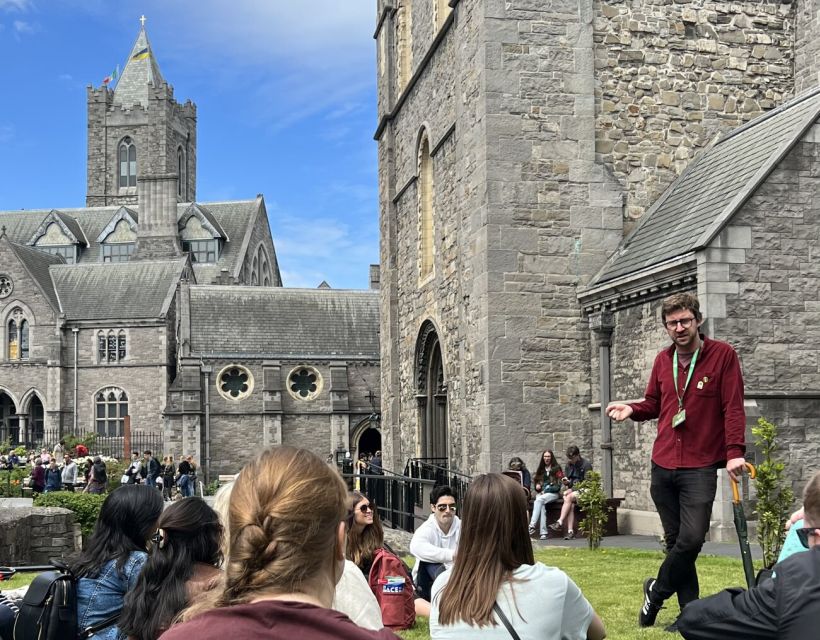
The folklore section covers some of Ireland’s best-known mythical beings, including the banshee, púca, and leprechaun. You will also hear about fairies and the place they hold in Irish belief.
The useful part is the distinction between folklore and the simplified images often sold to visitors. The guide puts these creatures into a wider Irish setting and explains how stories helped people make sense of the world around them. You may come away with a more serious understanding of why these figures lasted so long.
The banshee brings a darker mood, with its connection to death and mourning. The púca offers a more unpredictable character. The leprechaun is familiar worldwide, but the tour gives you a chance to hear about the Irish figure rather than only the cheerful tourist version.
Ancient warriors also enter the story. This broadens the subject beyond supernatural creatures and shows how heroic tales helped build a sense of Irish identity. The mythology becomes a bridge between old storytelling and later ideas about nationhood.
You should not expect costumes, props, or theatrical special effects. The guide is the main attraction. That is a plus if you enjoy spoken storytelling and asking questions. It may be less satisfying if you prefer a highly visual attraction with displays or recreated settings.
Leaving the usual route for Dublin’s darker side
One of the strongest parts of the walk is the move away from the standard tourist path. The itinerary brings you into the Georgian Quarter and its more unsettling stories, including rebellions, grave robbing, and revolutions.
This section gives Dublin a rougher edge. Georgian architecture is often presented as elegant and orderly, but the stories connected with the area can be grim. Grave robbing, in particular, reveals the tension between medical demand, poverty, death, and social power. It is a subject that makes the city feel less polished and more human.
The rebellion and revolution material also adds needed context. Irish history is not separate from folklore. Stories about heroes, suffering, resistance, and betrayal can shape the way later generations understand political events. The guide helps you see how storytelling can preserve feeling as well as facts.
The Georgian Quarter section is a good reason to take this tour early in your stay. It gives you a set of ideas to notice as you continue walking around Dublin. A street that first looks like a row of attractive buildings may later suggest conflict, loss, or social change.
The subject matter can turn macabre, so this is not a purely lighthearted outing. The guides use humor, but the tour still touches on death and difficult chapters of Irish life. Families should consider the age and interests of younger children, though Dave is specifically praised for holding children’s attention during the walk.
More Dublin walking tours:
- Dublin Highlights and Hidden Gems Guided Walking Tour
★ 5.0 · 6,020 reviews - Dublin: Highlights and Hidden Gems Walking Tour
★ 4.9 · 2,140 reviews - 1916 Rebellion Walking Tour
★ 5.0 · 1,605 reviews - 90 Minute Dublin Walking tour and Sightseeing tips
★ 5.0 · 916 reviews
The Abbey Theatre and the cost of cultural ambition
The tour includes the tragic history of the Abbey Theatre. This is an important change of pace. Instead of staying with ancient mythology, the walk shows how Ireland’s storytelling tradition continued into modern theater and national culture.
The Abbey Theatre has a special place in Ireland’s cultural story, and its history includes hardship as well as achievement. Here, the guide can show how drama became part of the effort to define Irish identity. The theater is not treated as an isolated arts venue. It is linked to language, politics, public feeling, and the desire to tell Irish stories in an Irish voice.
This stop is especially useful if you are interested in literature or theater but do not want a standard literary tour. The focus remains on folklore and national identity, yet the Abbey connection gives those subjects a modern stage.
You should also expect the stop to be mainly about explanation from the guide. The tour includes the story of the theater, but it does not promise an interior visit or performance. If you want to go inside, you will need to arrange that separately.
Finishing on O’Connell Street with living Gaelic culture
The final section reaches O’Connell Street and introduces the revival of the Gaelic language and culture. This gives the tour a forward-looking ending. You move from ancient stories and supernatural beings to the ongoing work of keeping Irish identity visible in public life.
The Irish language is central to that discussion. You learn how cultural revival shaped modern Ireland and why Gaelic remains important even for people who do not use it every day. The walk makes clear that folklore is not only about a distant past. It continues to influence how Dubliners understand place, community, and identity.
The ending also includes contemporary street characters. That detail keeps the tour grounded in the present. Dublin’s stories are still being made, told, and performed in public spaces. The city is not simply a backdrop for old legends.
Because the tour ends back at the meeting point, you can easily continue exploring central Dublin afterward. The guides are also praised for offering suggestions about places to visit next, including options that do not cost much. That practical help can be valuable early in your trip, when you are still working out how to use your time.
How the guides shape the experience
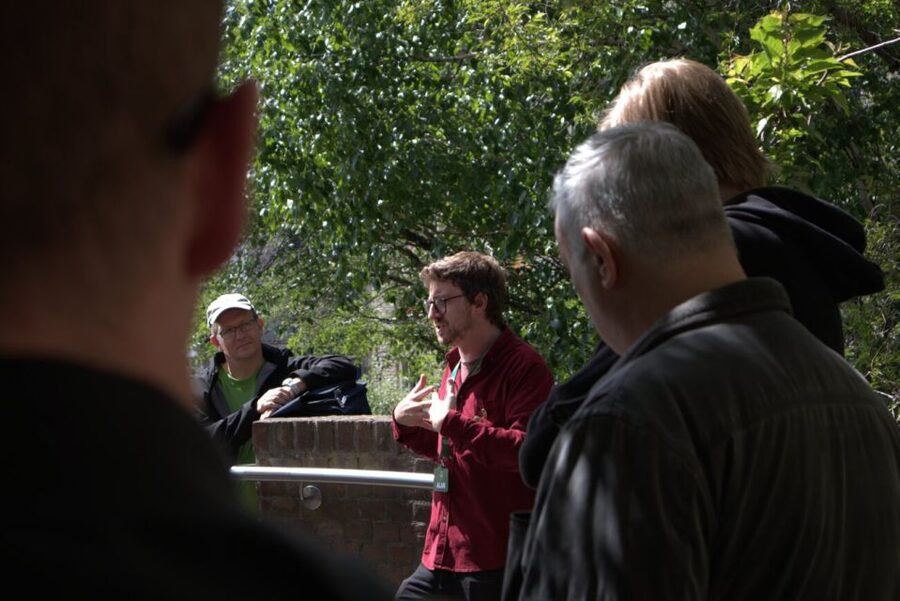
This is a guide-led experience in the fullest sense. There are no listed audio devices, displays, or transport sections to carry the tour. Your attention stays on the person telling the story and the street around you.
Helena receives especially strong praise for her energy, humor, and ability to adjust to the group’s walking pace. One useful detail is that she pays attention to people’s energy levels and chooses stopping points where the group can rest while listening. That makes the tour easier after a full day of sightseeing.
Emily is praised for making the material welcoming and accessible. Her approach also links past and present, including examples of folklore connected with Gay Pride and HIV Awareness. That gives you a broader idea of folklore as a living community practice, not simply a set of ancient legends.
Dave combines jokes with practical information. He is also singled out for keeping children interested and for giving suggestions about getting around Dublin and finding affordable places to go. With any guide, the exact style will vary, but these examples show the range you can expect.
The best guides make the stories feel conversational. You can ask questions along the route, and the small or moderate group sizes described in the feedback should make that easier than on a large coach tour. Still, group size can change, so do not book this expecting a private walk.
Pace, access, price, and practical value
The tour lasts two hours and costs $27 per person. I consider that a fair price if you want an introduction to Irish folklore with a real guide rather than a self-guided pamphlet. You are paying for interpretation, local context, and a route that adds meaning to places you might otherwise pass without noticing.
The value is strongest for first-time visitors who want to understand Dublin beyond its headline attractions. It is also useful if you have already taken a classic city tour and want a different subject. A person who already knows a lot about Irish political history may find the mythology angle particularly rewarding, since it covers material often skipped by standard history walks.
The walking itself appears manageable. The tour lasts two hours, includes several pauses, and guide feedback indicates attention to different energy levels. You still need comfortable shoes and clothing suited to Dublin weather. The walk takes place outdoors, and rain can be part of the deal, though a lively guide can make it easier to stay engaged.
The activity is wheelchair accessible. Hotel pickup and drop-off are not included, so you need to make your own way to Temple Bar. The tour is in English and uses a live guide.
You can cancel up to 24 hours ahead for a full refund, and the reserve-now, pay-later option gives you some flexibility. Those terms are helpful when your Dublin schedule is still changing.
Who should book this folklore walk?
I would choose this tour for anyone who enjoys myths, oral storytelling, cultural history, or seeing familiar places from an unusual angle. It works well for couples, solo visitors, families with interested older children, and people who want a gentle two-hour activity rather than a full-day excursion.
It is also a smart first-day choice. The walk helps you understand references to Irish legends and national identity that may appear elsewhere during your stay. It can also point you toward more places to explore after the tour.
You may want to skip it if your priority is entering major attractions, seeing detailed interiors, or covering as many landmarks as possible. The tour is not built around monuments. Its strength is the guide’s voice and the meaning attached to ordinary streets and well-known areas.
Should you book it?
Book this Dublin mythology and folklore walking tour if you want stories with context, a relaxed pace, and a route that reaches beyond the standard sightseeing script. The strongest reasons are the clear links between fairies, ancient warriors, Georgian Dublin, the Abbey Theatre, Gaelic revival, and life on today’s streets.
At $27, it offers good value for two hours, especially with a strong guide such as Helena, Emily, or Dave. Go in ready to listen, walk outdoors, and let the stories change how you see Temple Bar, the Georgian Quarter, and O’Connell Street. If that sounds more appealing than ticking off another list of buildings, this is a worthwhile addition to your Dublin plans.
FAQ
How long does the Dublin mythology and folklore tour last?
The walking tour lasts two hours. Check availability for the exact starting times.
Where does the tour begin?
Meet outside The Old Storehouse pub in Temple Bar. Look for the green umbrella.
Where does the tour finish?
The activity ends back at the meeting point.
What language is the tour in?
The tour is conducted in English with a live English-speaking guide.
Is hotel pickup included?
No. Hotel pickup and drop-off are not included.
Is the walking tour wheelchair accessible?
Yes, the activity is listed as wheelchair accessible.
What subjects are covered?
The tour covers Irish mythology, Celtic traditions, fairies, banshees, púca, leprechauns, ancient warriors, Georgian Dublin, rebellions, grave robbing, revolutions, the Abbey Theatre, Gaelic language revival, and contemporary Dublin street characters.
Can I cancel for a refund?
Yes. You can cancel up to 24 hours in advance for a full refund. You can also reserve now and pay later.
Just added around Dublin
- Wicklow: Private Day Tour from Dublin★ 5.0 · 5 reviews
- Wicklow Mountains Private Day Tour including Glendalough★ 5.0 · 7 reviews
- Wicklow Mountains & Glendalough Luxury Private Day Tour★ 5.0 · 23 reviews
- Wicklow tour of Glendalough★ 4.5 · 8 reviews
- Women Of Ireland: Trailblazers & Pioneers★ 5.0 · 4 reviews
- Dublin To Kilkenny Castle Waterford Crystal Private Car – Day Tour★ 5.0 · 8 reviews
- Waterford Crystal and Kilkenny Full-Day Rail Tour from Dublin★ 5.0 · 3 reviews
- Full Day Private Wicklow Tour★ 5.0 · 12 reviews
Dublin Mythology and Storytelling Tours, compared.
Dublin Mythology and Folklore Tour with Irish Stories and Legends
Read our review →
Howth Hiking Trail from Dublin: Mythology and Legend
Read our review →
Private Dublin Pub Odyssey: Storytelling, and Pub Culture
Read our review →

Dublin Storytelling Pub Tour – 3 stops, drinks & local snacks
Read our review →
Browse the lists this tour appears in