
Reviewed · CRUISES & BOAT TOURS
Dublin: River Liffey Sightseeing Cruise
Dublin’s story makes more sense from the River Liffey. In 45 minutes, you see the bridges, Custom House, Docklands, the Jeanie Johnston, and the point where the city opens toward Dublin Port, while a local guide connects them to Viking arrivals, reclaimed land, canals, and modern redevelopment. I like the way the cruise gives you a quick city orientation without taking half a day. I also like the guides’ warm, funny delivery, with names such as Gerry, Jerry, Lucy, and Peter praised for clear storytelling. The main drawback is its short running time: if you are enjoying the commentary, it can feel over almost as soon as it gets going.
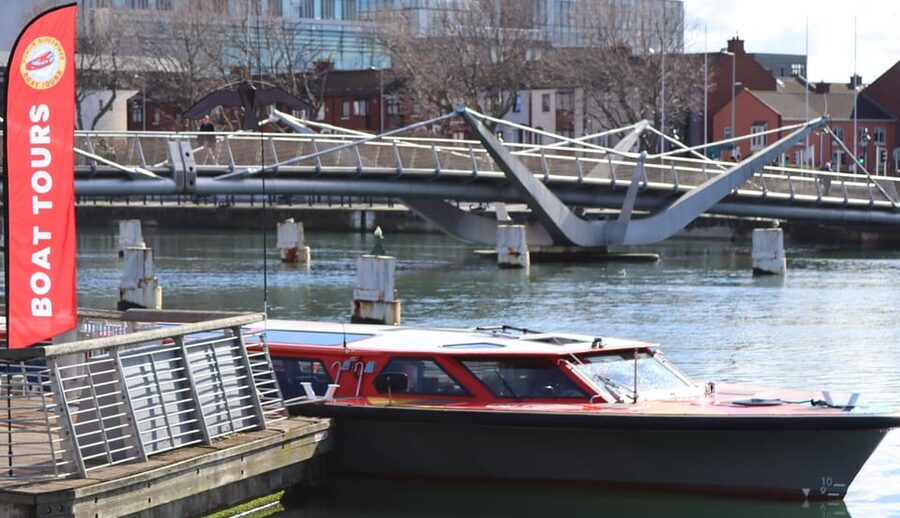
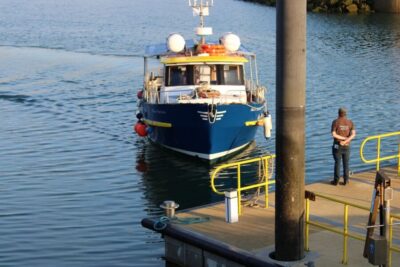
You board an all-weather 48-passenger boat at the pontoon beside the Sean O’Casey Footbridge on Custom House Quay. I like that the boat runs in less-than-perfect weather, since Dublin is hardly famous for a guaranteed blue sky. Still, bring a coat and arrive 10 minutes early. Tides can change what the boat can comfortably do, and there are no toilets onboard.
Key points at a glance
- A 45-minute city lesson on water: The guide traces Dublin from Viking settlement through its Georgian growth, decline, and Docklands renewal.
- Strong bridge and waterfront views: You pass the Ha’penny Bridge, Custom House, the Jeanie Johnston, and historic neighborhoods along the Liffey.
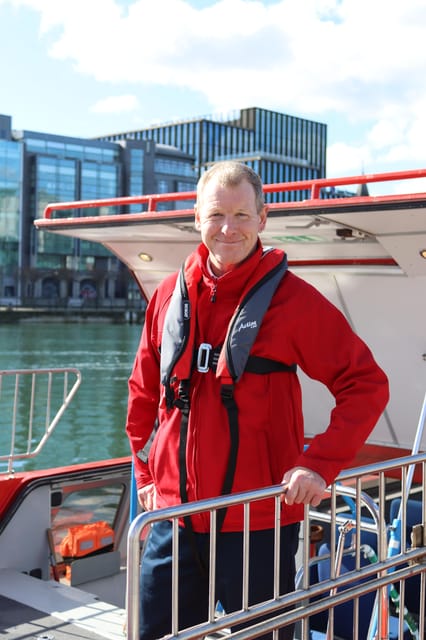
- Local guides make the trip: Guides including Gerry, Jerry, Lucy, Peter, Tony, and Mark have been praised for humor, warmth, and clear delivery.
- A compact 48-passenger boat: The smaller vessel gives the trip a personal feel, though loud passengers can make commentary harder to hear.
- Tide matters: The route and clearance under bridges depend on conditions, so the sailing plan can change.
- Simple central meeting point: Departures leave from and return to the pontoon on the north bank at Custom House Quay.
Why the Liffey is the right place to begin
Dublin can feel like a collection of separate sights when you first arrive. The river ties many of them together. From the boat, you see the north and south banks as parts of one city, not as a list of addresses on a map.
The Liffey also gives you a useful timeline. The commentary begins with the arrival of the Vikings more than 1,000 years ago, then moves through Dublin’s swift growth in the 18th and 19th centuries. From there, you hear how the waterfront declined and how Dublin Docklands has been rebuilt in more recent decades.
That broad sweep is the real value of the trip. You are not simply looking at buildings from a different angle. You are hearing why the river mattered, how trade shaped the city, and why sections of Dublin now look so different from the old port districts.
The boat carries up to 48 passengers and is designed for all-weather use. It is a practical size for a guided city cruise: large enough to accommodate a group, but small enough for a guide’s voice and personality to matter. The sailing lasts 45 minutes, so you get an introduction rather than a full tour of Dublin.
More boat trips from Dublin:
- Dublin Sightseeing Cruise on River Liffey with Local Guide
★ 4.5 · 927 reviews - Dublin: Howth Coastal Boat Tour
★ 4.7 · 644 reviews - Dublin: Howth Cliffs and Lighthouse Cruise
★ 4.4 · 441 reviews
Boarding at Custom House Quay
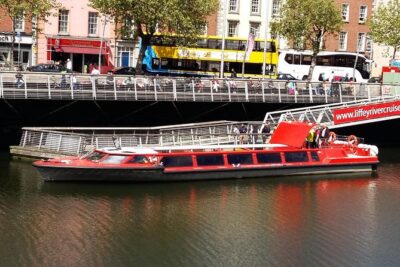
All cruises leave from the pontoon on the north side of the river, at Custom House Quay. Look for the Sean O’Casey Footbridge and the CHQ building. The pontoon is opposite CHQ, which gives you a useful landmark when walking to the meeting point.
Arrive 10 minutes before your booked time. That small cushion matters because you need to check in and receive instructions from the crew before boarding. The cruise returns to this same pontoon, so you do not need to arrange transport at the far end.
There is no hotel pickup or drop-off. You make your own way to the quay, which is easy to fold into a day of sightseeing around central Dublin. If you are planning several timed attractions, allow a little breathing room around the cruise rather than booking another activity immediately after it.
The boat is wheelchair accessible. Practical details can depend on the exact boarding conditions, so if you have particular access needs, it is wise to confirm them when booking. Also use a toilet before boarding. There are no toilets on the boat, and the crew has directed passengers to facilities across the road.
Setting off past Dublin’s bridges
Once underway, the cruise turns the familiar center of Dublin into a waterfront view. Bridges become the main visual markers, and the guide uses them to explain how the city grew around the river.
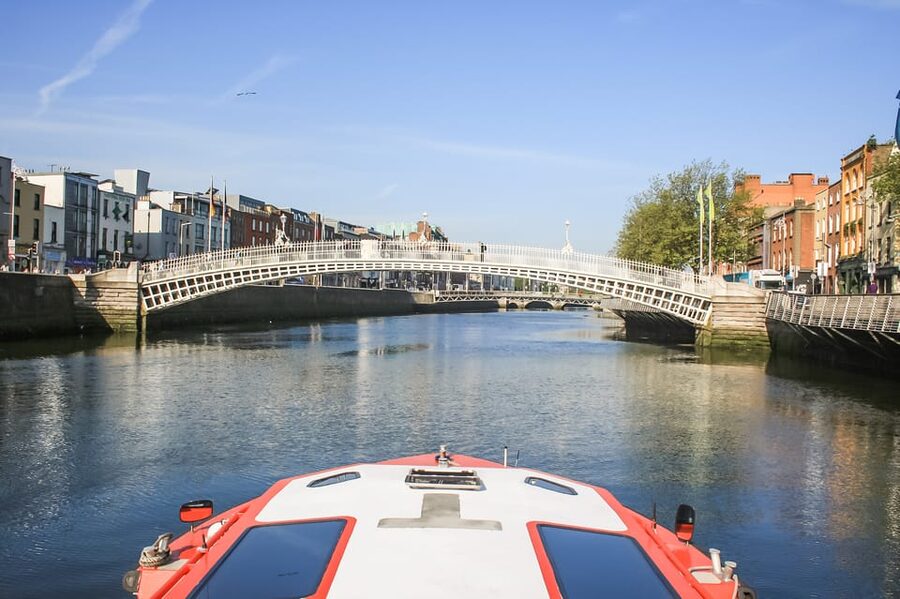
The Ha’penny Bridge is one of the key sights. From the water, you see its position as a crossing point between the north and south sides of the city. The bridge is easy to recognize from land, but the river gives you a cleaner sense of its place in Dublin’s urban pattern.
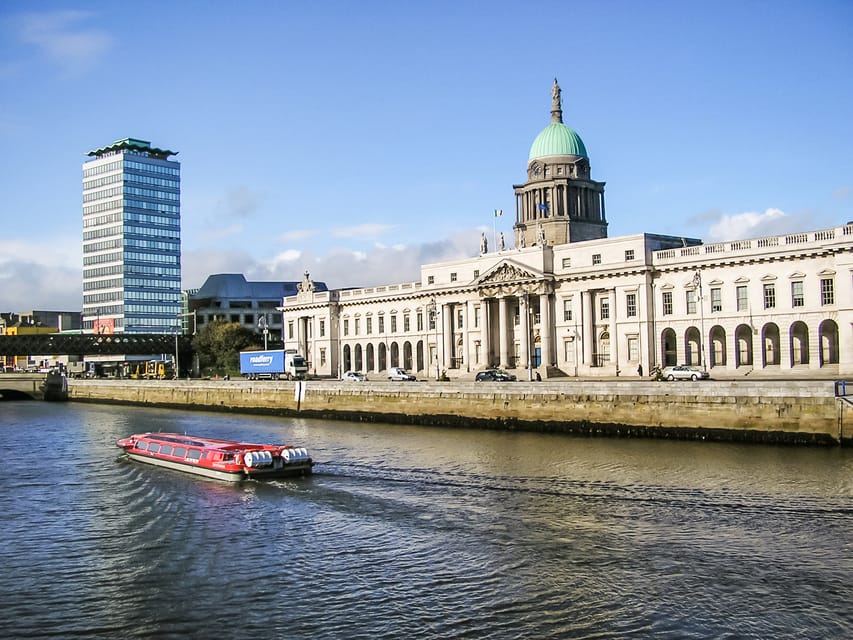
The boat also passes the Custom House, Gandon’s celebrated building. From the Liffey, its relationship with the river and quays becomes clearer than it can from a nearby pavement. The guide uses the building to explain Dublin’s commercial and civic development, making the view more than a quick photograph.
The bridges can be a fun part of the trip, especially around high tide. At certain times, the boat may pass very close to the top of the vessel under some bridges. That closeness adds a little drama, but it also explains why tidal conditions matter. The crew is upfront when high water affects the plan, and the exact route may be adjusted for safety and clearance.
From Viking Dublin to the Georgian city
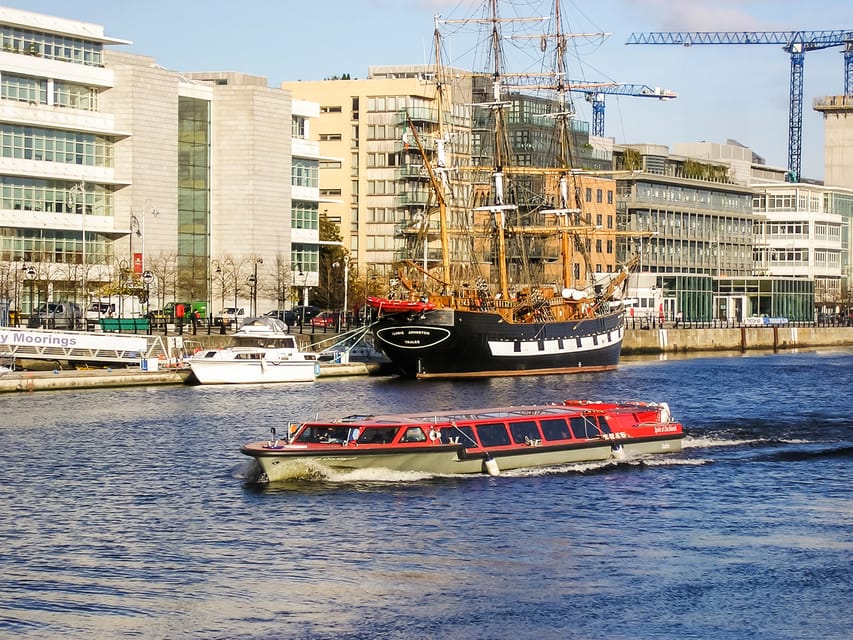
The commentary gives you useful historical layers without requiring a separate museum visit. You hear about the Vikings who established a settlement in the area, then about Dublin’s later expansion during the 18th and 19th centuries.
The guide also explains how much of modern Dublin sits on reclaimed land. Trinity College and the Spire on O’Connell Street are among the examples used to show how the shoreline and river edges changed over time. That is a particularly good detail because it challenges the simple idea that the river has always looked exactly as it does today.
I like this part of the cruise because it helps you read the city after you disembark. The next time you walk near the quays, you have a better sense of which ground is old river edge, which area was reshaped, and why the city developed in particular directions.
The style of the commentary matters here. The strongest guides combine dates with stories, humor, and local pride. Peter has been described as a natural storyteller, while Lucy’s approach is clear and measured, giving plenty of information without overloading the group. Gerry and Jerry have also led trips praised for fun stories and strong knowledge of the city.
Guide assignments can change, so you should not book expecting one particular person. What you can expect is live English commentary from a local guide, rather than a recorded narration that treats Dublin like a series of captions.
A completely different kind of day out of Dublin:
- Dublin to Cliffs of Moher, including Wild Atlantic Way and Galway
★ 5.0 · 23,331 reviews - From Dublin: Cliffs of Moher, Burren & Galway City Day Tour
★ 4.8 · 18,888 reviews - Dublin: Guinness Storehouse Entry Ticket
★ 4.6 · 16,863 reviews - Dublin to Cliffs of Moher, Burren, Wild Atlantic Way, Galway Tour
★ 5.0 · 12,924 reviews
Docklands and the Jeanie Johnston
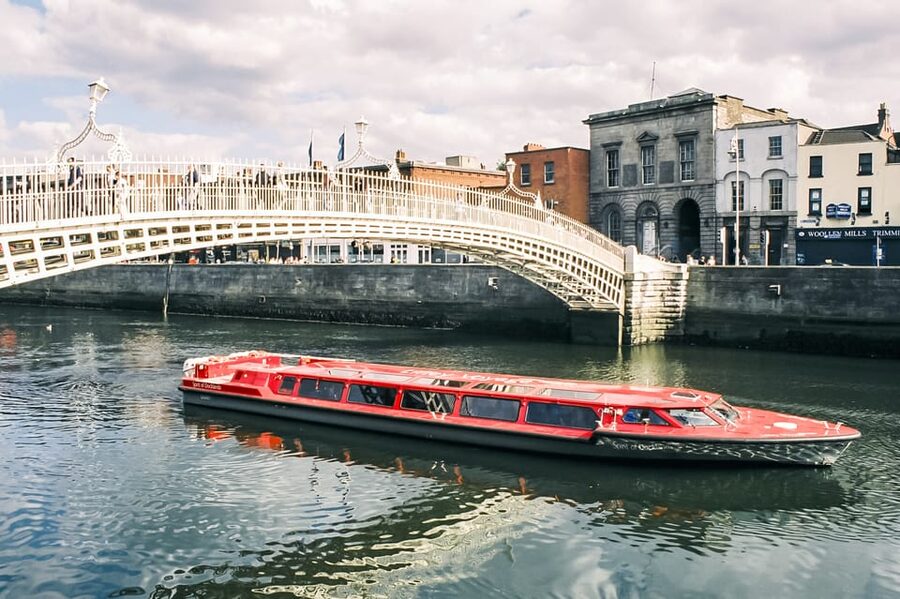
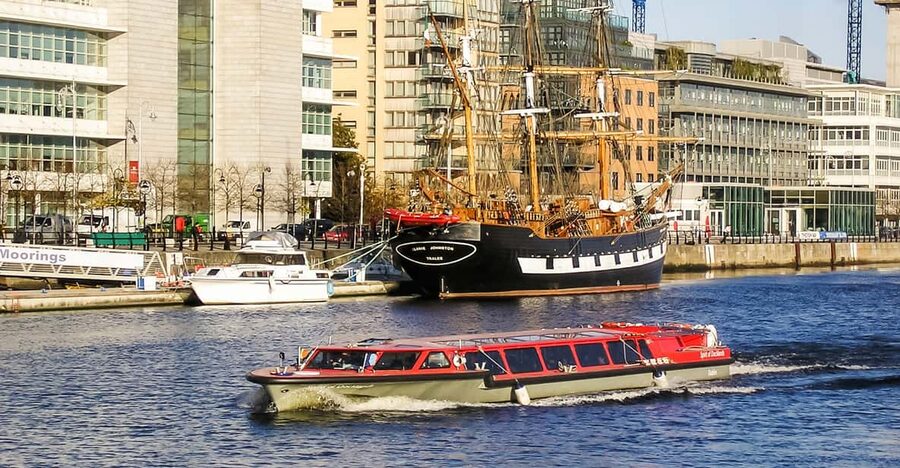
As the boat reaches the Docklands area, the city’s newer face comes into view. The district reflects Dublin’s long relationship with shipping, trade, warehouses, and port activity, but it also shows the more recent effort to bring life back to former industrial waterfront areas.
The cruise passes the Jeanie Johnston, the replica tall ship associated with Irish emigration. Seeing it from the river gives you a clear connection between the city, the port, and the people who left Ireland by sea. The ship is not just another waterfront object. It helps explain how Dublin’s river was tied to travel, work, migration, and hardship.
Docklands is also where the contrast between older Dublin and newer development is most useful. One moment the guide is discussing Georgian expansion or the working river, and the next you are looking at a district shaped by redevelopment. You get a compact lesson in how cities reuse their waterfronts.
The boat’s position on the water makes this contrast easier to grasp. On foot, buildings and roads can break up the view. From the Liffey, you see longer stretches of quay at once, along with the way the river organizes the district.
Toward the point where the city meets the sea
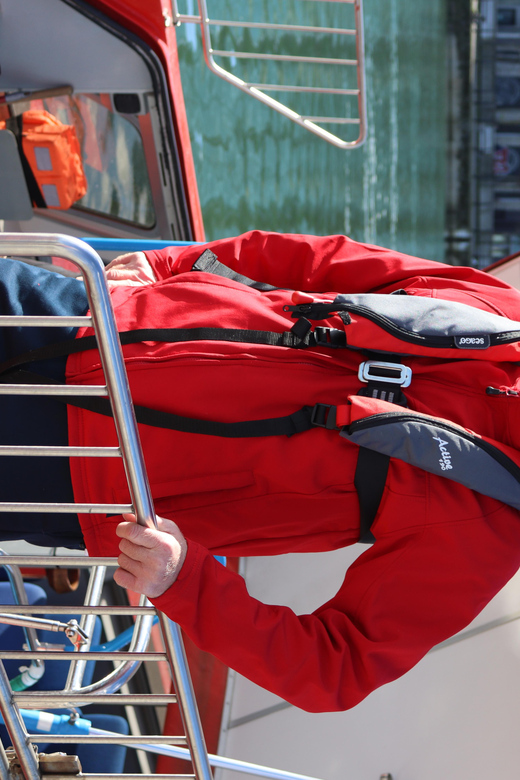
The cruise follows the Liffey toward Dublin Port and the place where the city meets the sea. This is an important change of mood. The central river feels enclosed by streets and bridges, while the port edge opens the view and reminds you that Dublin is a coastal city.
The guide also brings in Captain William Bligh, who surveyed Dublin Bay in 1800. That detail connects the present-day waterfront to the work of mapping, navigation, and managing the bay. It is the sort of small historical point that can easily be missed if you only walk between the city’s main sights.
Do not expect a long coastal boat trip. The whole experience lasts 45 minutes, and the emphasis remains on Dublin’s riverfront rather than on a full tour of Dublin Bay. Still, reaching the port edge gives the route a satisfying shape. You begin among the city bridges and finish looking toward the wider waterway that helped Dublin grow.
Tidal conditions can affect how far the boat goes or which sections are practical on a given sailing. If the operator contacts you about a changed time or alternative departure, that is part of the reality of running a boat on a tidal river, not a minor scheduling detail to ignore.
The guides are the heart of the cruise
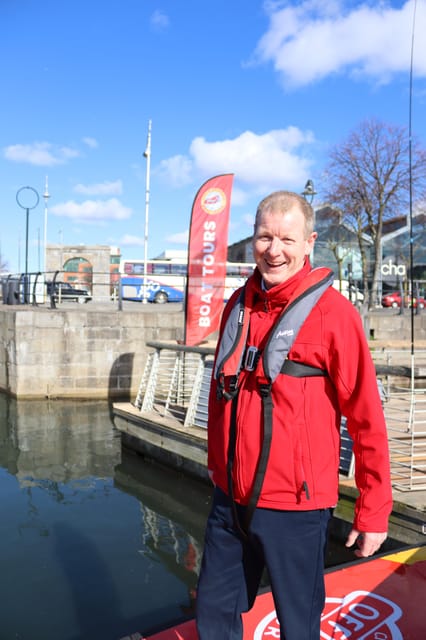
The boat and views matter, but the guide determines how much you take away. The best commentary is lively without becoming a lecture. It connects buildings to people and events, then adds a little local humor.
The guides who have led this cruise include Gerry, Jerry, Lucy, Peter, Tony, and others. Their styles differ, but the strongest pattern is clear: friendly delivery, Irish humor, and a strong personal connection to Dublin. One guide has been described as passionate about the city where he was born, while another kept the group entertained with urban myths alongside the main facts.
That mix suits a short cruise. You do not need every date in Dublin’s history. You need enough context to understand what you are seeing, and enough stories to keep your attention as the boat moves between landmarks.
There is one sound-related weakness to keep in mind. If people nearby talk loudly throughout the trip, some commentary can be hard to hear. Sit where you can best hear the guide, and do not be shy about helping preserve the experience for the rest of the boat by keeping conversation low during the main explanations.
Weather, comfort, and the short format
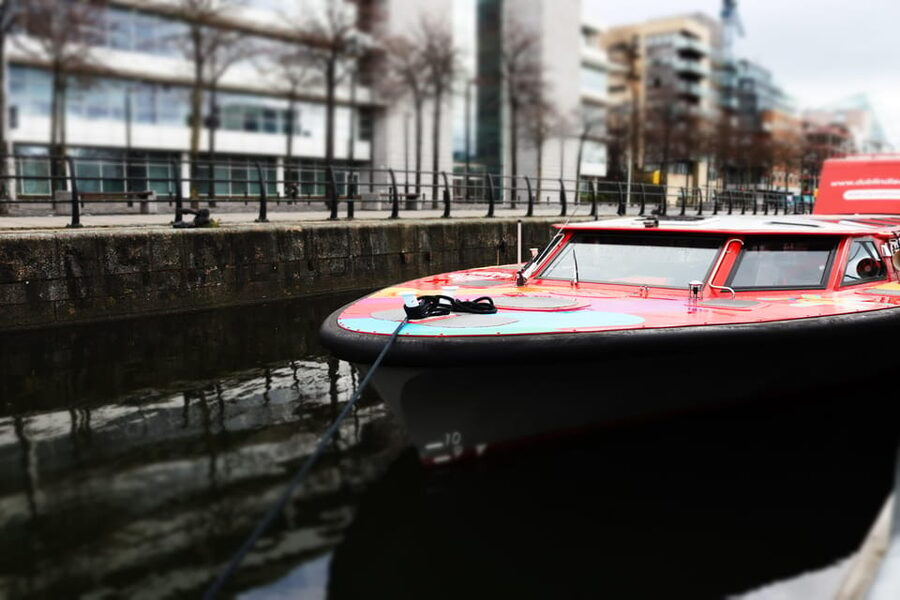
The boat operates in all weather, which is useful in Dublin. A gray or rainy day does not automatically ruin the outing. The guide can still explain the bridges, quays, and waterfront buildings, and the covered boat offers a practical way to spend 45 minutes outdoors without committing to a long walking tour.
Weather still affects the views. On a bright day, the river and buildings are easier to take in, and a smooth ride makes the whole trip feel relaxed. In poor weather, you may pay more attention to the commentary than to photographs. That is not a bad trade, but you should dress for the conditions rather than assuming the boat will feel warm.
The 45-minute duration is both a strength and a limitation. I like it for a first morning in Dublin, a break between attractions, or a gentle activity after a long day on foot. It is also short enough for families or anyone who does not want a full afternoon commitment.
On the other hand, you will not get a long time at each landmark. The boat keeps moving, and the cruise is designed to tell a connected story rather than stop for extended viewing. If you enjoy city cruises, you may wish it lasted longer. If you prefer a brisk introduction, the timing is just right.
Is $23 good value?
At $23 per person, this is not the cheapest way to see Dublin, but it is a reasonable price for a live, 45-minute cruise with a guide. You are paying for more than transport on the river. You get a compact history lesson, changing views of the city, and access to parts of the waterfront that are difficult to understand from street level.
The value is strongest if this is your first visit to Dublin. The cruise helps you place the Liffey, bridges, Custom House, Docklands, and port on the same mental map. You can then explore those districts on foot with a clearer sense of how they fit together.
It is also good value if the weather is uncertain. A normal walking tour can become tiring in rain, while this boat still gives you a structured way to see the riverfront. The experience is less valuable if you have already taken several Dublin history tours and want a long, highly detailed exploration of the port.
You can cancel up to 24 hours before departure for a full refund, and the reserve-now, pay-later option keeps your plans flexible. Bookings remain subject to availability and tides, however, and an unsuitable sailing time may lead to an alternative arrangement.
Who should book this cruise?
I would choose this for a first-time Dublin visitor who wants orientation without a large time commitment. It also suits repeat visitors who have walked the city center but have not seen the riverfront from the water.
Families may like the short format and the moving views. History fans will appreciate the links between Vikings, canals, reclaimed land, shipping, and Docklands redevelopment. The cruise also works well for people who want something easy and social rather than another indoor attraction.
I would think twice if you dislike live commentary, need a completely silent ride, or expect an extended voyage into Dublin Bay. You should also keep the 45-minute format in mind. This is an introduction to Dublin’s river story, not a full-day sightseeing program.
Should you book the River Liffey cruise?
Yes, if you want a friendly, compact way to understand Dublin from a new angle. The strongest reasons are the local guides, the clear historical thread, and the views of Custom House, the Ha’penny Bridge, the Jeanie Johnston, Docklands, and Dublin Port.
Book it early in your Dublin stay if possible, then use the information to shape your walking plans. Arrive 10 minutes ahead, use a toilet before boarding, dress for changing weather, and keep your schedule flexible around the tide.
Skip it only if you need a long boat trip or already know Dublin’s waterfront well. For most visitors, $23 buys a useful 45-minute introduction, with enough humor and local detail to make the city easier to read afterward.
FAQ
How long does the Dublin River Liffey cruise last?
The cruise lasts 45 minutes and returns to the pontoon where it begins.
Where does the cruise depart?
All cruises leave from the pontoon at the Sean O’Casey Footbridge on the north side of the River Liffey, on Custom House Quay, opposite the CHQ building.
What sights can I see from the boat?
The cruise passes sights and areas including the Ha’penny Bridge, Custom House, the Jeanie Johnston, Dublin Docklands, historic riverfront neighborhoods, and the edge of Dublin Port.
Is the cruise guided?
Yes. The cruise includes a live English-speaking guide who explains Dublin’s history, the River Liffey, the canals, reclaimed land, bridges, and Docklands redevelopment.
Is the boat wheelchair accessible?
Yes, the activity is listed as wheelchair accessible.
Can I cancel or change my booking?
You can cancel up to 24 hours in advance for a full refund. Bookings are subject to availability and tidal conditions, and the operator may contact you if your chosen sailing cannot run as planned.
Just added around Dublin
- Wicklow: Private Day Tour from Dublin★ 5.0 · 5 reviews
- Wicklow Mountains Private Day Tour including Glendalough★ 5.0 · 7 reviews
- Wicklow Mountains & Glendalough Luxury Private Day Tour★ 5.0 · 23 reviews
- Wicklow tour of Glendalough★ 4.5 · 8 reviews
- Women Of Ireland: Trailblazers & Pioneers★ 5.0 · 4 reviews
- Dublin To Kilkenny Castle Waterford Crystal Private Car – Day Tour★ 5.0 · 8 reviews
- Waterford Crystal and Kilkenny Full-Day Rail Tour from Dublin★ 5.0 · 3 reviews
- Full Day Private Wicklow Tour★ 5.0 · 12 reviews
Cruises & Boat Tours, compared.
Dublin Sightseeing Cruise on River Liffey with Local Guide
Read our review →

Howth Coastal Boat Tour (Ireland’s Eye Ferries 50 mins trip)
Read our review →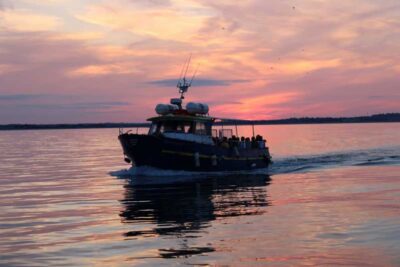
Browse the lists this tour appears in