
Reviewed · DUBLIN MUSEUM AND ATTRACTION TICKETS
Dublin: EPIC Museum and Jeanie Johnston Entry Ticket
The most useful thing about this Dublin combination is its two-part story. You first walk aboard the Jeanie Johnston, a tall ship linked with Irish famine migration, then cross the street to EPIC The Irish Emigration Museum and see how Irish people shaped the wider world. The order matters: the ship gives the museum’s broad themes a human starting point.
I like the excellent location, with both attractions beside each other in the Docklands, about a 10-minute walk from central Dublin. I also like the balance between a guided experience on the ship and a self-guided museum visit, so you get lively storytelling without being tied to a guide for the entire three hours.
The main consideration is accessibility. The ship is reached by a gangplank and is not suitable for wheelchairs, mobility scooters, or buggies. You need to walk across the gangplank, although scooters and buggies can be left at the office during the tour.
Key points to know before you book

- The Jeanie Johnston comes first: Follow a guide below deck and hear about passengers and crew who fled the famine aboard a vessel known as the Miracle Ship.
- EPIC is directly across the street: You can move from the ship to the museum without arranging extra transport.
- The museum is self-guided: Interactive galleries let you set your own pace and spend more time on the subjects that catch your attention.
- The ship guides are a major strength: Guides including Claire, Owin, and Katrina have been praised for clear facts, warmth, and lively delivery.
- Your EPIC ticket includes a free return visit within 10 days: That makes it easier to split the museum over two visits.
- The $36 price buys two substantial attractions: It is strongest value for visitors who plan to give EPIC proper time rather than rush through both sites.
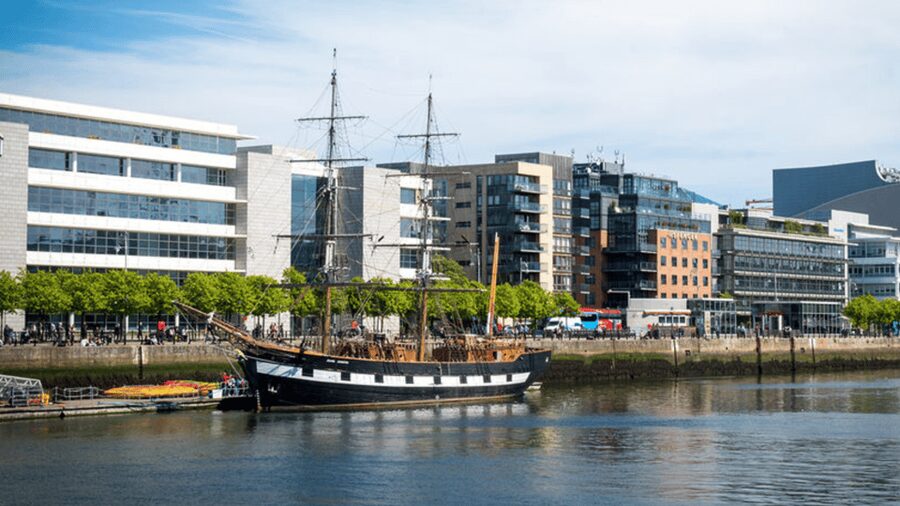
Starting at the Jeanie Johnston in Dublin’s Docklands
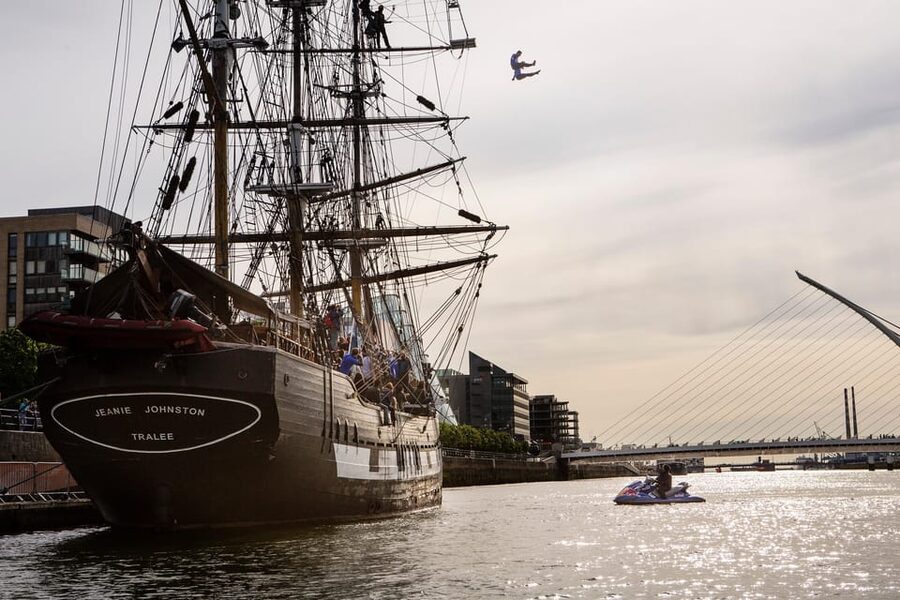
The Jeanie Johnston gives this experience its emotional center. You are not beginning with a broad survey of Irish identity or a wall of dates. You are stepping onto a ship and hearing about people who left Ireland during the famine, when hunger and hardship drove large numbers to seek a new life elsewhere.
The ship is described as a tall ship, and its nickname, the Miracle Ship, points to the remarkable nature of its journeys. Your guide leads you through the vessel and explains the experiences of passengers and crew. The setting does a lot of work: cramped shipboard spaces and the physical act of crossing the gangplank help you picture the uncertainty of leaving home by sea.
This is a guided tour, so the quality of the person leading it matters. Claire has been praised for combining strong historical detail with clear enthusiasm for the Jeanie Johnston. Owin has also been singled out for a dynamic presentation. Katrina is noted for engaging with her group, knowing her facts, and keeping the delivery friendly and fun.
Those details are useful when you are deciding what sort of experience you want. The ship is not simply a vessel to walk through at your own speed. The guide supplies the human context, explains what you are seeing, and connects the physical ship to the people who depended on it.
The tour also gives you a more personal route into famine-era Ireland. The museum across the street covers a huge subject: emigration, identity, culture, and Irish influence around the world. On the ship, the focus is narrower. That narrower focus can make the history easier to grasp before you enter EPIC.
More Dublin museum and attraction tickets:
- Irish Rock ‘N’ Roll Museum Experience Dublin
★ 5.0 · 6,112 reviews - The Little Museum of Dublin Famous Guided Tour
★ 5.0 · 2,948 reviews - Dublin EPIC Museum Admission Ticket
★ 4.5 · 1,729 reviews
Why the ship tour adds more than a photo stop
A ship can easily become a quick picture opportunity. The Jeanie Johnston is more useful than that because the tour centers on the people who sailed aboard it. You hear about those fleeing the horrors of the famine, as well as the crew responsible for the vessel and its passengers.
I like this part for two reasons. First, it gives you a clear sense of movement: Ireland is not presented as an isolated island, but as a place from which people left under pressure and hope. Second, it gives the later museum visit a strong point of reference. When EPIC talks about Irish people abroad, you have already considered what departure could mean in physical and personal terms.
The ship may be the better choice if you prefer a traditional guided tour with a guide speaking directly to you. One review specifically called the ship the highlight of the experience, while finding EPIC less fun, though still praising its visuals and production. That is a fair distinction. The ship relies on the guide and the atmosphere of the vessel. EPIC relies more on design, interactive displays, and your willingness to explore.
You should also allow for the ship’s practical limits. The gangplank is not suitable for wheelchair users, mobility scooter users, or buggies. This is not a minor detail to overlook when planning a family visit or a day out with someone who has limited mobility. Scooters and buggies can be left in the office during the tour, but the visitor still needs to be able to walk aboard.
Crossing to EPIC The Irish Emigration Museum

After the ship, you head across the street to EPIC. Both sites are in the Docklands, and the short transfer is one of the best features of the pairing. You do not lose time finding a bus, taxi, or second part of town.
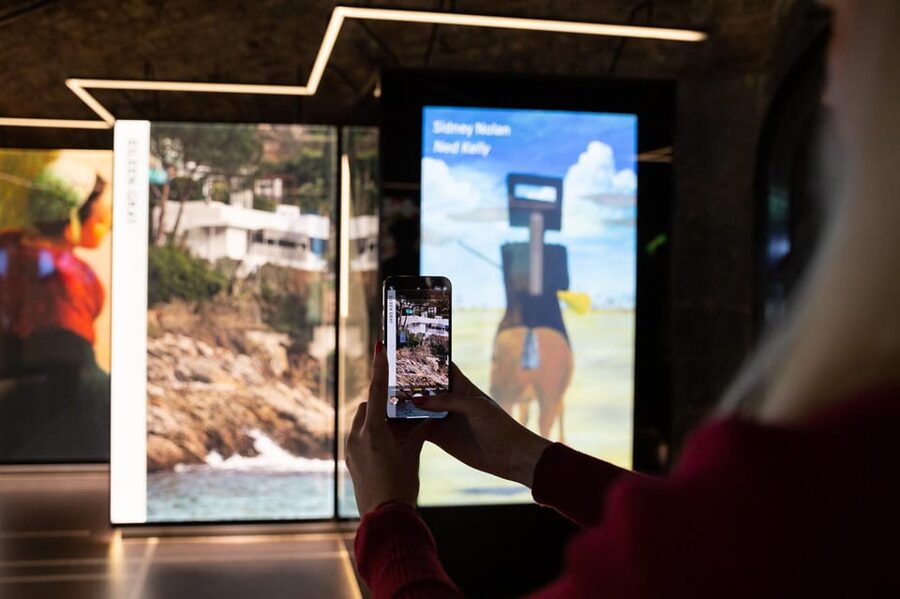
EPIC takes a much wider view of Irish identity. Its galleries explain how a small island made a large impact around the world, using the stories of Irish emigrants who became scientists, politicians, poets, artists, and outlaws. The point is not simply that Irish people left Ireland. The point is that Irish identity continued to develop far beyond the island.
This is also where the experience avoids the more familiar tourist version of Ireland. You will not find a display built around leprechauns or pots of gold. Instead, the museum asks you to consider why Irishness is recognized and celebrated in so many places, and why saying you are Irish can start a conversation almost anywhere.
You explore EPIC independently. That gives you freedom to pause at an exhibit, move quickly through a section, or return to a gallery that caught your attention. The format suits curious visitors who like interactive museums and do not want a guide deciding how long each display deserves.
The museum’s presentation has earned praise for its visual and production qualities. Music and dance are part of the experience, and Irish migration is shown through different reasons for leaving. The displays also touch on early parts of the Troubles, giving you a wider political and cultural frame rather than treating emigration as one simple story.
How much time you need at each attraction

The stated duration is three hours, with starting times available according to the date you choose. That gives you a useful half-day plan in Dublin, but you should not treat the three hours as a strict promise that every person will finish at exactly the same moment.
The Jeanie Johnston portion is guided and timed. EPIC is self-guided, so your pace will depend on how much you read, watch, and try. One person may move through the museum briskly after the ship tour. Another may spend many hours there, especially if interactive displays, music, dance, and the stories of individual emigrants hold their attention.
The free return visit within 10 days is therefore important. You do not have to force every EPIC gallery into one afternoon. If you are staying in Dublin for several days, you can make a first visit after the ship and return later for the sections you skipped.
I would plan this as a substantial block of your day rather than a quick pair of stops. The 10-minute walk from the city center makes it easy to reach, but the museum’s scope rewards time. If you are interested in Irish culture or family migration stories, the return option adds real value.
A completely different kind of day out of Dublin:
- Dublin to Cliffs of Moher, including Wild Atlantic Way and Galway
★ 5.0 · 23,331 reviews - From Dublin: Cliffs of Moher, Burren & Galway City Day Tour
★ 4.8 · 18,888 reviews - Dublin: Guinness Storehouse Entry Ticket
★ 4.6 · 16,863 reviews - Dublin to Cliffs of Moher, Burren, Wild Atlantic Way, Galway Tour
★ 5.0 · 12,924 reviews
What makes EPIC different from a conventional museum

EPIC presents Irish history and culture from the viewpoint of people who left Ireland and carried parts of Irish identity with them. That approach changes the question. Instead of asking only what happened in Ireland, you also ask how Irish ideas, customs, talent, and political connections traveled abroad.
The interactive style is a good fit for visitors who prefer doing something rather than reading long rows of text. The galleries are designed to pull you through a series of subjects, and the free souvenir passport gives you a small memento of your journey through the museum.
I would not describe EPIC as a quiet, traditional museum. Music, dance, visuals, and production are part of its appeal. That can make the experience accessible for families and for anyone who finds standard historical displays tiring. It can also feel less personal than the ship, where the guide speaks directly to your group and the physical setting keeps the story close.
The museum is strongest when you follow its wider idea: Ireland’s influence is not limited to the island. You can move from famine migration to cultural identity, then to the achievements and activities of Irish emigrants around the world. The mix of subjects means some sections may interest you more than others, but the self-guided format lets you make those choices.
Getting good value from the $36 price
At $36 per person, this is not the cheapest activity in Dublin. Its value depends on how you use the two admissions. You are paying for a guided ship experience and entry to a major self-guided museum, not just a short photo opportunity.
The price looks reasonable if you want a focused half-day in the Docklands. The two attractions are next to each other, so you avoid paying for separate transport between them. You also receive the museum’s free return option within 10 days, which can turn one admission into two museum visits.
The value is weaker if you plan to rush through EPIC or are mainly interested in the ship. In that case, you are paying for a combined ticket while using only half of its potential. The ship and museum also offer different styles, so you should be comfortable with both a guided tour and a self-directed gallery visit.
For a visitor with a strong interest in emigration, Irish identity, or family connections abroad, the combination makes more sense than either attraction alone. The ship shows departure in a concrete setting. EPIC shows what Irish identity became after departure. That connection gives the ticket a clear purpose.
Food and a practical Docklands break
The CHQ building has plenty of cafés and restaurants, which makes the area convenient for a longer visit. You can arrange a meal or coffee nearby rather than returning to the city center between the ship and museum.
That matters because the experience can stretch beyond the advertised three hours if you explore EPIC carefully or use the return visit. The nearby food choices also make this pairing easier to fit into a full day with children or older family members who may appreciate a break.
The information provided does not specify a particular restaurant, menu, or price range, so I would treat the CHQ options as a convenience rather than plan your entire meal around one venue. The important point is that refreshments are close to both attractions.
Who will enjoy this combination most
I would recommend this experience to you if you want Irish history presented through real human movement rather than only through monuments and famous buildings. The Jeanie Johnston is especially well suited to anyone interested in famine-era migration, ships, or guided storytelling.
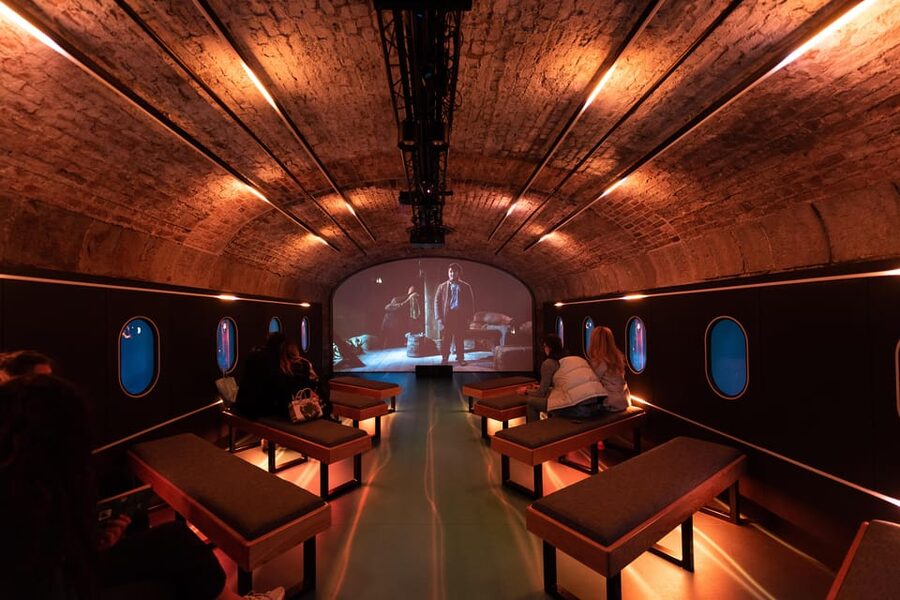
EPIC works well for visitors who like interactive displays and want to explore at their own pace. It is also useful if you want a broader picture of Irish influence, including science, politics, poetry, art, and less respectable figures such as outlaws.
Families may appreciate the combination of physical spaces, visual displays, music, and dance. The free passport gives younger visitors a simple souvenir, though the ship’s gangplank and access limits need careful thought before booking.
You may prefer another Dublin activity if you dislike interactive museums, need step-free access to every part of a tour, or want a short visit with no planned return. The ship and EPIC are also not identical in tone. The Jeanie Johnston is intimate and guide-led. EPIC is larger in subject and more dependent on your own pace.
Booking details worth knowing
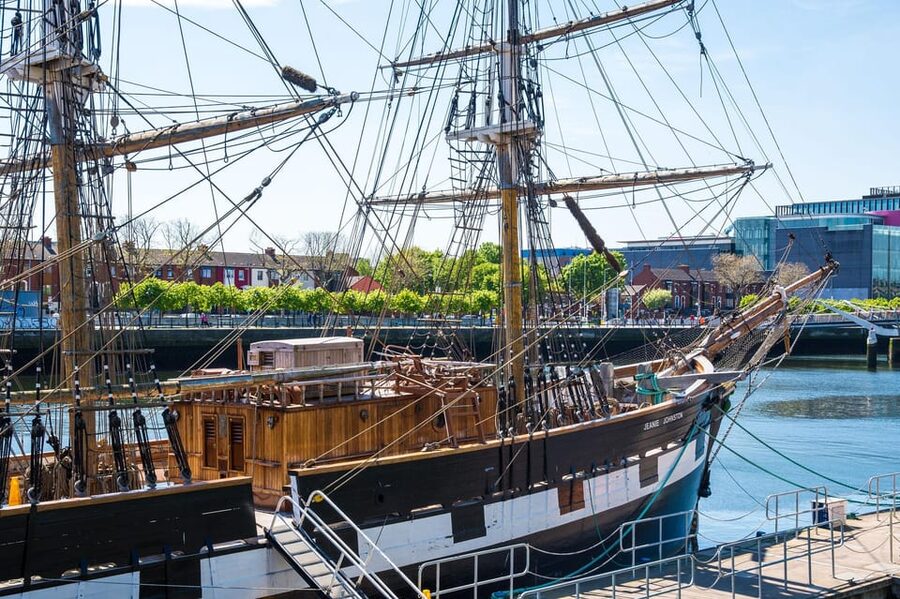
The activity includes entry to both the Jeanie Johnston and EPIC The Irish Emigration Museum. The ticket price is $36 per person, and the listed duration is three hours, with start times shown when you check availability.
You can cancel up to 24 hours in advance for a full refund, and reserve now while paying later. Those terms are helpful if your Dublin schedule is still changing.
For access, remember the gangplank. The ship is not suitable for wheelchairs, mobility scooters, or buggies, although scooters and buggies can be left in the office during the tour. You need to walk across the gangplank onto the ship.
Should you book the Jeanie Johnston and EPIC ticket?
Book it if you want two connected views of Irish emigration: one aboard a famine ship, one through interactive stories of Irish people around the world. The strongest part of the experience is the link between the guided ship tour and the museum’s wider ideas.
I would give special weight to the guide-led element. Claire, Owin, and Katrina are examples of the warm, lively style that can make the Jeanie Johnston memorable. EPIC then gives you more freedom, with music, dance, visual displays, and a return visit included within 10 days.
Skip it if the ship’s access is not practical for you, or if you know you will not spend enough time in the museum to justify the combined price. For most visitors who have three hours to spare and want more than a standard Dublin city-center stop, this is a well-matched Docklands pairing with solid value.
FAQ
Where are the Jeanie Johnston and EPIC Museum located?
Both attractions are in Dublin’s Docklands, directly beside each other. They are about a 10-minute walk from Dublin city center.
How long does the combined experience take?
The listed duration is three hours. Your exact time may vary because the Jeanie Johnston tour is guided while EPIC is self-guided.
Is the EPIC Museum visit guided?
No. Your visit to EPIC The Irish Emigration Museum is self-guided, so you can choose your own pace through the galleries.
Can I return to EPIC after my first visit?
Yes. Your EPIC ticket includes a free return visit within 10 days.
Is the experience suitable for wheelchair users or mobility scooter users?
The Jeanie Johnston is not suitable for wheelchairs or mobility scooters because access requires crossing a gangplank. Scooters and buggies can be left in the office, but you must be able to walk across the gangplank.
What is included in the ticket?
The ticket includes entry to the Jeanie Johnston and entry to EPIC The Irish Emigration Museum. A free souvenir passport is also provided for your museum visit.
Just added around Dublin
- Wicklow: Private Day Tour from Dublin★ 5.0 · 5 reviews
- Wicklow Mountains Private Day Tour including Glendalough★ 5.0 · 7 reviews
- Wicklow Mountains & Glendalough Luxury Private Day Tour★ 5.0 · 23 reviews
- Wicklow tour of Glendalough★ 4.5 · 8 reviews
- Women Of Ireland: Trailblazers & Pioneers★ 5.0 · 4 reviews
- Full Day Private Wicklow Tour★ 5.0 · 12 reviews
- Dublin To Kilkenny Castle Waterford Crystal Private Car – Day Tour★ 5.0 · 8 reviews
- Waterford Crystal and Kilkenny Full-Day Rail Tour from Dublin★ 5.0 · 3 reviews
Dublin Museum and Attraction Tickets, compared.
The Little Museum of Dublin Famous Guided Tour
Read our review →

The Dublin Pass with Tickets to 40+ Attractions
Read our review →


Irish Whiskey Museum: Whiskey Blending Experience
Read our review →
Go City: Dublin Pass | Save up to 50% – Includes 35+ Things To Do
Read our review →Browse the lists this tour appears in