
Reviewed · DUBLIN MYTHOLOGY AND STORYTELLING TOURS
Dublin Mythology and Folklore Tour with Irish Stories and Legends
Dublin’s old stories come alive on this walk, where fairies, legendary warriors, church crypts, prison history, and modern Irish identity all meet on city streets. The best part is the way guides such as Helena, Emily, Dave, Ross, and Lee connect folklore to places you might otherwise pass without a second glance.
I like the link between mythology and Irish history, especially at the GPO and the Garden of Remembrance. I also like that the route crosses the River Liffey and finishes north of the river, giving you a wider view of central Dublin than a Temple Bar-only walk. The main drawback is that you are outdoors and on your feet for about two hours, and a group of up to 25 can make it hard to hear at times.
Key points to know before booking

- Irish storytelling is the main event: Expect legends, fairies, invasions, old tales, and the way folklore still shapes Irish identity.
- The route crosses the Liffey: You begin in Temple Bar and finish at Parnell Square, rather than returning to the starting point.
- History comes with the myths: St. Michan’s Church, Newgate Prison, Green Street Courthouse, the GPO, and the Garden of Remembrance all add real historical weight.
- Guides bring different personalities: Helena, Emily, Dave, Ross, Lee, Deidre, Alan, and Dave have all led tours, with humor and storytelling praised repeatedly.
- Plan for walking and standing: The pace is generally manageable, but one guide was described as a fast walker and some people found the standing tiring.
- The price is modest: At $29.02 per person, the tour gives you two hours of guided sightseeing without separate admission fees.
Why the mythology works better on Dublin’s streets
This is not a lecture about Irish mythology delivered in a room. It is a walking story that uses Dublin itself as the backdrop.
You begin in Temple Bar, pass through the center of the old city, cross the Liffey, and continue north toward Parnell Square. Along the way, the guide moves between old legends and more recent events. That change of scale is what gives the tour its appeal. A tale about fairies or heroic figures can lead into a discussion of Irish identity, political memory, or the way folklore appears in public buildings and monuments.
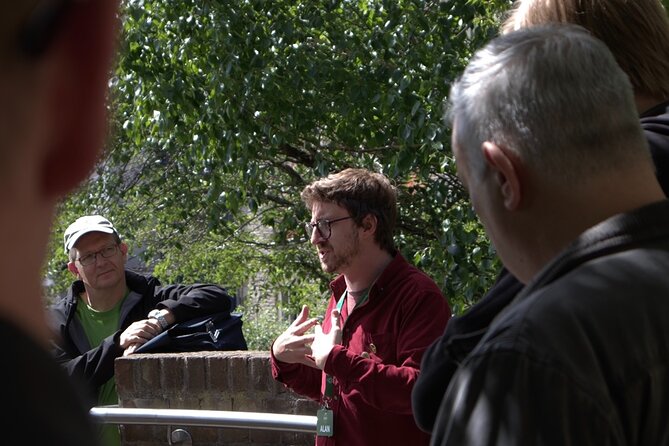
The strongest guides make these connections feel natural rather than forced. Helena is repeatedly praised for humor, warmth, and her ability to answer questions. Emily is known for keeping the mood light, even in poor weather, while also handling detailed questions about myths and Irish history. Ross brings plenty of energy and a gift for storytelling. Lee is described as funny and entertaining, and Dave receives praise for answering questions about both the tour and the wider Dublin area.
The subject matter is broad. You may hear about leprechauns, fairies, invasions, legendary figures, and the sources behind modern fictional characters. One particularly unexpected thread connects Irish mythology with the roots of The Hulk. That sort of surprise is part of the fun. You are not simply ticking off famous Dublin buildings. You are learning how old ideas continue to shape popular culture and national stories.
More Irish myth and storytelling walks:
- Dublin: Mythology, Folklore and Legends Walking Tour
★ 4.9 · 703 reviews - Storytelling of Irish Myths and Legends
★ 5.0 · 158 reviews - Howth Hiking Trail from Dublin: Mythology and Legend
★ 5.0 · 77 reviews
Temple Bar gives the tour a lively starting point
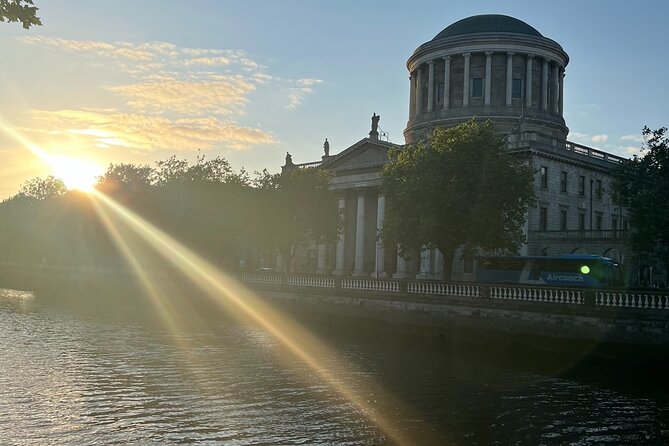
The meeting point is at 3 Crown Alley, in the center of Temple Bar. This is a convenient place to begin because it is close to public transportation and easy to fit into a day of sightseeing in central Dublin.
The first section takes about 10 minutes and passes through much of the Temple Bar area on the way toward Grattan Bridge. You will not receive a separate admission ticket for this stop. The value here is not entry to a paid attraction. It is the guide’s interpretation of the streets, their names, and the stories attached to the old center of the city.
Temple Bar can be crowded and noisy, so this is one place where staying close to the guide matters. A group of 25 is not enormous, but it is large enough for people at the back to lose parts of the story if the guide is speaking beside traffic or a busy pub. Move toward the front when you can, and arrive ready to listen rather than expecting a private tour.
This opening section also sets the tone. The walk is not designed as a fast transfer from one landmark to another. You stop, listen, and move on. The storytelling carries as much weight as the buildings.
The River Liffey changes the view of Dublin
The tour then reaches the River Liffey, with about 10 minutes spent exploring places on both the north and south sides of the waterway.
This is a small part of the schedule, but it matters. Many Dublin walks stay on one side of the river or remain within the Temple Bar and Trinity College area. This route uses the Liffey as a natural dividing line and takes you into a different part of central Dublin.
The river crossing also helps the tour feel like a proper walk through the city rather than a talk in one neighborhood. You get a sense of how Dublin’s two sides relate to one another, and you finish on the north side at Parnell Square. If you have been staying around Temple Bar, that change of scenery is useful.
The tradeoff is simple: you must keep moving with the group. One person found the guide’s pace brisk, though other comments describe the walk as easy and not too demanding. If you walk slowly, tell the guide early. The route includes stops, but you should still expect regular movement between them.
Grattan Bridge brings folklore into the city view
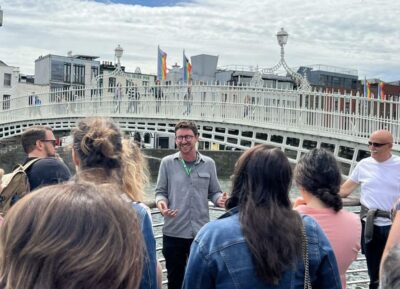
Grattan Bridge is one of Dublin’s most recognizable crossings, linking Parliament Street with Capel Street. Its ornate lamps, decorated with seahorses, give the guide something visual to point out while the storytelling continues.
The stop lasts about 10 minutes. Again, there is no admission charge. You are here to hear the story of the place and to look more closely at a piece of the city’s design.
This is a good example of what the tour does well. Instead of treating architecture as background scenery, the guide uses it as an opening into Irish culture and memory. The bridge is not simply a convenient route across the water. Its decoration, location, and connection between two parts of Dublin help keep the city’s older character in view.
If you enjoy taking photographs, this is one of the easier stops for a quick look at the bridge and river. Still, the tour is built around listening, so it is better to take a few quick pictures than to fall behind while trying to document every detail.
A completely different kind of day out of Dublin:
- Dublin to Cliffs of Moher, including Wild Atlantic Way and Galway
★ 5.0 · 23,331 reviews - From Dublin: Cliffs of Moher, Burren & Galway City Day Tour
★ 4.8 · 18,888 reviews - Dublin: Guinness Storehouse Entry Ticket
★ 4.6 · 16,863 reviews - Dublin to Cliffs of Moher, Burren, Wild Atlantic Way, Galway Tour
★ 5.0 · 12,924 reviews
St. Michan’s Church adds a darker note
The stop outside St. Michan’s Church introduces some of the tour’s most unusual material. The guide discusses the church’s role in Dublin’s secret tales and the bodies held in its crypt.
The tour does not include admission inside the church, so you should not book this expecting a crypt visit. The focus is the story of the site, its atmosphere, and the place it occupies in Dublin’s folklore.
From there, the group explores the grounds of the old Newgate Prison and Green Street Courthouse. This section brings a more serious historical tone. The church, prison, and courthouse form a compact corner of Dublin where religious life, crime, punishment, and public justice overlap.
I especially like this part for travelers who want more than cheerful tales about fairies. Irish folklore is tied to fear, loss, belief, and memory as well as humor. The stories gain weight when you hear them beside places associated with imprisonment and death.
This is also one of the sections where standing may become noticeable. The overall walk is not described as difficult, but some people found the stops tiring because they spent a lot of time on their feet. Wear comfortable shoes and avoid scheduling another demanding walking activity immediately afterward if you can.
The GPO connects old mythology with modern Ireland
The General Post Office is the next major stop, and the group pauses outside its impressive facade for about 10 minutes.
The GPO is one of the most important buildings in modern Irish history. Here, the guide explains how Irish mythology helped shape the way the country understood its past and its political story. That connection is one of the tour’s strongest ideas: myths are not locked away in ancient texts. They can influence national symbols, public memory, and the way historic events are explained.
You will not go inside the GPO Museum as part of this walking tour. The stop is outdoors, so the quality of the experience depends on the guide’s ability to make the building and its meaning clear from the street.
This is where the tour becomes especially useful for first-time visitors. You are not only looking at a grand facade. You are being shown how stories from the distant past can be used to make sense of more recent Irish history. Several guides are praised for making those links clear and for answering questions, so do not hesitate to ask if you want more context.
The Garden of Remembrance is a thoughtful finish
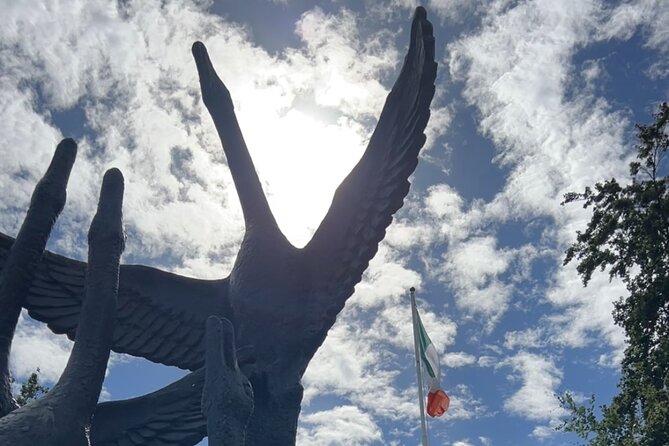
The tour ends at the Garden of Remembrance in Parnell Square, at the foot of Oisin Kelly’s Children of Lir statue. The published timing gives this final stop about 10 minutes.
The statue provides a fitting ending because it draws directly on Irish mythology while also sitting in a place connected with national remembrance. After two hours of stories about legends, conflict, identity, and the city’s past, the finish feels more reflective than the lively opening in Temple Bar.
The ending point is also practical. You finish on the north side of central Dublin rather than returning to the south side. That works well if your next stop is around Parnell Square, the Rotunda area, or other northern parts of the city. It is less convenient if you need to return immediately to Temple Bar, though central Dublin is compact enough that you can continue on foot or use public transportation.
The guides shape the experience
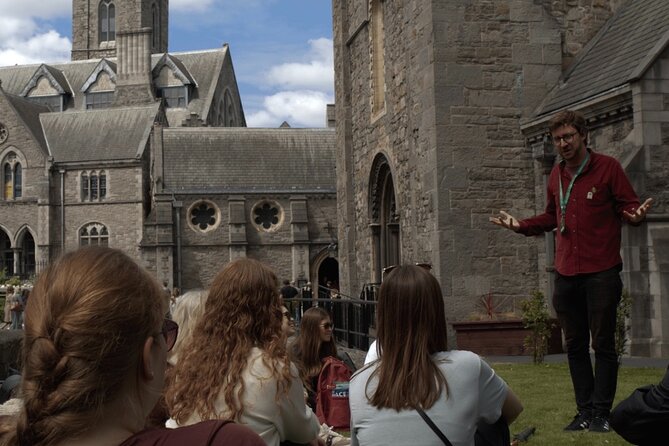
This tour depends heavily on the person holding the group’s attention. That is not a weakness unique to this activity. Storytelling walks rise or fall on delivery, and the comments about this one show clear differences in pace and style.
Helena receives particular praise for humor, friendliness, and command of the subject. Emily is described as funny, intelligent, patient with questions, and able to keep the group engaged in bad weather. Ross is praised for his gift of gab and for sharing a large number of stories. Lee brings humor and mischief, while Deidre is noted for enthusiasm and passion. Dave is valued for his answers and for offering suggestions after the tour. Alan is described as kind and informative.
You should expect a guide-led experience rather than a fixed script performed in the same way every time. That variety can be a strength. A lively storyteller may make the legends memorable, while a guide with a strong history focus may spend more time explaining Ireland’s past and present.
The main concern is hearing. One person found the group too large and had trouble following the guide. If you have hearing difficulties, stay near the guide and avoid lingering at the back. A late start also caused one person to miss the tour because of another appointment, so leave space in your schedule rather than booking a tight connection afterward.
How much walking and standing should you expect?
The tour lasts about two hours and includes several stops of around 10 minutes each. It is described by some people as an easy walk with a comfortable pace, but it still involves being outdoors, walking between sites, and standing while the guide speaks.
The route is wheelchair and stroller accessible, and most people can participate. That is useful, but accessible does not mean effortless. Crowded streets, group movement, and long periods of standing can still affect comfort. If you use a wheelchair, stroller, or mobility aid, contact the operator if you need route details beyond the stated accessibility information.
Wear shoes suited to city walking. Bring weather protection, too. The tour runs outdoors, and one guide’s storytelling helped make rainy weather bearable, but good clothing will make the experience easier for you.
You should also consider your energy level. One person booked two walking tours on the same day and found the second one tiring, especially with a fast-moving guide. I would put this walk earlier in your Dublin visit, when it can help you get your bearings, or schedule it after a quieter morning.
Is $29.02 a fair price?
At $29.02 per person, this is a reasonably priced way to spend two hours in central Dublin. There are no separate admission fees for the listed stops, and the main value comes from interpretation rather than entry to a museum or historic interior.
That distinction matters. If you want to go inside St. Michan’s Church or spend time at the GPO Museum, you will need separate plans. If you want a guide to explain how Dublin’s streets, buildings, legends, and national history connect, the price is easier to justify.
The group can include up to 25 people. That keeps the cost below what you would pay for a private guide, but it also means the experience may feel less personal. The strongest value comes when your guide is lively, the group stays together, and you enjoy listening in public spaces.
The tour is offered in English and includes a mobile ticket. It is best suited to people who like stories, questions, and context more than formal museum displays.
Who should book this Dublin walk?
I would choose this tour if you want a lively introduction to Irish mythology but also want to understand how those stories connect with modern Ireland. It works particularly well early in a Dublin stay, when the route can give meaning to places you may pass again later.
It suits adults, families with older children, history fans, folklore fans, and anyone who enjoys a good storyteller. The guides make room for humor, unusual details, and questions, so you do not need to arrive as an expert in Irish legends.
It may be less suitable if you dislike outdoor walking, need to sit often, or prefer small private groups. The two-hour length is manageable for many people, but the walking and standing are real parts of the activity. If hearing every word is important to you, the group size and street noise are worth considering.
Should you book it?
Book this tour if the idea of connecting fairies, legendary figures, Dublin buildings, imprisonment, political memory, and national identity sounds appealing. The route gives you more than a string of old tales, and the finish at the Children of Lir statue makes sense after an afternoon of stories about Ireland’s past.
I would skip it only if you want indoor attractions, very little walking, or a guaranteed intimate group. For most visitors who enjoy storytelling and can manage two hours on city streets, $29.02 is a sensible price for a memorable introduction to Dublin’s myths and history.
FAQ
How long does the Dublin Mythology and Folklore Tour last?
The tour lasts approximately two hours.
Where does the tour begin?
It begins at 3 Crown Alley in Temple Bar, Dublin, near the center of the Temple Bar area.
Where does the tour finish?
The tour finishes at the Garden of Remembrance in Parnell Square, beside Oisin Kelly’s Children of Lir statue.
Does the tour cross the River Liffey?
Yes. The route explores locations on both the north and south sides of the River Liffey and crosses at Grattan Bridge.
How large is the tour group?
The maximum group size is 25 people.
Is the tour wheelchair and stroller accessible?
Yes. The tour is listed as wheelchair and stroller accessible. It also takes place near public transportation, and service animals are allowed.
What happens if I need to cancel?
You can cancel up to 24 hours before the experience begins for a full refund. Cancellations or changes made less than 24 hours before the start time are not accepted for a refund.
Just added around Dublin
- Wicklow: Private Day Tour from Dublin★ 5.0 · 5 reviews
- Wicklow Mountains Private Day Tour including Glendalough★ 5.0 · 7 reviews
- Wicklow Mountains & Glendalough Luxury Private Day Tour★ 5.0 · 23 reviews
- Wicklow tour of Glendalough★ 4.5 · 8 reviews
- Women Of Ireland: Trailblazers & Pioneers★ 5.0 · 4 reviews
- Dublin To Kilkenny Castle Waterford Crystal Private Car – Day Tour★ 5.0 · 8 reviews
- Waterford Crystal and Kilkenny Full-Day Rail Tour from Dublin★ 5.0 · 3 reviews
- Full Day Private Wicklow Tour★ 5.0 · 12 reviews
Dublin Mythology and Storytelling Tours, compared.

Howth Hiking Trail from Dublin: Mythology and Legend
Read our review →
Private Dublin Pub Odyssey: Storytelling, and Pub Culture
Read our review →

Dublin Storytelling Pub Tour – 3 stops, drinks & local snacks
Read our review →
Browse the lists this tour appears in