
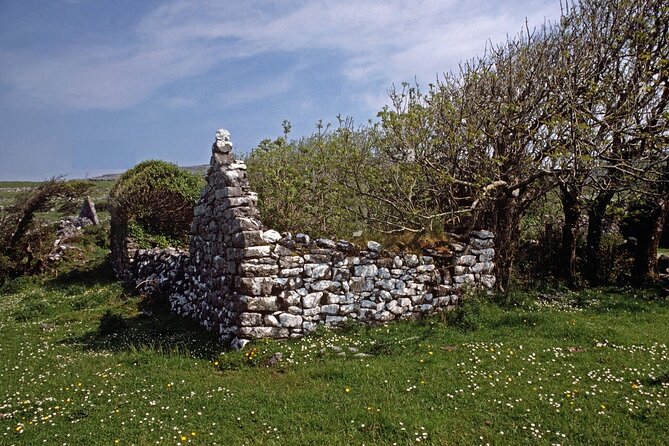
Reviewed · DUBLIN MUSEUM AND ATTRACTION TICKETS
Irish Famine Museum / Exhibition Dublin
The Irish Famine Museum presents one of Ireland’s most painful chapters in a compact exhibition above St. Stephen’s Green Shopping Centre. You’ll move at your own pace through photographs, newspapers, objects, and plain explanations of the potato famine, also known as the Great Hunger.
I like the self-guided format, since you can pause over material that matters to you instead of keeping up with a group. I also like the 15-minute documentary, which gives the exhibition a human focus and breaks up the reading. The main drawback is clear: this is a temporary, text-heavy pop-up in a shopping centre, not a large purpose-built museum.
Key points to know before you go
- Rare views of St. Stephen’s Green: The exhibition includes unusual aerial views of the famous central Dublin park.
- Original objects add weight: You’ll see items such as a 19th-century soup pot, newspapers, and other museum artefacts.
- Plan for about one hour: The visit is short, self-guided, and easy to fit into a day in central Dublin.
- The film is only 15 minutes: It is the main audio-visual element, so most of your time is spent reading.
- Translation help is available: Guides are offered in French, German, Italian, and Spanish.
- The setting is informal: The exhibition is upstairs in a shopping centre and may feel more like a temporary display than a traditional museum.
A serious subject in an easy central location

You enter the exhibition at St. Stephen’s Green Shopping Centre, at St Stephen’s Green, Dublin, D02 HX65. That location makes the museum simple to pair with time around the park, shopping, or other central Dublin sights.
The setting also shapes the experience. You are not entering a grand stone museum with long galleries and formal rooms. You are going upstairs in a busy commercial building to find a temporary exhibition space. That can feel slightly unexpected for a subject as serious as the Great Hunger.
Still, the location has a practical advantage. You do not need to set aside half a day or travel across the city. One hour is usually enough for a careful visit, though you can spend longer if you read every panel closely.
The exhibition is scheduled to run daily from noon to 6 p.m. between April 1 and September 30, 2026. Check the date and opening hours when you book, since this is a temporary display rather than a permanent museum.
More Dublin museum and attraction tickets:
- Irish Rock ‘N’ Roll Museum Experience Dublin
★ 5.0 · 6,112 reviews - The Little Museum of Dublin Famous Guided Tour
★ 5.0 · 2,948 reviews - Dublin EPIC Museum Admission Ticket
★ 4.5 · 1,729 reviews
What you see inside the exhibition
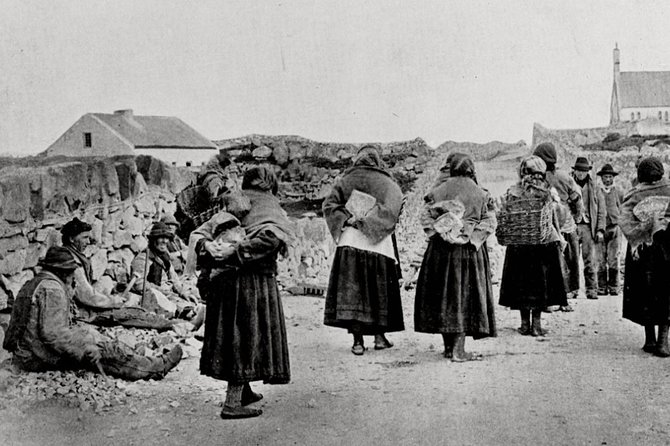
The exhibition explains the Irish Potato Famine through printed panels, historic photographs, newspapers, museum objects, and a short film. The material focuses not only on the agricultural crisis, but also on the political choices and slow response that made the disaster worse.
That focus gives the display more bite than a simple account of crop failure. You are encouraged to think about how governments, landowners, and aid systems responded to starving people. The subject is presented as a human and political tragedy, not only as a failed harvest.
You can expect a lot of reading. The information is arranged for a self-guided visit, so you choose your own pace and decide where to linger. I find that useful in a museum about family history and national trauma. You may want time to study a photograph, read a newspaper, or connect the material with your own family background.
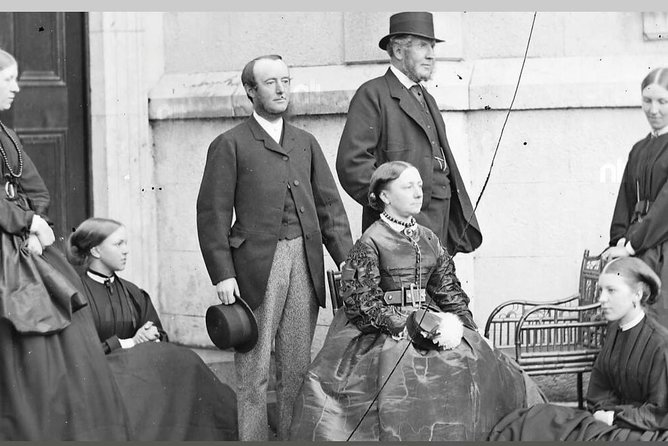
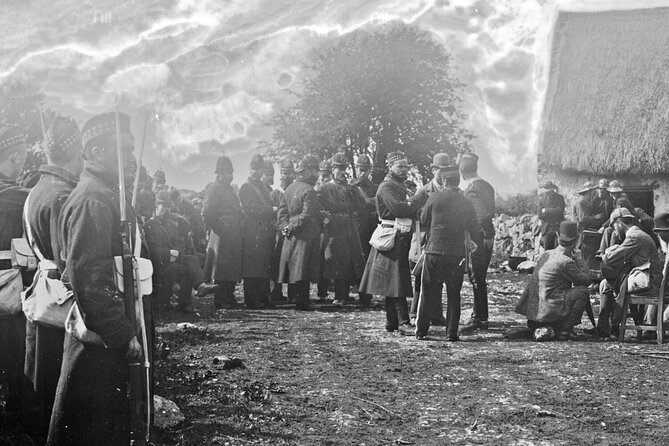
The exhibition uses many 19th-century images. These photographs help put faces and places beside the written account. An original soup pot provides a more physical connection to the period. Newspapers and other artefacts help show how the crisis was recorded and discussed at the time.
Do not expect a large collection of objects. The appeal here is the combination of simple explanation and emotionally powerful evidence, rather than a room packed with artefacts.
The 15-minute documentary
The included documentary lasts about 15 minutes. It gives you a chance to sit down and hear the story presented in a different way after reading the display panels.
That small change of pace matters. A fully self-guided exhibition can become tiring when every part depends on text. The film helps gather the main ideas and gives the visit a more structured middle section.
The film area may feel warm because the space is not climate controlled. If you are sensitive to heat, keep that in mind when deciding how long to sit there. The film is also the only major audio-visual feature mentioned for the exhibition, so do not book this expecting a multimedia show with constant screens or interactive displays.
If you enjoy documentaries and reading, the balance should work well. If you prefer hands-on exhibits or a guide telling stories aloud, you may find the format limited.
Why the political context matters
The strongest part of the exhibition is its attention to decisions made during the crisis. It presents the failure to respond quickly enough, along with the way military spending and aid were weighed against the needs of starving people.
That material can be difficult. The story raises questions about power, land ownership, government responsibility, and whose suffering receives urgent attention. The exhibition does not treat the famine as an unfortunate accident with no human choices behind it.
I appreciate that approach because it gives you more to think about after you leave. The famine is not presented as a distant Irish tragedy that belongs only to the past. The display also invites comparisons with later food crises, government responses, and the experience of the COVID-19 pandemic.
You will need to bring your own patience to this section. The exhibition is self-guided, and the information is delivered through written displays rather than a live historian who can answer questions or adjust the story to your interests.
A completely different kind of day out of Dublin:
- Dublin to Cliffs of Moher, including Wild Atlantic Way and Galway
★ 5.0 · 23,331 reviews - From Dublin: Cliffs of Moher, Burren & Galway City Day Tour
★ 4.8 · 18,888 reviews - Dublin: Guinness Storehouse Entry Ticket
★ 4.6 · 16,863 reviews - Dublin to Cliffs of Moher, Burren, Wild Atlantic Way, Galway Tour
★ 5.0 · 12,924 reviews
Rare views above St. Stephen’s Green
One unusual feature is the chance to see rare aerial views of St. Stephen’s Green. The park is directly outside the shopping centre, so these images give you a fresh look at a place you might otherwise see only from ground level.
The views are not the main reason to book the exhibition, but they add local character. They connect the temporary display to Dublin itself, rather than making it feel like a history lesson that could be placed anywhere.
You might also use the views as a simple pause between more difficult sections. After reading about famine, emigration, and government failure, looking out toward the park can help you reset before continuing.
A self-guided hour, not a guided tour
This experience works best when you understand what it is before you arrive. There is no named guide listed, and you are not joining a scheduled talk. You receive admission and explore independently.
That means you can move quickly if you already know the subject. It also means you can slow down if the story connects with your family. A booked admission ticket is useful because it helps you avoid an entrance line, though the visit itself remains flexible once inside.
The venue can accept up to 90 people, but the overall format is still self-guided. A larger number at one time could make a small pop-up space feel crowded, especially around the film area and the most popular objects.
Children must be accompanied by an adult. Service animals are allowed, and the site is near public transportation. Most people can take part, but remember that the experience depends heavily on reading and standing or walking around a temporary exhibition space.
Is the $18.15 price fair?
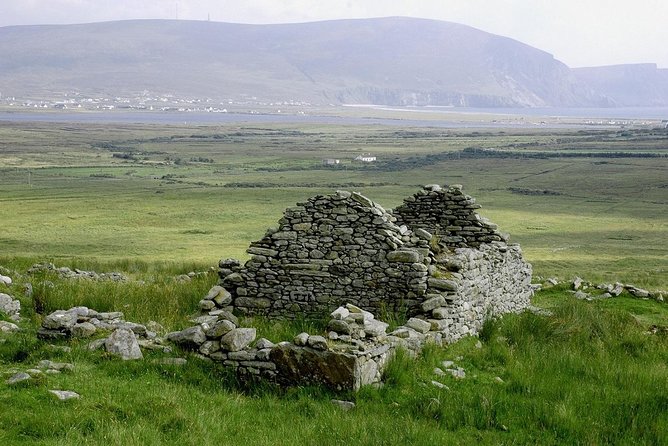
At $18.15 per person, this is not the cheapest short attraction in Dublin. You are paying for roughly one hour, a documentary, printed interpretation, historic images, and access to the objects and views.
The value depends on your expectations. If you want a focused introduction to the Irish Famine, the price is reasonable because you can learn a great deal in a short time and fit it into a central Dublin day. The advance booking and included film also make the visit feel more complete than simply walking through a small display.
If you expect a major museum with extensive collections, staff-led interpretation, climate control, and many interactive elements, the price may feel high. This is a temporary exhibition in a shopping centre, and some of the material is presented on posters for you to read.
The value improves if you have Irish family connections or plan to visit other sites related to the famine. It gives you a framework for understanding the causes of emigration and the anger surrounding the treatment of Irish people. You may also find the exhibition useful before visiting historic sites elsewhere in Ireland.
An exhibition book is available for separate purchase. That could be worthwhile if you want to continue reading after the visit, but it is not included in admission.
Who will get the most from this visit?
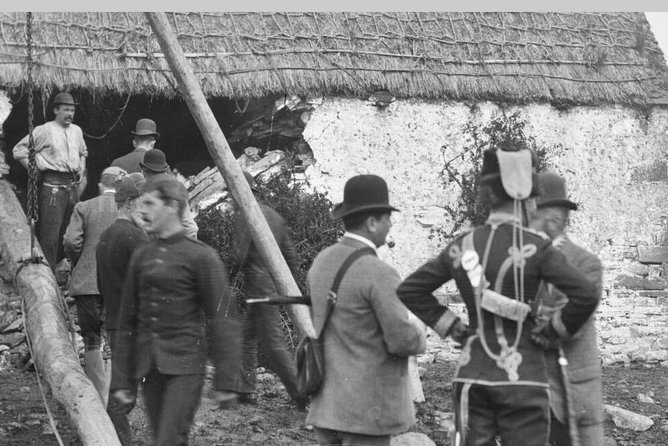
I would recommend the museum most strongly to adults, older children, students, people researching Irish ancestry, and anyone who wants a concise introduction to the Great Hunger.
It is especially suitable if you like to read at your own pace. You can decide how much detail to absorb, return to a panel, and spend more time with the photographs or newspapers that catch your attention.
The exhibition may also work well for families with different levels of background knowledge. One person can already understand the period, while another can use the simple explanations to build a foundation. The short film gives everyone a shared point of reference.
I would be more cautious about booking it for very young children or anyone who dislikes reading. There are no details suggesting a large interactive children’s program, and the display depends on text, photographs, and historical interpretation.
The subject is also emotionally heavy. You should not expect a light sightseeing stop. The exhibition deals with starvation, political failure, displacement, and the loss of homes and communities. That seriousness is part of its value, but it is worth knowing in advance.
Practical advice for planning your visit
Book in advance if you want to avoid waiting at the entrance. Confirmation is provided at booking, and the mobile ticket makes entry straightforward.
Allow about an hour. You can probably see the main material faster, but rushing would weaken the point of the visit. The documentary alone takes 15 minutes, and the photographs, newspaper material, and written panels deserve some quiet attention.
The exhibition is offered in English. Translation guides are available in French, German, Italian, and Spanish, which helps if English is not your first language. The film and main display still form the core of the visit, so check what kind of support you need before booking.
Since the space is not climate controlled, dress for the conditions on the day. The film area can become warm. You may also want to schedule the exhibition before or after a walk through St. Stephen’s Green, rather than treating it as your only activity in the area.
Free cancellation is available if you cancel at least 24 hours before the start time. Cancellations or changes made less than 24 hours before the start are not refunded.
Should you book the Irish Famine Museum?
Book it if you want a short, serious, central Dublin history stop with clear text, strong historic images, an original soup pot, newspapers, rare park views, and a useful documentary. It is particularly worthwhile if you are exploring Irish family history or want to understand why the famine led to such widespread emigration.
Skip it if you need a large traditional museum, a live guide, extensive objects, or an interactive presentation. The pop-up setting and reading-heavy format are real limitations.
For the right audience, the compact size is an advantage. You can learn the basic story without losing half a day, then step outside into modern Dublin with a sharper sense of what the city and country endured.
FAQ
Where is the Irish Famine Museum in Dublin?
The exhibition is located at St. Stephen’s Green Shopping Centre, St Stephen’s Green, Dublin, D02 HX65, Ireland.
How long does the experience take?
The visit lasts approximately one hour. The included documentary film runs for 15 minutes.
Is the exhibition guided?
No. It is a self-guided exhibition, so you explore the displays at your own pace.
What languages are supported?
The exhibition is offered in English. Translation guides are available in French, German, Italian, and Spanish.
What are the opening hours?
From April 1 through September 30, 2026, it is scheduled to open daily from noon to 6 p.m.
Can I cancel my booking?
Yes. You can cancel for a full refund if you cancel at least 24 hours before the experience begins. Cancellations or changes made less than 24 hours before the start time are not refunded.
Just added around Dublin
- Wicklow: Private Day Tour from Dublin★ 5.0 · 5 reviews
- Wicklow Mountains Private Day Tour including Glendalough★ 5.0 · 7 reviews
- Wicklow Mountains & Glendalough Luxury Private Day Tour★ 5.0 · 23 reviews
- Wicklow tour of Glendalough★ 4.5 · 8 reviews
- Women Of Ireland: Trailblazers & Pioneers★ 5.0 · 4 reviews
- Dublin To Kilkenny Castle Waterford Crystal Private Car – Day Tour★ 5.0 · 8 reviews
- Waterford Crystal and Kilkenny Full-Day Rail Tour from Dublin★ 5.0 · 3 reviews
- Full Day Private Wicklow Tour★ 5.0 · 12 reviews
Dublin Museum and Attraction Tickets, compared.


The Little Museum of Dublin Famous Guided Tour
Read our review →

The Dublin Pass with Tickets to 40+ Attractions
Read our review →


Irish Whiskey Museum: Whiskey Blending Experience
Read our review →
Go City: Dublin Pass | Save up to 50% – Includes 35+ Things To Do
Read our review →Browse the lists this tour appears in