
Reviewed · DUBLIN
Experience Gaelic Games in Dublin
Gaelic games make far more sense once you pick up the ball, grip a hurley, and try to keep pace with the action. At Na Fianna GAA Club, you get a short introduction to Gaelic football, hurling, and handball, then head outside for drills, team games, and possibly mini-matches. I like the hands-on format and the chance to see how sport connects with Irish identity. I also like that coaches such as Kyle, Georgina, Elyse, Adam, Darren, and Tiernan are praised for patience and good humor.
The main consideration is physical effort. You do not need to be athletic, but you should expect to move, sweat, and occasionally look less graceful than a seven-year-old. Flat shoes are required, the session operates in all weather, and casual clothing is best unless you plan to get competitive.
Key points to know before you book
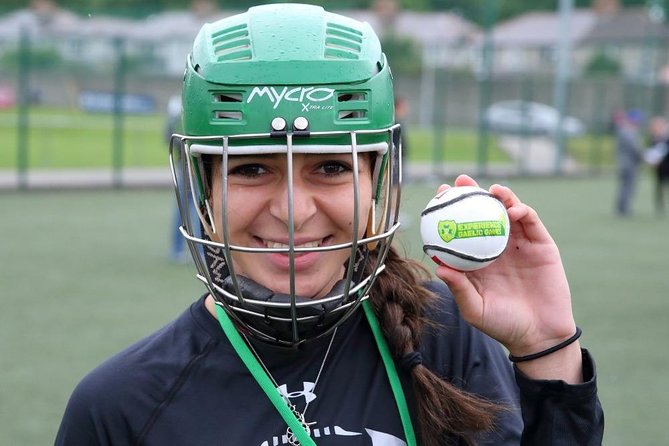
- Three Gaelic sports in one session: Try Gaelic football, hurling, and Gaelic handball rather than simply watching them from the sidelines.
- A real local club setting: Na Fianna GAA Club is about 10 minutes from central Dublin by bus, with routes 4, 9, and 155 stopping across the road.
- Friendly coaching for all skill levels: The activity welcomes beginners, families, older adults, and sporty participants without making competition the main point.
- A small-group feel: The experience is limited to a maximum of 18 people, with the tour summary describing groups of up to 15.
- Plan for active weather: Bring flat footwear, casual sports clothes, and a towel and toiletries if you want to use the showers.
- A useful cultural break: This is more than a sports lesson. It gives you a practical feel for games that matter deeply to communities across Ireland.
Why playing Gaelic games beats only watching them
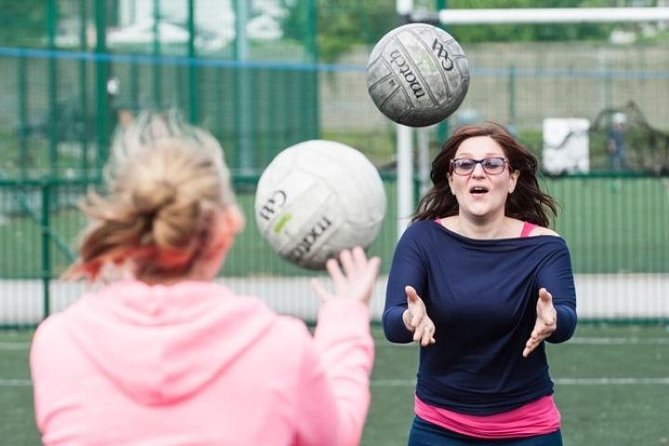
You can watch Gaelic football or hurling in a Dublin pub and still wonder what on earth is happening. The games move quickly, and the equipment, rules, and mix of skills can seem unfamiliar. A short lesson changes that.
At Na Fianna, the session begins with an introduction to the games and their place in Irish life. You learn the basic idea behind each sport before being asked to perform it. That order matters. Once you try to strike a sliotar with a hurley or carry a football while moving, you begin to notice the control, timing, and teamwork required in an actual match.
I especially like the way this activity joins culture with participation. You are not sitting through a long lecture about Irish sporting traditions. You hear enough background to understand why the games matter, then put that knowledge to work on the pitch.
The sports also give you three different challenges. Gaelic football uses a round ball and combines elements that may feel familiar from soccer, basketball, and other field sports. Hurling adds the hurley and a smaller ball, demanding hand-eye coordination. Gaelic handball shifts the action again, asking you to work with the ball in a different setting.
You will not become an expert in three hours. That is not the point. The reward is a better sense of what you are watching if you later see a match, and a more direct connection with an important part of Irish culture.
Other Dublin days people line up beside this one:
- Dublin to Cliffs of Moher, including Wild Atlantic Way and Galway
★ 5.0 · 23,331 reviews - From Dublin: Cliffs of Moher, Burren & Galway City Day Tour
★ 4.8 · 18,888 reviews - Dublin: Guinness Storehouse Entry Ticket
★ 4.6 · 16,863 reviews
Arriving at Na Fianna from central Dublin
The meeting point is 107 St Mobhi Road, Botanic, Dublin 9. You should arrive a little before the 10am start time so you can find the club and get ready without rushing.
The club is close enough to central Dublin to make this an easy half-day outing. Bus routes 4, 9, and 155 stop directly across the road, and the ride is about 10 minutes from the city center. Transportation to and from the club is not included, but the location means you do not need to arrange a private transfer.
This is useful if you want a break from central Dublin sightseeing without giving up much of your morning. You can reach the club by public transport, take part in the three-hour session, and still have much of the day left.
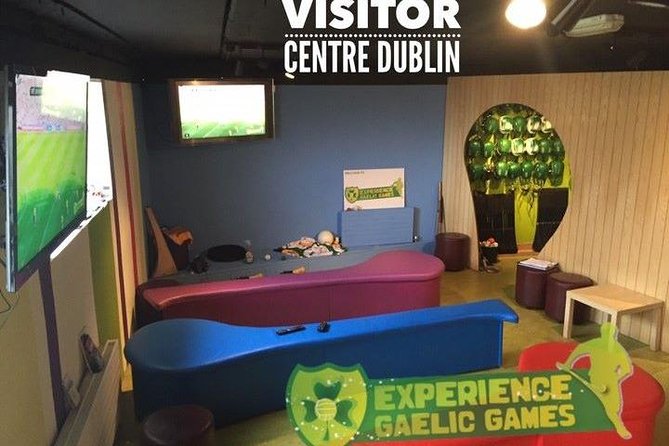
The setting also matters. You are visiting a local Gaelic club rather than a purpose-built attraction designed only for tourists. Na Fianna has a modern facility and a dedicated visitor center, but the main setting is still a working sports club. That gives the activity a stronger local connection than a generic recreation class.
The tour information gives slightly different group limits, with the experience described as a small group of up to 15 and the additional details allowing a maximum of 18 participants. Either way, this is not a huge bus group. You should have enough room to listen, practice, and take part without disappearing into a crowd.
The opening lesson: three sports, one Irish tradition
The first part of the session introduces Gaelic football, hurling, and handball. The coaches explain the history of the games and their importance throughout the country, with enough context to help you understand their place in Irish communities.
The cultural side is one of the strongest reasons to book this activity. Sport in Ireland is not simply a pastime to watch on television. Gaelic clubs bring people together, and the games form part of local identity and family life. You do not need Irish roots or previous knowledge to appreciate that connection.
The instructors keep the introduction practical. You learn what the equipment is for, how the games work, and what you will be attempting outside. The coaches named in participant feedback include Kyle, Georgina, Elyse, Adam, Darren, and Tiernan. Coaches may vary by session, but the consistent theme is a patient, encouraging approach.
That tone makes a real difference. A confident athlete can enjoy the challenge, while someone who has not played a team sport in decades can still take part without feeling out of place. One participant in their seventies found the activity manageable, while families with children and adult children also enjoyed it.
I would not treat this as a formal sports clinic. You are there to understand and try the games, not to master advanced technique. The explanations are designed to get you moving quickly, which suits a holiday activity.
Taking the field for Gaelic football
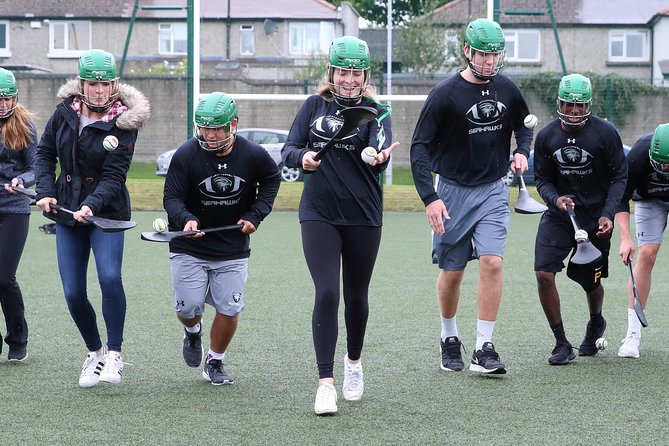
After the introduction, the group heads outside for gentle team-building activities. Gaelic football is usually the first sport many people connect with because its round ball feels familiar, even though the rules and movement patterns are different from soccer.
Expect simple drills that help you handle the ball, pass, move into space, and work with your group. You may find that the basic skills are easy to understand but harder to perform at speed. That is part of the fun.
The emphasis is not on finding the best athlete in the group. The coaches use encouragement and humor to keep the activity moving, and the sessions can include free-play time or short matches. If your group enjoys competition, there is room for it. If your group mainly wants laughs and a new experience, the format supports that too.
This flexibility makes the activity work well for mixed groups. A keen sportsperson can try to improve, while a less active partner can focus on taking part. You might miss a pass, lose track of the ball, or discover that your coordination needs work. Nobody expects polished play from beginners.
The most useful result is that you gain a better sense of the speed and teamwork involved in Gaelic football. If you later watch a match, you will have a clearer idea of why players move as they do and why the sport demands so much control.
A completely different kind of day out of Dublin:
- Dublin to Cliffs of Moher, Burren, Wild Atlantic Way, Galway Tour
★ 5.0 · 12,924 reviews - Dublin to Belfast Black Cab, Dunluce Castle and Giant’s Causeway
★ 5.0 · 7,954 reviews - Kilkenny, Wicklow Mountains & Glendalough Day Tour from Dublin
★ 5.0 · 7,897 reviews - From Dublin: Wicklow Mountains, Glendalough & Kilkenny Tour
★ 4.8 · 6,235 reviews
Trying hurling with a hurley in hand
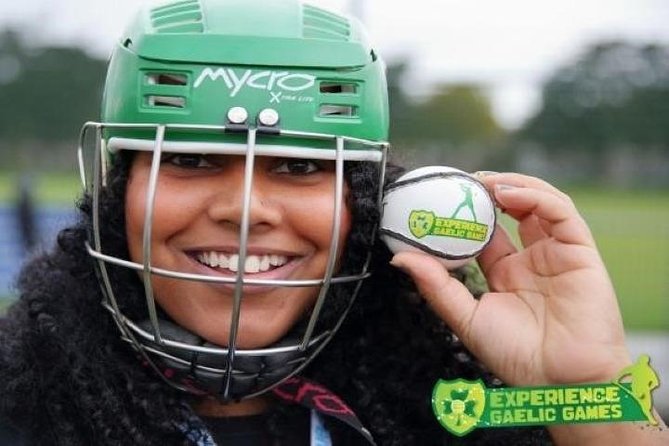
Hurling is likely to be the most unfamiliar part of the session. Players use a wooden stick called a hurley to strike a small ball, known as a sliotar. The sport is fast, skillful, and difficult to understand from a distance, which makes the chance to try it particularly valuable.
The coaches begin with basic handling and striking drills. You will work on how to hold the hurley and how to make contact with the ball. Do not expect immediate success. Even making a clean strike can feel like a small victory.
Hurling also shows why watching from the stands does not tell the whole story. The ball moves quickly, and players must judge distance, timing, and body position in an instant. After a few attempts, you begin to appreciate the control required at a high level.
The activity keeps the mood light. You are not being graded, and the coaches are there to help you adjust your technique. Participants describe the instructors as patient and helpful, which is exactly what you want when a simple-looking skill refuses to cooperate.
Families can enjoy this section together because different ages and ability levels can work on the same basic exercises. Strong athletes may pick it up faster, but beginners often get just as much satisfaction from one successful contact with the ball.
A different challenge with Gaelic handball
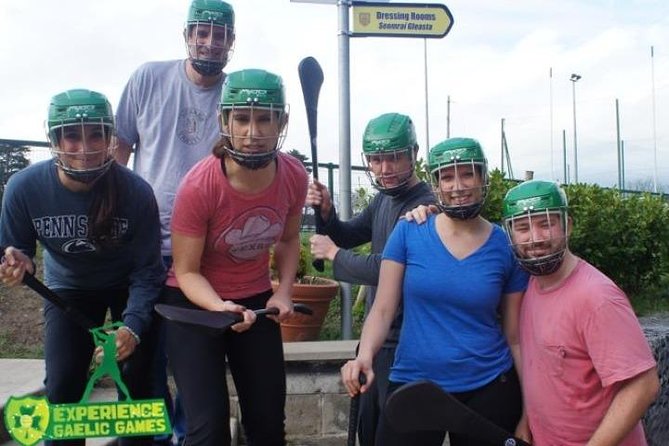
Gaelic handball gives the session a change of pace. Instead of running across a large pitch, you work with the ball in a more contained setting and learn the basic action of striking it with your hand.
The sport helps round out the lesson. Gaelic football shows teamwork and movement, hurling adds equipment and striking, and handball gives you another way to think about control and timing. Trying all three prevents the morning from feeling like a single long drill.
You will have time to practice before the group moves toward games and shared activities. The exact balance can vary depending on the group, but the plan is to let you try each sport rather than spend the whole session on one discipline.
This variety is one reason the experience suits families and mixed-age groups. If one sport does not appeal to you, the next may. You can also compare your own strengths. Someone who struggles with a hurley may find handball easier, while another person may prefer the running and passing of Gaelic football.
Team games, mini-matches, and the right level of competition
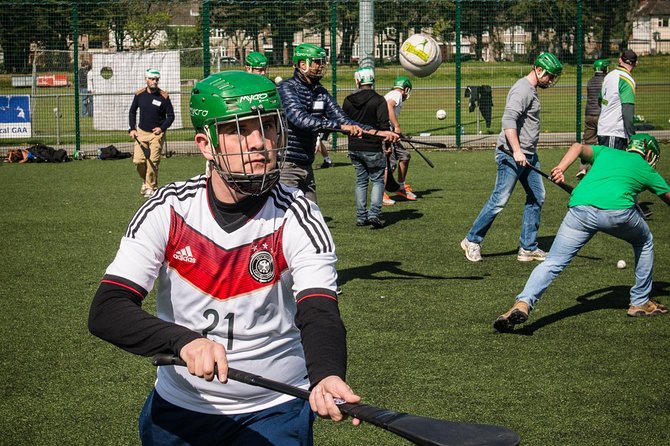
The session builds toward team activities and, depending on the group, mini-matches. This is where the morning becomes less like a demonstration and more like a shared event.
The coaches divide the group into teams and encourage everyone to take part. You may find yourself playing against people you met only that morning, which adds a social side without requiring forced introductions or awkward icebreakers.
The competition remains good-natured. You can take the games seriously if you enjoy sport, but the format does not demand a high level of fitness or skill. That balance is important for a group containing active adults, children, and people who have not played team sports for years.
You should still be honest about the physical side. The activity involves movement, and several participants describe working up a sweat. Wear comfortable clothes and flat shoes with good grip. Sandals, dress shoes, or anything that feels unstable on a sports surface would be poor choices.
The club operates in all weather conditions, so check the forecast and dress sensibly. Rain will not necessarily cancel the session. The supplied information does not promise indoor play as a substitute, so come prepared for Irish weather rather than assuming a dry morning.
What the $59.26 price includes
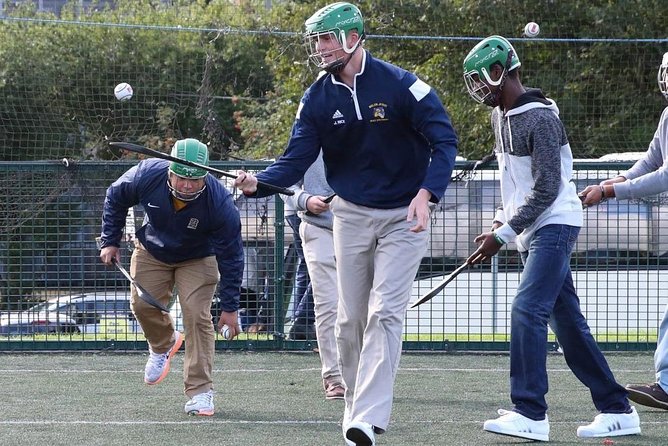
The listed price is $59.26 per person. That covers the activities, taxes, fees, and handling charges. You pay separately for getting to and from Na Fianna.
For a three-hour experience with instruction in three sports, the price is reasonable if you value active cultural activities. You are paying for coaches, use of the club facilities, the equipment and activities, and a small-group format. It is not the cheapest way to fill a morning, but it offers more participation than a standard sightseeing stop.
The value is strongest for families and groups with different interests. A sports fan gets practical instruction. A culture-minded visitor gets context about Irish life. Someone who has already seen the main sights gets a fresh way to spend part of the day.
The value is weaker if you dislike physical activity or want a quiet cultural tour. You will be on your feet and involved rather than simply observing. If your plan is packed with museums and historic sites, allow enough time to reach the club, take part, and return.
Free cancellation is available if you cancel at least 24 hours before the start time. If too few people book a preferred session, the provider may offer a different time or date, or provide a full refund.
What to bring and who will enjoy it most
Bring flat footwear and comfortable clothing. Casual clothes are fine, but sporting attire makes sense if you expect to get competitive or want to stay comfortable while moving.
Water, tea, and coffee are available at the club. Dressing rooms and showers are also available, but you need to bring your own towel and toiletries if you plan to use them.
This activity suits:
- Families with children or adult children
- Couples looking for something beyond standard sightseeing
- Sports fans who want to understand Gaelic games
- Visitors interested in Irish culture and community life
- Active adults who enjoy trying new skills
- Beginners who do not mind making mistakes in public
You should think twice if you have mobility concerns, dislike group activities, or want a fully indoor experience. The information says most people can participate, but it does not promise that every activity can be adapted to every physical limitation.
Should you book Experience Gaelic Games in Dublin?
I would book this if you want to understand Ireland through participation rather than observation. The short history lesson gives the games context, the coaches make the skills approachable, and the small group keeps the experience personal.
It is especially good for families, sports fans, and anyone who has watched Gaelic football or hurling and wondered how players manage it. The chance to try all three sports gives you a real point of reference for the rest of your trip.
Book with sensible expectations. You will not leave as a Gaelic football star, and the morning may leave you sweaty and slightly humbled. You will, however, gain a better feel for three distinctive Irish sports, meet other people, and spend three hours at a real local club instead of following the usual sightseeing route.
FAQ
How long does Experience Gaelic Games in Dublin last?
The session lasts approximately three hours, beginning at about 10am.
Where does the experience take place?
It takes place at CLG Na Fianna Gaelic Club, 107 St Mobhi Road, Botanic, Dublin 9, D09 K4K0, Ireland.
How do I get to Na Fianna GAA Club from central Dublin?
The club is about a 10-minute bus ride from Dublin city center. Bus routes 4, 9, and 155 stop directly across the road from the club.
Which Gaelic sports will I try?
You will learn about and practice Gaelic football, hurling, and Gaelic handball.
Do I need previous sports experience?
No. The activity welcomes all ages and skill levels, and most people can participate. You should be willing to take part in physical activities and team games.
What should I wear and bring?
Wear casual clothing and flat footwear. Dress appropriately for weather because the session operates in all conditions. Bring sporting clothes if you expect to get competitive, plus your own towel and toiletries if you want to use the showers.
Just added around Dublin
- Wicklow: Private Day Tour from Dublin★ 5.0 · 5 reviews
- Wicklow Mountains Private Day Tour including Glendalough★ 5.0 · 7 reviews
- Wicklow Mountains & Glendalough Luxury Private Day Tour★ 5.0 · 23 reviews
- Wicklow tour of Glendalough★ 4.5 · 8 reviews
- Women Of Ireland: Trailblazers & Pioneers★ 5.0 · 4 reviews
- Waterford Crystal and Kilkenny Full-Day Rail Tour from Dublin★ 5.0 · 3 reviews
- Full Day Private Wicklow Tour★ 5.0 · 12 reviews
- Dublin To Kilkenny Castle Waterford Crystal Private Car – Day Tour★ 5.0 · 8 reviews