
Reviewed · DUBLIN
Dublin Jewellery Forge a Hammered Silver ring:Georges Street
The best thing about this Dublin workshop is that you do not simply buy a souvenir, you make one from a strip of sterling silver. Over about two hours, you cut, shape, file, texture, and polish a ring that carries the small marks of your own hands.
I like the calm, step-by-step teaching, especially for first-time makers. I also like the choices that matter: the curve of the ring, one of three hammered textures, and the final finish. The main drawback is practical: the studio occupies two old buildings with plenty of stairs, no lift, and no wheelchair access.
Key points
- A real hands-on process: You cut the silver, shape it with a mallet, file the edges, and hammer in the texture yourself.
- Expert soldering demonstration: Your instructor joins the ring in front of you and explains each stage as it happens.
- A personal design: Choose the finger, curve, texture, and polish, so no two finished rings need look alike.
- A small class setting: The maximum group size is 12, and several sessions have had only six or seven makers.
- A useful rainy-day plan: Coffee, tea, and chocolate make this an inviting indoor activity in Dublin weather.
- A few firm limits: Children must be at least 10, anyone under 16 needs a paying adult, and late arrivals over 10 minutes are refused entry.
A handmade souvenir on South Great George’s Street
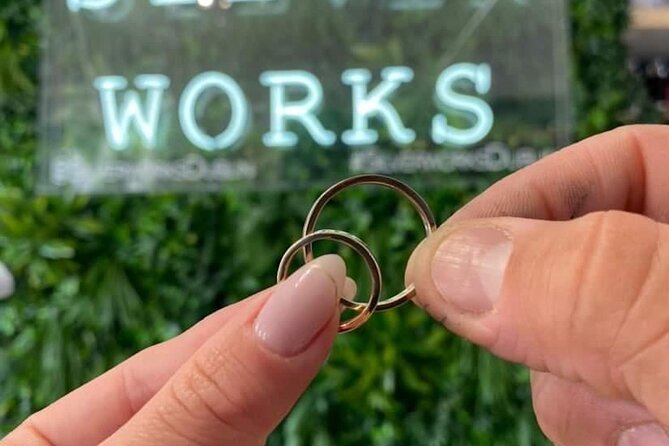
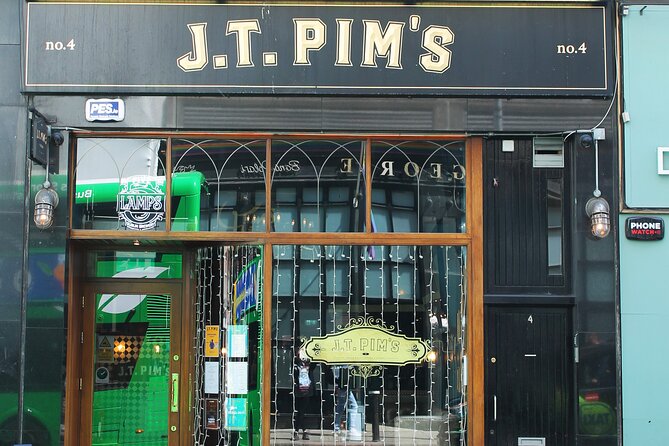
Silver Works sits at 4 South Great George’s Street, Dublin 2, close to public transport and in a central part of the city. The experience begins and ends at the studio, so you do not need to arrange transport between stages or collect the finished ring elsewhere.
This is a small workshop rather than a large craft attraction. That matters because the activity depends on being able to see the demonstration, ask questions, and get help when a file or hammer does not behave as expected. The maximum group size is 12, while sessions described by participants have included six and seven people. A smaller class should give you more room to work and more chances to check your technique.
You will be working in two old period buildings. They add character, but they also bring stairs and no lift. The buildings are not wheelchair accessible, and the studio cannot store luggage. Arrive ready to work, with bags kept to a minimum.
The price is $103.79 per person. That is more than you would pay for a ready-made trinket in a shop, but the comparison is not quite fair. Your fee includes the sterling silver, instruction, use of the workshop tools, and a ring you take home. You also spend two hours learning a process and making something tied to your time in Dublin. If you want an activity rather than another purchased object, the price is reasonable.
Other Dublin days people line up beside this one:
- Dublin to Cliffs of Moher, including Wild Atlantic Way and Galway
★ 5.0 · 23,331 reviews - From Dublin: Cliffs of Moher, Burren & Galway City Day Tour
★ 4.8 · 18,888 reviews - Dublin: Guinness Storehouse Entry Ticket
★ 4.6 · 16,863 reviews
Choosing your finger and cutting the silver
The workshop starts with a simple but important decision: which finger will wear the ring? The instructor marks the silver to the length needed for that finger, then shows you how to use a handsaw to cut it to size.
This is not a demonstration where you watch someone else do the interesting work. You handle the material from the beginning. The cutting stage gives you an early sense of the craft, though you should expect careful guidance if you have never used a jeweller’s saw before.
Ring size is one reason to pay attention at the start. Think ahead about the finger you want to use and listen closely as the silver is measured. The rest of the ring depends on this first choice. The instructors are there to help, but the final piece is meant to be yours.
The class is suitable for beginners. You do not need previous jewellery-making experience, and the teaching is designed to make each task understandable. One participant with chronically shaky hands still completed every stage with patient help, which suggests that you do not need perfect manual control to enjoy the workshop. You should still expect to work carefully and ask for help when needed.
Forming the band with a mallet
Once cut, the straight piece of silver is formed into a ring. You use a mallet and a ring mandrel, gradually shaping the metal into a curve.
This is one of the more satisfying parts because the material begins to look like jewellery rather than raw stock. The ring does not become perfectly round in one quick movement. You work it around the mandrel, following instructions and making small adjustments.
The tools may look serious at first, but the class is built around controlled, manageable steps. You are not expected to arrive as a silversmith. The instructors explain what to do and help you avoid forcing the metal too quickly.
The process also gives the ring its first handmade quality. A factory ring is designed to be identical to thousands of others. Here, your decisions and handling affect the shape. That personal connection is a major part of the value.
Watching the soldering, then taking over again
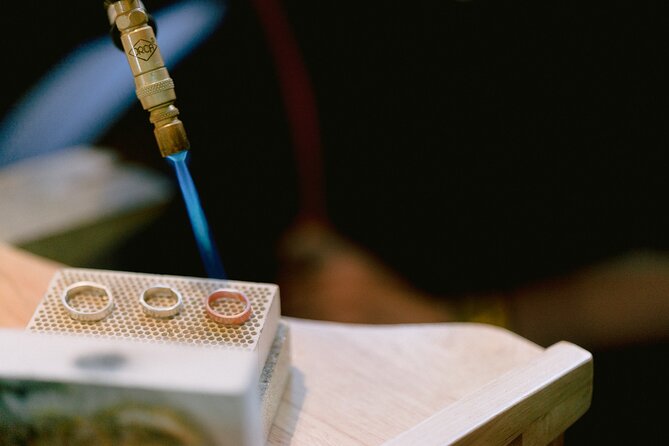
At the next stage, an expert tutor solders the ring. You watch as the open band is joined, with a detailed explanation of what is being done and why.
This is the one part you do not perform directly. That is sensible. Soldering requires heat and precision, and the professional demonstration lets you see the important technique without turning the class into a stressful test. The instructor’s explanation keeps you involved rather than leaving you to wait through a technical step.
The break in hands-on work can also give you a short pause. One account of the class notes that the instructor handles this part while the maker gets a moment to rest. The workshop is active, but it is not two hours of nonstop hammering.
Instructors named by participants include Emily, Trisha, and Cat, along with Owen and Ava. The useful pattern is clear: the teaching is patient and encouraging, with help offered at the point you need it. Staff have also been praised for explaining the process thoroughly without making beginners feel clumsy.
A completely different kind of day out of Dublin:
- Dublin to Cliffs of Moher, Burren, Wild Atlantic Way, Galway Tour
★ 5.0 · 12,924 reviews - Dublin to Belfast Black Cab, Dunluce Castle and Giant’s Causeway
★ 5.0 · 7,954 reviews - Kilkenny, Wicklow Mountains & Glendalough Day Tour from Dublin
★ 5.0 · 7,897 reviews - From Dublin: Wicklow Mountains, Glendalough & Kilkenny Tour
★ 4.8 · 6,235 reviews
Filing creates the ring’s character
After soldering, you use different hand files to smooth and shape the ring. This may sound like a minor finishing job, but it is where the ring’s outline becomes more individual.
You decide what curve you want. A straighter band will look different from one with a more pronounced curve, and the file work can change the feel of the finished piece. Take your time here. The ring is small, so a few careful strokes can make a visible difference.
This stage rewards patience more than strength. You are refining the form, not trying to remove large amounts of silver. Your instructor can guide you, but you have room to make the ring your own.
The experience works well for couples, parents and children, and friends because everyone follows the same method while making different choices. A parent and a 14-year-old, for example, can take part together, since the minimum age is 10 and anyone under 16 must be accompanied by a paying adult.
Hammering one of three textures
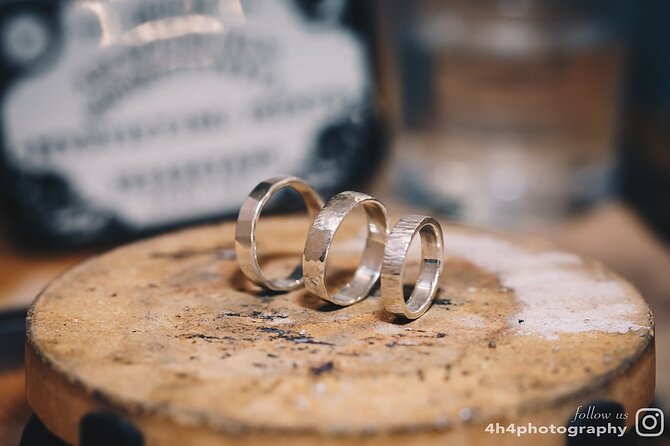
Now comes the part many makers find most enjoyable: adding texture with a planishing hammer. You choose from three different textures, then use the hammer to create the surface you want.
This is where the ring moves away from a plain beginner project. The marks are not printed onto the metal. You make them. The pattern, force, and spacing of your hammer blows affect the final look, so your ring will carry evidence of the work.
You will need to listen to the demonstration before starting. Hammering is fun, but random blows can produce a finish you did not intend. The instructor helps you understand how to use the tool, then gives you room to build the surface.
The three texture choices give you a useful amount of freedom without overwhelming you. You do not face an entire catalogue of options or need to know jewellery design in advance. Choose the texture that fits the style you want, then concentrate on applying it steadily.
This is also the most social section of the class. You can compare how different patterns develop, talk with the people beside you, and enjoy coffee, tea, and plenty of chocolate as you work. The refreshments are a small detail, but they help the workshop feel relaxed rather than formal.
Picking the final polish
At the end, you choose how the ring should be polished. You can polish only the inside, leaving the outside with an artistic, rustic appearance, or choose a fully polished finish for a brighter, glittering look.
This choice gives the same basic project two very different moods. A fully polished ring has a cleaner shine, while the rustic option keeps more attention on the hammer marks and handmade surface. There is no single correct answer.
Think about how you want to remember the activity. If you want a ring that looks deliberately handmade, keeping the exterior textured may suit you. If you prefer sparkle and a more finished jewellery-shop appearance, choose the full polish.
You then take the ring home. That final moment is the heart of the workshop. It is not merely a piece of silver supplied by the studio. You have measured it, cut it, shaped it, filed it, textured it, and chosen its finish.
Why the small group matters
A class of up to 12 is still a group activity, but it is small enough to make personal help possible. Several people have described sessions of six or seven as especially comfortable. Each person has their own tools, and you can watch the demonstration without being lost in a crowd.
The teaching style is a strong part of the experience. Names such as Emily, Trisha, Cat, Owen, and Ava are associated with sessions praised for clear explanations, patience, and reassurance. That matters if you are nervous about using a saw, file, or hammer for the first time.
The class also suits different ability levels. You can be crafty or entirely inexperienced. One person described the process as sparking a new interest in jewellery making, while others simply wanted a fun keepsake. The workshop does not require you to arrive with a design portfolio.
There is a practical limit to the relaxed mood. You must arrive on time. If you are more than 10 minutes late, you will not be admitted and will not receive a refund or rescheduling option. Build in enough time to reach South Great George’s Street.
Who will get the most from this Dublin activity

I would recommend this workshop to anyone who values a personal souvenir more than a standard purchase. It is especially suited to:
- Couples making matching or complementary rings
- Parents and children aged 10 and older
- Friends looking for a shared activity
- Solo visitors who enjoy practical creative work
- Anyone needing an indoor plan on a cold or rainy Dublin day
- People who would rather bring home something handmade than another shirt or magnet
It is less suitable if you want a quiet sightseeing stop with no manual work. You will use tools and take part at every major stage. It is also not suitable for children under 10, and anyone under 16 must attend with a paying adult.
Accessibility deserves careful thought. The old buildings have plenty of stairs and no lift, and the location is not wheelchair accessible. Service animals are allowed, and most people can participate, but contact the provider before booking if you have a specific access requirement.
The language offered is English. Confirmation arrives at booking, and the activity accepts mobile tickets. The studio is near public transport, though no specific route details are provided, so check your own route before setting out.
Is $103.79 good value?
At first glance, $103.79 may seem steep for a two-hour activity. The sterling silver alone is not the whole reason to book. You are paying for materials, instruction, specialist tools, a small class, and the chance to leave with an object you designed and made.
The value is strongest if you would otherwise spend money on a souvenir. A shop-bought ring may be quicker, but it will not carry the memory of learning to shape and texture it in Dublin. The class also gives you a story to go with the object, which is difficult to put a price on.
It is less compelling if your main goal is the cheapest possible ring. This is an experience first and a piece of jewellery second. You should also remember that the finish will reflect beginner-level work. The point is not factory perfection. The point is a ring with your choices in it.
The rating is 4.8 from 59 reviews, with 95 percent recommending the activity. Those figures fit the strongest parts of the experience: the patient instruction, manageable process, small-group feel, and personal souvenir. They do not remove the practical drawbacks, particularly the stairs, late-arrival rule, and age restrictions.
Booking, timing, and cancellation details
The workshop lasts approximately two hours, and the average booking is made 26 days ahead. That does not mean you cannot find a last-minute place. One person booked shortly before the activity and had a good experience, but booking ahead is sensible if your Dublin dates are fixed.
You can cancel for a full refund up to 24 hours before the start time. Cancellations or changes made less than 24 hours before the experience are not accepted for a refund, and cut-off times follow local Dublin time.
The activity ends where it starts, at Silver Works, 4 South Great George’s Street. Keep your luggage elsewhere because the small studio has no storage.
Should you book the hammered silver ring workshop?
Book it if you want a Dublin souvenir with a personal story, enjoy learning by doing, and can manage stairs in an old building. The combination of clear instruction, real silver, a small group, and several design choices makes this more memorable than buying a finished trinket.
I would be cautious if you need step-free access, are travelling with a child under 10, or dislike activities that require concentration and handwork. For everyone else, this is a practical, creative way to spend two hours and leave Ireland wearing something you made yourself.
FAQ
How long does the Dublin silver ring workshop last?
The workshop lasts approximately two hours.
Where does the activity take place?
It starts and ends at Silver Works, 4 South Great George’s Street, Dublin 2, D02 NR59, Ireland.
What is included in the price?
The price includes sterling silver for your ring, coffee and tea, and plenty of chocolate.
Do I need previous jewellery-making experience?
No. The activity is designed for beginners, and the instructor explains each stage step by step.
How many people can join the workshop?
The maximum group size is 12 people.
What will I do during the workshop?
You will mark and cut the silver, shape it with a mallet on a ring mandrel, watch the soldering demonstration, file the ring, add one of three textures with a planishing hammer, and choose the final polish.
Can children take part?
Children must be at least 10 years old. Anyone under 16 must be accompanied by a paying adult.
Is the workshop wheelchair accessible?
No. The activity takes place in two old period buildings with plenty of stairs and no lift, and the buildings are not wheelchair accessible.
What happens if I arrive late?
If you arrive more than 10 minutes late, you will not be permitted to enter the workshop and will not receive a refund or rescheduling option.
Can I cancel for a refund?
Yes. You can cancel at least 24 hours before the start time for a full refund. Cancellations or changes made less than 24 hours before the start time are not accepted for a refund.
Just added around Dublin
- Wicklow: Private Day Tour from Dublin★ 5.0 · 5 reviews
- Wicklow Mountains Private Day Tour including Glendalough★ 5.0 · 7 reviews
- Wicklow Mountains & Glendalough Luxury Private Day Tour★ 5.0 · 23 reviews
- Wicklow tour of Glendalough★ 4.5 · 8 reviews
- Women Of Ireland: Trailblazers & Pioneers★ 5.0 · 4 reviews
- Full Day Private Wicklow Tour★ 5.0 · 12 reviews
- Dublin To Kilkenny Castle Waterford Crystal Private Car – Day Tour★ 5.0 · 8 reviews
- Waterford Crystal and Kilkenny Full-Day Rail Tour from Dublin★ 5.0 · 3 reviews