

Reviewed · MUSEUMS
Dublin: Irish Famine Exhibition Entry Ticket
Ireland’s potato famine was not simply a story of failed crops. This exhibition asks how more than a million people could die from hunger and disease while Ireland still had food, and why millions more were forced to leave. The central question is political as well as human, giving you more to think about than a display of old photographs.
I like the clear, step-by-step layout and the chance to see original newspapers, personal letters, and a cast-iron soup pot rather than only modern panels. I also like that you can take your time, sit in each room, and watch a short overview film. The main drawback is its setting inside a shopping centre, which lacks the solemn atmosphere of a purpose-built museum.
Key points
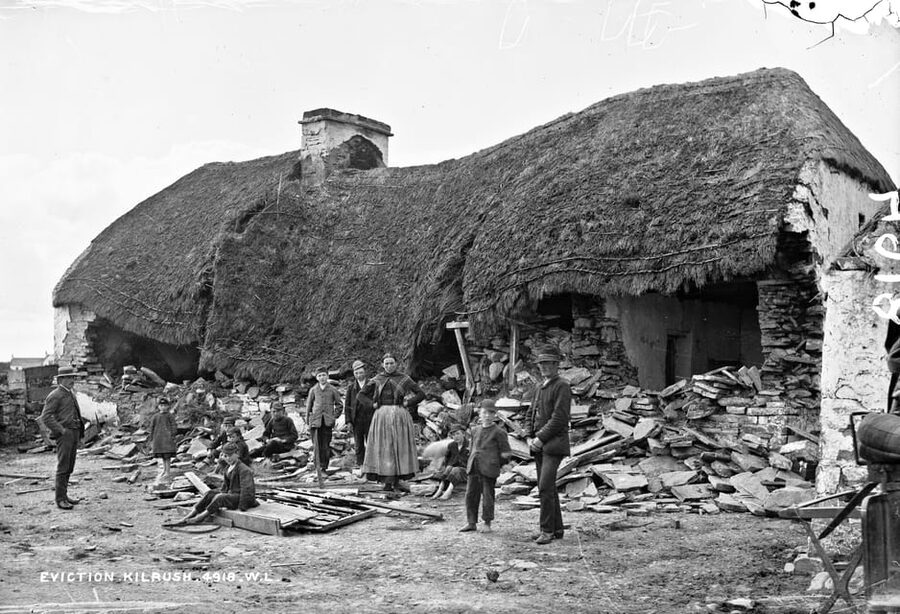
- Rare 19th-century photographs show Ireland during the famine years.
- Original letters and newspapers bring the crisis down to individual families and public events.
- A 15-minute film gives you a quick overview before or after reading the displays.
- Self-paced rooms let you spend more time on difficult subjects such as eviction, disease, and workhouses.
- Translation manuals are available in French, German, and Italian.
- One hour is a sensible visit time, though you can stay longer if you read every panel carefully.
A serious history lesson above a Dublin shopping centre
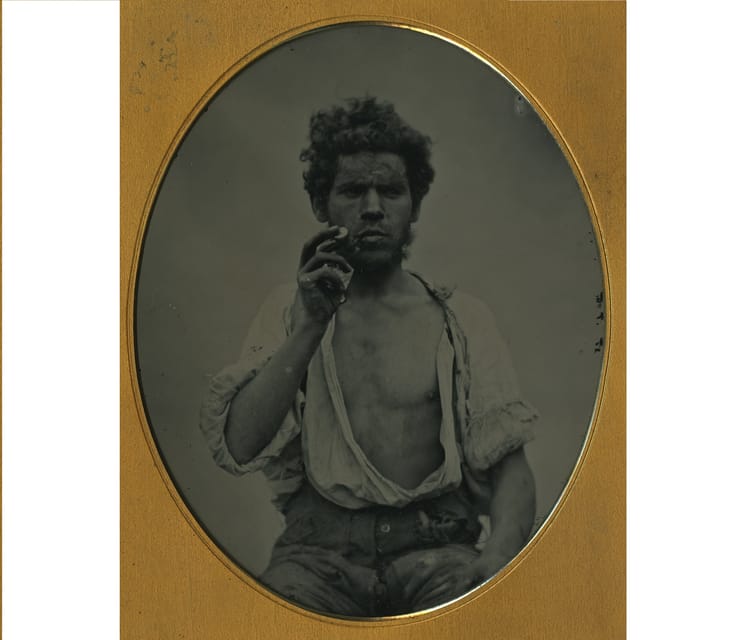
The Irish Famine Exhibition occupies Unit 200b on the top floor of Stephens Green Shopping Centre, just off Grafton Street. That location may sound ordinary, even slightly awkward for a difficult subject, but it is easy to reach and places the exhibition close to several central Dublin sights.
Enter through the main entrance on Grafton Street. The elevator is about 20 metres inside, on the right. Take it to the second floor, then turn left. If you enter from the car park, walk to the opposite end of the centre.
The exhibition opens every day from noon to 6pm. Your ticket is valid for 180 days, so you are not tied to one narrow date. Check the available starting times when booking, but the visit itself is designed to be flexible and self-guided.
I would allow at least an hour. You could move through more quickly, especially if you watch only part of the film, but that would miss much of the point. The material is arranged so that you follow the events step by step, and the subject needs a little time.
More Dublin museum and attraction tickets:
- Irish Rock ‘N’ Roll Museum Experience Dublin
★ 5.0 · 6,112 reviews - The Little Museum of Dublin Famous Guided Tour
★ 5.0 · 2,948 reviews - Dublin EPIC Museum Admission Ticket
★ 4.5 · 1,729 reviews
Why the word famine matters here
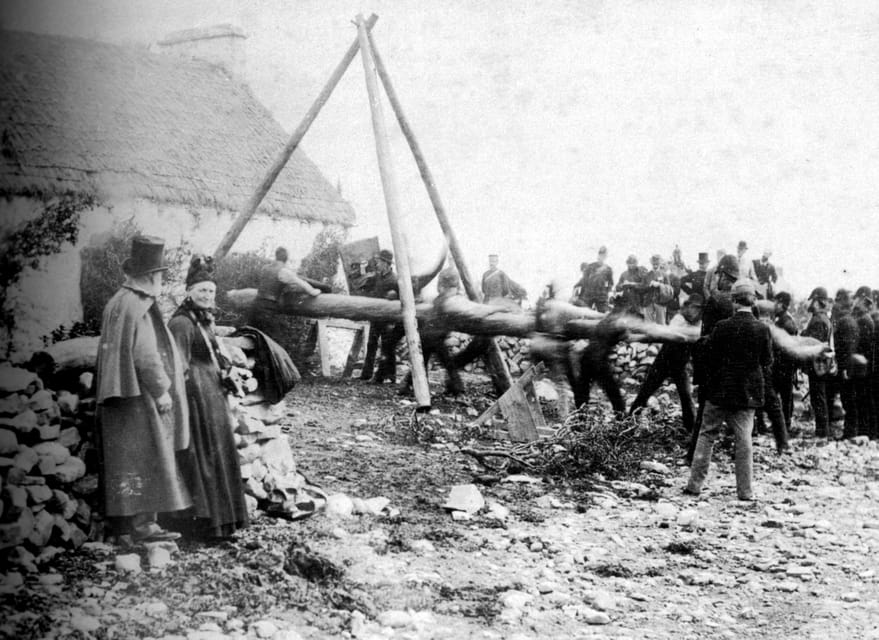
The exhibition begins with the scale of the disaster. The potato crop failed, but the story does not stop with agriculture. Ireland was then part of the British Empire, one of the richest political powers in the world, and food continued to exist in the country during the famine years.
That fact makes the word famine controversial in this context. The exhibition asks you to consider how government policy, land ownership, poverty, and relief systems shaped what happened. More than a million people died from starvation and disease, while millions of others left Ireland.
This framing gives the visit its main value. You are not only learning that a crop failed. You are examining how a food crisis became a mass death event and a cause of forced migration on a huge scale.
The display presents this material in plain language. You do not need specialist knowledge of Irish history to follow it. If you know only that the potato crop failed, the exhibition supplies the wider setting and explains the chain of events.
Following the story room by room
The exhibition is made up of several rooms with storyboards. Each room covers part of the wider story, so you move forward in a logical order rather than facing a wall of disconnected dates and facts.
The panels explain the crisis in an easy-to-follow way. That matters in a self-guided exhibition, since there is no guide to pause and explain a point or answer a question. You can read the boards at your own pace, then sit down before moving on.
The design also gives you room to process the subject. A bench is provided in each room, and there is seating for the film. This is useful because the exhibition covers death, eviction, sickness, hunger, and forced migration. You do not have to rush from one section to the next.
The displays focus on workhouses, evictions, coffin ships, and disease. These subjects show how the crisis affected daily life, housing, health, family ties, and movement across the sea. The exhibition does not treat the famine as a single bad season. It presents it as a long emergency that reached into nearly every part of life.
The photographs put faces to the crisis
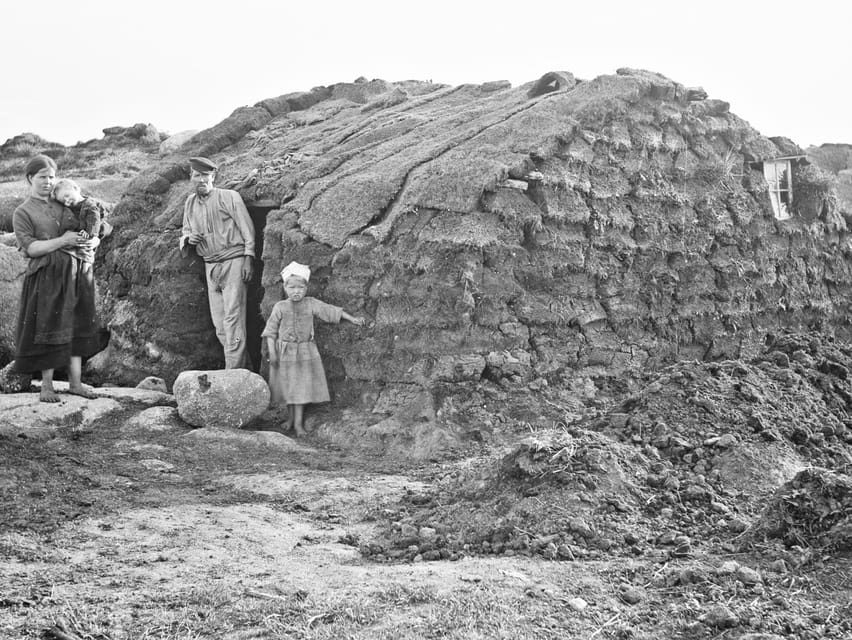
Rare 19th-century photographs form one of the strongest parts of the visit. Photography was still a developing medium, so these images have a different feel from modern documentary pictures. They give you visual evidence of Ireland during and around the famine period.
The photographs are especially helpful after you have read the written material. They turn a large historical event into something more concrete. You can connect the conditions described on the panels with the people and places shown in the images.
Do not expect a large photo collection or a full gallery of images. The exhibition is compact. Its strength is the mix of photographs with documents and objects, rather than the sheer number of items.
A few more Dublin trips worth weighing up
- Dublin: Guinness Storehouse Entry Ticket
★ 4.6 · 16,863 reviews - Dublin: Fast-Track Book of Kells Ticket & Dublin Castle Tour
★ 4.5 · 1,661 reviews - Dublin: The Dublin Pass with Tickets to 40+ Attractions
★ 4.3 · 1,639 reviews - Dublin: EPIC Museum Entrance Ticket
★ 4.6 · 816 reviews
Original letters make the subject personal
Two personal letters are displayed. One was written by a tenant to a landlord. The other went from a father to his son.
These are small objects, but they carry a lot of weight. A general account can explain population loss and government policy. A letter shows how those pressures entered a family’s life and shaped the relationship between people with very different levels of power.
The tenant’s letter points toward the housing and land pressures behind eviction. The father’s letter brings the crisis into a family relationship. Together, they help you remember that the famine was lived through by individuals making painful choices, not by statistics alone.
The letters are also worth seeing because they are original documents. They are not modern reconstructions or reproduced text alone. That direct link to the period adds something that a standard information panel cannot provide.
Newspapers and a soup pot
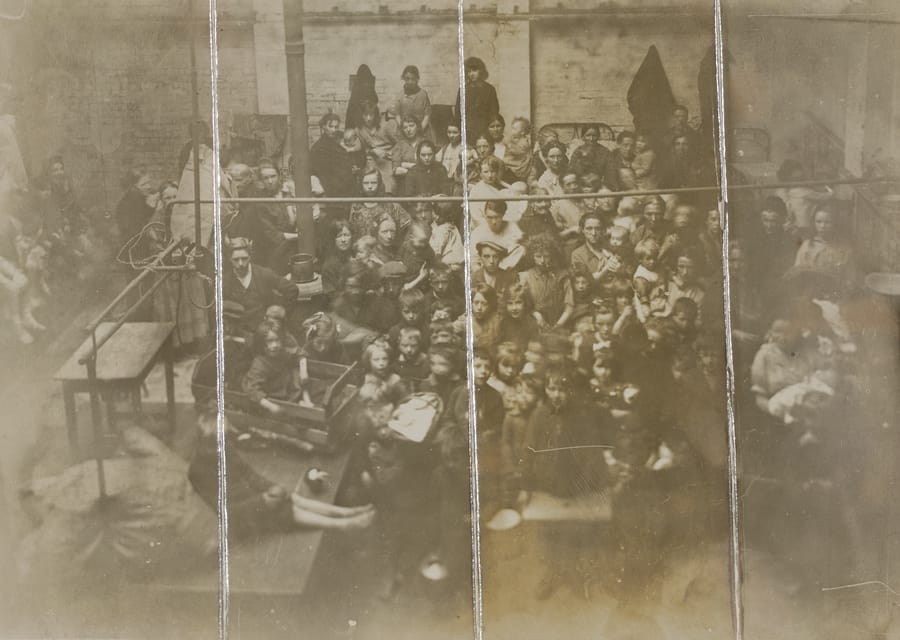
Two original newspaper articles describe the catastrophe. They offer a public record of how the disaster was reported and presented at the time. Read them alongside the personal letters and you get two views of the same crisis: the broad public account and the private family experience.
An original cast-iron soup pot is also on display. It may seem modest compared with a large historic object, but that is part of its value. The pot points to the practical side of relief and hunger. It is a physical reminder that food aid was prepared and distributed in basic, urgent conditions.
The objects are not numerous, so you should not approach this as a major museum collection. Instead, think of them as carefully chosen examples. The exhibition uses a few original pieces to support the larger story told through photographs, film, and panels.
The 15-minute film gives you the outline
A 15-minute overview film is included with your visit. You can watch it in the seated area, either before reading the room displays or afterward.
If you have limited time, the film gives you a useful starting point. It explains the main sequence of events and helps you understand the themes before you inspect the documents. If you have a full hour, I would watch the film and then read the storyboards, since the two formats serve different purposes.
The film is also included on the optional USB version of the exhibition. That may suit you if you want to revisit the material after leaving Dublin. The USB is not included in the ticket price, and neither is the exhibition book.
The film uses mood music, according to the format offered on the USB. That may make the material easier to follow for some people, while others may prefer the quieter, slower pace of reading the displays in person.
Translation support and accessibility
A translation manual is included in French, German, and Italian. This is useful because the exhibition depends heavily on written explanation. If you are more comfortable reading one of those languages, the manual should make the visit easier to follow.
The exhibition is wheelchair accessible. The elevator from the shopping centre provides access to the second floor, and the benches in the rooms give you places to rest during the visit.
There is no information about a live guide, a fixed group size, or an audio guide. Plan on reading the material yourself and using the film as the main shared presentation.
How much time should you plan?
One hour is the safest estimate. That allows time to read the storyboards, examine the photographs and original objects, and watch the 15-minute film.
You can make the visit shorter if you focus on the film and key objects. You can also stay longer if you read every panel carefully or need time to sit between sections. Since the exhibition is open from noon to 6pm, it works well as a daytime stop between central Dublin shopping, sightseeing, or a meal.
I would not book this as your only activity for the day. It is an important historical visit, but the exhibition is compact and self-guided. Pair it with other central Dublin sights rather than expecting a full-day museum experience.
Is the 16 dollar ticket good value?
At $16 per person, the ticket is reasonably priced for an educational stop of about an hour. The value comes from the combination of original material, a film, and a clear presentation of a difficult subject.
You are not paying for a large building, a long guided tour, or dozens of rooms. You are paying for focused access to an exhibition that brings together photographs, newspapers, letters, an original soup pot, and a structured explanation of the famine.
For families, students, and anyone seeking historical context beyond Dublin’s usual literary and political sights, the price can make sense. The main question is your interest level. If you prefer interactive displays, live interpretation, or a large museum collection, this may feel limited.
The flexible validity also helps. Your ticket remains valid for 180 days, and you can reserve now while paying later. Cancellation is allowed up to 24 hours in advance for a full refund, which gives you some room to adjust your plans.
Who should visit this exhibition?
I would recommend it to you if you want to understand one of the defining events in Irish history before visiting famine memorials, historic sites, or places linked to emigration. It is also a good choice if you want a quiet, self-paced activity in central Dublin.
It suits adults and older children who can engage with difficult subjects. The exhibition covers death, disease, eviction, starvation, and forced migration, so it is not a light attraction for a spare half-hour.
The clear layout makes it approachable for people without a background in Irish history. The translation manuals help international visitors, while the film offers a quick way to grasp the main story.
I would be more cautious if you are looking for entertainment or a cheerful break from sightseeing. The subject is grim, and the exhibition does not soften it. That seriousness is appropriate, but you should allow yourself enough time and attention for it.
Should you book the Irish Famine Exhibition?
Book it if you want a focused, affordable history lesson with original documents and a clear explanation of why the Irish famine became such a vast human disaster. The letters, newspapers, photographs, and soup pot give the story a personal and physical presence.
Skip it if you want a large museum, a guided walk, or an interactive attraction. The setting inside Stephens Green Shopping Centre is practical rather than atmospheric, and the exhibition can be completed in about an hour.
For most history-minded visitors, I would make room for it, especially on a rainy Dublin afternoon or between central city stops. Go in ready for serious material, watch the film, read the panels in order, and give the original letters and newspapers the time they deserve.
FAQ
Where is the Irish Famine Exhibition located?
It is in Unit 200b on the top floor of Stephens Green Shopping Centre in Dublin. From the Grafton Street main entrance, take the elevator about 20 metres inside on the right to the second floor, then turn left.
What are the opening hours?
The exhibition is open every day from 12pm to 6pm.
How long should I allow for the visit?
Allow at least one hour. This gives you time to read the storyboards, see the original objects, and watch the 15-minute overview film.
What does the ticket include?
The ticket includes entry to the Irish Famine Exhibition and a translation manual in French, German, and Italian.
Are the book and USB included?
No. The exhibition book and USB stick are available to buy separately at the reception desk.
What can I see inside the exhibition?
You can see storyboards, films, rare 19th-century photographs, two original newspaper articles, two personal letters, and an original cast-iron soup pot.
Is the exhibition wheelchair accessible?
Yes, the exhibition is wheelchair accessible.
How long is the ticket valid?
The ticket is valid for 180 days. Check availability for the starting times offered.
Can I cancel my booking?
Yes. You can cancel up to 24 hours in advance for a full refund. You can also reserve now and pay later.
Just added around Dublin
- Wicklow: Private Day Tour from Dublin★ 5.0 · 5 reviews
- Wicklow Mountains Private Day Tour including Glendalough★ 5.0 · 7 reviews
- Wicklow Mountains & Glendalough Luxury Private Day Tour★ 5.0 · 23 reviews
- Wicklow tour of Glendalough★ 4.5 · 8 reviews
- Women Of Ireland: Trailblazers & Pioneers★ 5.0 · 4 reviews
- Dublin To Kilkenny Castle Waterford Crystal Private Car – Day Tour★ 5.0 · 8 reviews
- Waterford Crystal and Kilkenny Full-Day Rail Tour from Dublin★ 5.0 · 3 reviews
- Full Day Private Wicklow Tour★ 5.0 · 12 reviews
Museums, compared.
The Little Museum of Dublin Famous Guided Tour
Read our review →

Giant’s Causeway with the Titanic Exhibition and the best of Northern Ireland
Read our review →

Irish Whiskey Museum: Whiskey Blending Experience
Read our review →
Irish Whiskey Museum Blending Tour with Tastings
Read our review →Browse the lists this tour appears in