
Reviewed · DUBLIN
Women Of Ireland: Trailblazers & Pioneers
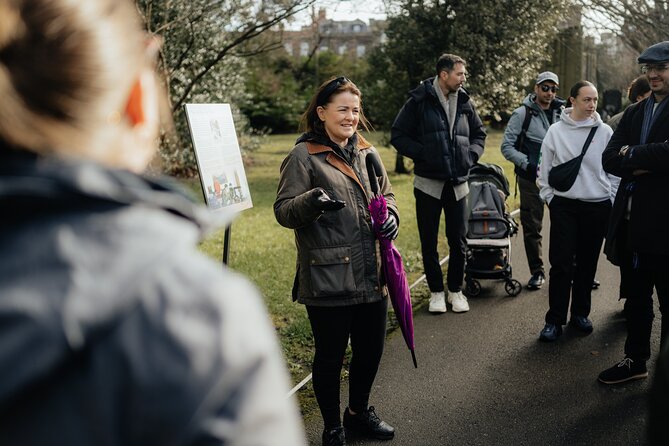
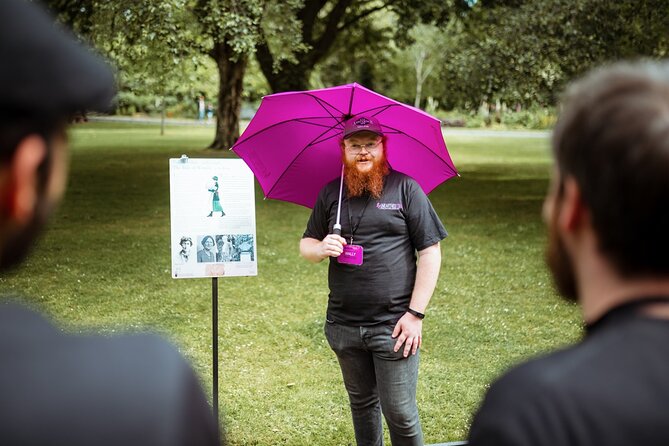
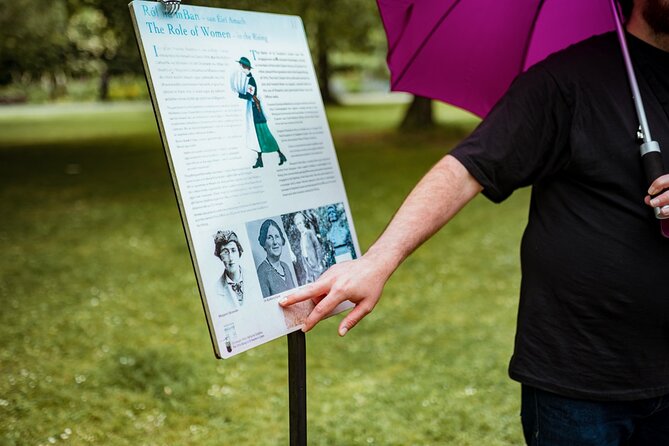
Dublin’s famous story is often told through its men. This walking tour corrects the balance by following women who fought, wrote, organized, rebelled, and changed Ireland. I like the way it uses ordinary city streets, gardens, and public buildings as the setting for stories that are easy to miss on a standard Dublin walk. The small group, capped at 14, also gives the guide room to adjust the talk to your level of interest.
I especially like the clear route from St Stephen’s Green to Dublin Castle and the mix of political, religious, journalistic, and revolutionary figures. Guides Tara and Ciarán have been praised for lively storytelling, good pacing, and small anecdotes that keep the walk from feeling like a lecture. The main drawback is that the tour lasts only 90 minutes, so each woman receives a focused introduction rather than a full biography, and several important buildings are viewed only from outside.
Key points to know before booking
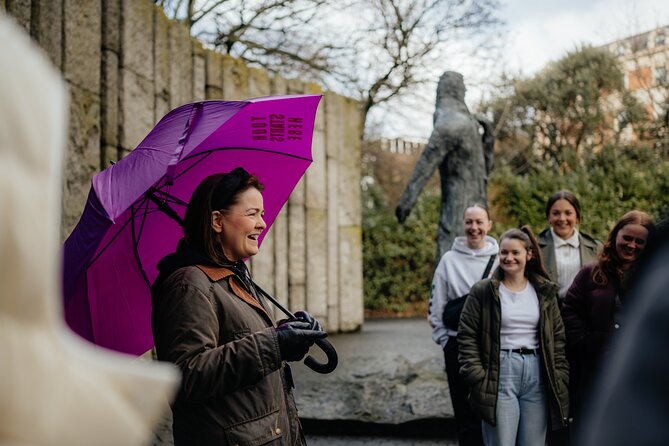
- Six central Dublin stops: The route covers St Stephen’s Green, the Royal College of Surgeons, Mercer Street Upper, Ship Street Great, Dubh Linn Gardens, and Dublin Castle.
- A different Dublin story: You learn about women such as Countess Markievicz, Margaret Anne Cusack, Hannah Sheehy-Skeffington, Veronica Guerin, and Anne Devlin.
- Small group size: The maximum of 14 people should make it easier to hear the guide and ask questions.
- Mostly an outdoor walk: The tour enters Dubh Linn Gardens, but does not enter the Royal College of Surgeons or Dublin Castle.
- Good central starting point: Meet at the Wolfe Tone sculpture in St Stephen’s Green at 11 a.m.
- Low-cost introduction: At $17.35 per person, it offers a useful way to spend 90 minutes in central Dublin without paying for major attraction admission.
Why this women’s history walk feels different
This is not a general tour of Dublin with a few women added at the edges. The women are the subject, and the route is built around their actions.
You begin with political rebellion, move through religious and social reform, examine the suffragette movement, and finish with modern journalism and the story of Anne Devlin. That range matters. You are not hearing one repeated version of female courage. You are meeting women who worked in very different settings and made difficult choices for very different reasons.
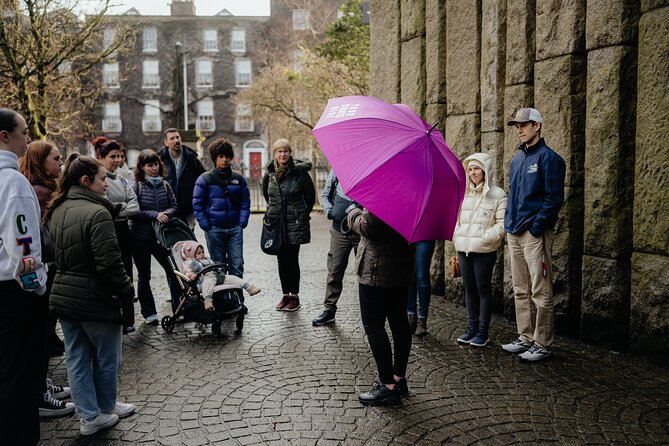
I also like the scale of the walk. A 14-person limit is small enough for a guide to notice if the group is losing the thread, and it should reduce the problem of standing at the back of a large crowd on a busy Dublin pavement. The tour is described as eco-friendly because it relies on walking rather than private transport, though you should expect to cover the route on foot for the full 90 minutes.
The tone can vary with the guide. Tara has been praised for matching the amount of explanation to the group’s existing knowledge. Ciarán has been praised for his enthusiasm, humor, and storytelling. That is useful to know if you want more than dates and names. The best version of this tour will feel like a guided conversation with a strong narrative thread.
Other Dublin days people line up beside this one:
- Dublin to Cliffs of Moher, including Wild Atlantic Way and Galway
★ 5.0 · 23,331 reviews - From Dublin: Cliffs of Moher, Burren & Galway City Day Tour
★ 4.8 · 18,888 reviews - Dublin: Guinness Storehouse Entry Ticket
★ 4.6 · 16,863 reviews
Starting with Countess Markievicz at St Stephen’s Green
Your meeting point is the Wolfe Tone sculpture at St Stephen’s Green, with the walk beginning at the nearby bust of Countess Markievicz. This is a practical place to meet because St Stephen’s Green is central and close to public transport.
The opening story introduces Markievicz and her part in Ireland’s fight for independence. Starting here gives the tour a clear political charge from the first few minutes. You are not simply looking at a statue. You are being asked to consider who gets remembered in public spaces and why.
The stop lasts about 15 minutes and has no admission fee. Since it takes place outdoors, dress for Dublin’s changeable weather. The tour begins at 11 a.m., so you may want to arrive a few minutes early and locate the Wolfe Tone sculpture before the group gathers.
This first stop also helps set expectations. The walk is about people and ideas, but it is equally about place. You see how Dublin’s streets and institutions connect to the women being discussed.
The Royal College of Surgeons and women during the rising
The next stop is the Royal College of Surgeons, where the guide discusses the women who held the building during the rising, including Margaret Skinneder.
This is one of the tour’s more unusual details. Many visitors pass the building without knowing that women were part of its wartime story. The stop widens your view of political action. Women were not only supporters, messengers, or figures in the background. They could also take direct roles in conflict and civic upheaval.
You do not enter the Royal College of Surgeons, and admission is not included. The guide explains the story from outside, so the value comes from the interpretation rather than from seeing an interior room or exhibit. If you prefer tours with frequent indoor visits, this is a limitation. If you like learning what happened behind familiar facades, it is a worthwhile pause.
The stop lasts roughly 15 minutes. With the route broken into short sections, you get a series of compact stories rather than one long talk in a single location.
Mercer Street Upper and the Nun of Kenmare
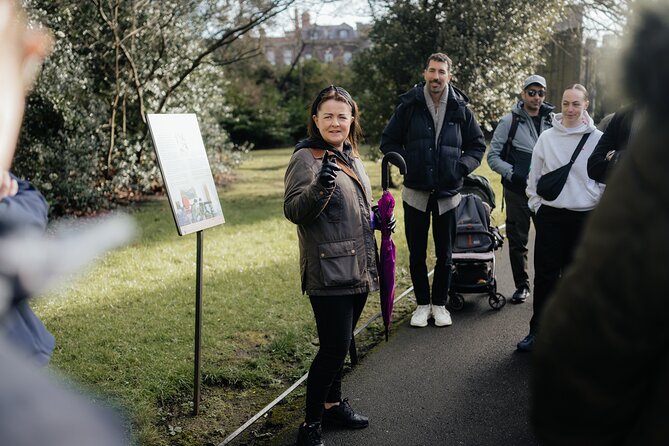
At Mercer Street Upper, the focus shifts to Margaret Anne Cusack, known as the Nun of Kenmare.
This stop adds a religious and social dimension to the tour. Cusack’s story helps show that Irish women shaped public life in ways that were not limited to armed rebellion or electoral politics. Her identity as the Nun of Kenmare creates an immediate contrast with the political figures at the start of the walk.
The guide spends about 15 minutes here, and there is no admission charge. Because the tour remains on the street, you will not be entering a dedicated attraction connected with Cusack. The setting is useful mainly because it places her story within the city rather than separating it from everyday Dublin.
I appreciate this change of subject. A tour about women’s history can easily become a parade of famous activists. Including Cusack gives the route more range and lets you see how questions of faith, public work, and social influence fit into Ireland’s past.
A completely different kind of day out of Dublin:
- Dublin to Cliffs of Moher, Burren, Wild Atlantic Way, Galway Tour
★ 5.0 · 12,924 reviews - Dublin to Belfast Black Cab, Dunluce Castle and Giant’s Causeway
★ 5.0 · 7,954 reviews - Kilkenny, Wicklow Mountains & Glendalough Day Tour from Dublin
★ 5.0 · 7,897 reviews - From Dublin: Wicklow Mountains, Glendalough & Kilkenny Tour
★ 4.8 · 6,235 reviews
Ship Street Great and the suffragette movement
Ship Street Great brings the tour to the suffragette movement and Hannah Sheehy-Skeffington.
This part should appeal to anyone interested in voting rights, organized protest, or the difficult work of changing public opinion. The stop also links Irish women’s history to a wider campaign for political representation, while keeping the focus on a specific Irish figure rather than offering only a broad overview.
Again, the guide talks from an outdoor location, with no ticket required. The 15-minute format is enough for a strong introduction, but you should not expect an extended account of the suffragette movement or a detailed study of every organization involved. The tour’s strength is its selection of people and its ability to connect them to the streets around you.
Hannah Sheehy-Skeffington also helps bridge the gap between the earlier revolutionary stories and modern ideas about civic rights. By this point, the walk has moved beyond the question of who fought for independence and toward the question of who had a voice in shaping the new country.
Veronica Guerin in Dubh Linn Gardens
The stop at Dubh Linn Gardens brings the tour into one of its few garden settings and turns to Veronica Guerin.
Guerin’s story moves the tour into modern Ireland and introduces journalism, crime, and public courage. It is a sharper change in tone than the earlier stops. Instead of looking only at independence-era figures, you are reminded that dangerous public work and personal bravery did not end with the founding of the state.
The guide enters the gardens here, and admission is free. That gives you a brief change from pavement and street corners. It is also a good point in the walk to pause and take in the setting while the guide connects Guerin’s life to modern Ireland.
Because the tour covers sensitive material, this stop may feel more intense than the others. The listing provides her name and subject but not a full account of the story, so the guide’s delivery will shape how much detail you receive. Ciarán’s reported strength is storytelling, while Tara’s approach has been described as measured and responsive to the group. Either style can work well here, depending on how much context you want.
Finishing with Anne Devlin near Dublin Castle
The final stop covers Anne Devlin and modern Ireland, ending in the gardens of Dublin Castle.
Devlin is a fitting figure for the close of the walk. Her story returns the tour to resistance and the struggle for Irish independence, but the guide uses the ending to connect past events with modern Ireland. That gives the route a sense of shape rather than leaving you with six unrelated biographies.
You do not enter Dublin Castle. The tour finishes in its gardens, so the castle is a setting and endpoint rather than an included attraction. Admission to the castle is not included, and you should not book this walk expecting a castle tour.
The ending location is practical. Dublin Castle is close to many central sights, restaurants, and transport connections, so you can continue sightseeing afterward. You might pair this walk with a separate visit to the castle, but allow extra time and budget for that, since it is not part of this experience.
What the 90-minute schedule means for you
The route divides into six stops of about 15 minutes each. That makes the pace easy to follow and prevents one subject from taking over the whole walk.
You should expect a steady outdoor stroll with regular pauses. The description says most people can participate, and the route is near public transportation. Service animals are allowed. Still, you should be comfortable walking and standing for roughly an hour and a half, since private transportation is not provided.
The short length is both a strength and a limit. It fits neatly into a morning or afternoon and works well as an introduction to Dublin before a larger sightseeing day. At the same time, you will receive selected stories rather than a full course in Irish women’s history. If you want detailed archival context, ask the guide questions during the stops and consider treating this as a starting point for further reading.
Is $17.35 a fair price?
At $17.35 per person, this is a good-value walking tour if you want a focused introduction to Dublin’s overlooked women. You are paying mainly for the guide’s interpretation, route planning, and storytelling, not for entry to major sights.
That distinction is important. The tour does not include admission to the Royal College of Surgeons or Dublin Castle, and it does not include food or private transportation. Those omissions are reasonable at this price, but you should factor in separate costs if you want to enter either site.
The value is strongest for a first visit to Dublin or for anyone who has already seen the standard landmarks and wants a different angle. The tour gives you names and places to investigate later, while adding context to streets you might otherwise walk past.
The experience is booked, on average, 24 days ahead, so it is sensible to reserve early if your Dublin dates are fixed. Confirmation is provided at booking. Free cancellation is available up to 24 hours before the start time. If the minimum number is not reached and the tour is canceled, you are offered another date or experience, or a full refund.
Who will enjoy this tour most?
I would recommend it to you if you enjoy history told through individual lives rather than a long list of dates. It suits people interested in women’s rights, Irish independence, journalism, political change, and the less familiar corners of central Dublin.
It is also a good choice for solo visitors and couples who prefer a small group. The 14-person maximum should make the guide easier to hear and gives you a better chance to ask about a story that catches your attention.
Families with older children may find the subject matter engaging, though the tour includes serious political and crime-related stories. Anyone looking for a relaxed route with frequent short stops should also find the format manageable.
I would choose another activity if you want to spend most of your time inside museums, avoid walking, or see the interiors of Dublin Castle and the Royal College of Surgeons. This is a street-level history walk, not an attraction pass.
Should you book Women of Ireland: Trailblazers & Pioneers?
Book it if you want a compact, fairly priced way to see Dublin through women’s experiences. The route has a strong structure, the group is small, and the subjects range from Countess Markievicz and Margaret Skinneder to Hannah Sheehy-Skeffington, Veronica Guerin, and Anne Devlin.
The main choice comes down to depth. You will get memorable introductions and useful context, but not long visits or extensive interiors. For a 90-minute walk at $17.35, that is a fair trade. I would place it early in a Dublin visit, then use the names and locations you learn here to decide which stories deserve more time.
FAQ
Where does the tour begin?
The tour begins at the Wolfe Tone sculpture in St Stephen’s Green, Dublin.
What time does the tour start?
The start time is 11 a.m.
Where does the tour finish?
The tour finishes in the gardens of Dublin Castle on Dame Street, Dublin 2.
How long does the experience last?
The walking tour lasts approximately 1 hour and 30 minutes.
Does the tour enter Dublin Castle or the Royal College of Surgeons?
No. The tour does not enter either building. It does enter Dubh Linn Gardens.
What is the maximum group size?
The tour has a maximum of 14 people.
Is cancellation free?
Yes. You can cancel up to 24 hours before the start time for a full refund. Changes or cancellations made less than 24 hours before the start time are not accepted for a refund.
Just added around Dublin
- Wicklow: Private Day Tour from Dublin★ 5.0 · 5 reviews
- Wicklow Mountains Private Day Tour including Glendalough★ 5.0 · 7 reviews
- Wicklow Mountains & Glendalough Luxury Private Day Tour★ 5.0 · 23 reviews
- Wicklow tour of Glendalough★ 4.5 · 8 reviews
- Dublin To Kilkenny Castle Waterford Crystal Private Car – Day Tour★ 5.0 · 8 reviews
- Waterford Crystal and Kilkenny Full-Day Rail Tour from Dublin★ 5.0 · 3 reviews
- Full Day Private Wicklow Tour★ 5.0 · 12 reviews
- Wicklow and Glendalough Private Chauffeured Sightseeing Tour★ 5.0 · 17 reviews